

- Bangladesh to Introduce New Law to Curb Extortion, IGP Says |
- UN Marks 81 Years of Global Cooperation and Peace |
- Dhaka's air 5th worst in the world this morning |
- Around 7,500 Bangladeshis imprisoned in Saudi Arabia: Shama Obaed |
- Bangladesh Outperforms India in Global Hunger Index 2026 |
DESH Green Building Framework Gains Momentum in Bangladesh
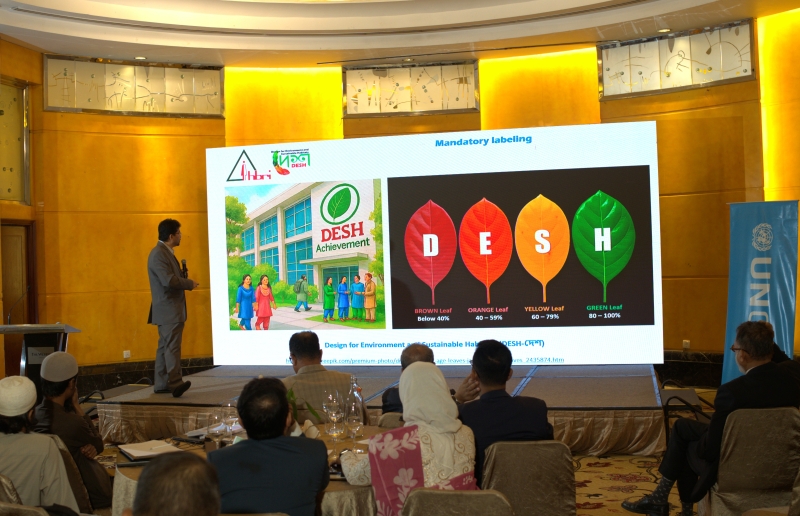
Bangladesh has moved a step closer to reshaping its construction sector with the advancement of a nationally tailored Green Building Certification Framework, known as DESH, aimed at promoting sustainable and climate-resilient development.
The framework is being developed by the Housing and Building Research Institute with support from the United Nations Office for Project Services, under the leadership of the Ministry of Housing and Public Works. It forms part of a broader initiative focused on transforming the built environment through sustainable materials in Bangladesh.
A recent stakeholder consultation marked a key milestone in the process, bringing together representatives from government, academia and industry to review and refine the framework. The session centred on technical validation and collaborative development, ensuring that the system reflects both global standards and local realities.
Participants responded positively to the DESH framework, highlighting its relevance to Bangladesh’s environmental conditions and development priorities. Unlike existing international certification systems, DESH is designed as a locally adapted, performance-based model that addresses specific national challenges. Stakeholders noted its practical applicability and expressed strong support, with no significant opposition raised during consultations.
The framework takes a comprehensive approach to green construction, incorporating elements such as climate resilience, energy efficiency, water management, sustainable building materials and occupant health. Its structure aims to balance technical rigour with ease of use, making it suitable for widespread adoption across the country’s rapidly expanding construction sector.
Authorities have underscored the need to broaden awareness and engagement as the initiative moves forward. Expanding understanding among developers, institutions and the public is expected to play a crucial role in the framework’s success. The next phase will include wider consultations and a public review process to ensure inclusivity and acceptance.
Officials involved in the initiative say DESH has the potential to become a cornerstone of Bangladesh’s efforts to promote low-carbon development and strengthen resilience against climate risks. By aligning construction practices with national climate goals and building local capacity, the framework is expected to contribute significantly to a more sustainable and resource-efficient built environment.