

- First cruise ship crosses Strait of Hormuz since war began |
- MDBs stress co-op support global stability amid uncertainty |
- PM opens first Hajj flight, visits Ashkona camp |
- River ports asked to hoist cautionary signal No 1 |
- Oil prices drop 9% & Wall Street rallies to a record after Iran reopens Hormuz |
Govt okays Tk 463cr Karnaphuli Tunnel connectivity project
The government on Tuesday approved a road connectivity project aimed at improving access between the much-talked-about Karnaphuli Tunnel (Anwara end) and the Chattogram-Cox’s Bazar National Highway at Gachhbari is set to be implemented, with the government allocating Tk 462.99 crore entirely from its own funds.
The project, titled ‘Development of the Connecting Road from Karnaphuli Tunnel (Anwara) to Gachhbari of Chattogram-Cox’s Bazar National Highway’, will be undertaken by the Roads and Highways Department (RHD) under the Road Transport and Highways Division.
The implementation period has been fixed from October 2025 to December 2028.
The approval came from the ECNEC meeting chaired by Chief Adviser Prof Muhammad Yunus, held at the NEC Conference Room of the Planning Ministry.
Covering a total length of 21.08 kilometres, the project will be implemented in Anwara and Chandanaish upazilas of Chattogram district. Its primary objective is to upgrade the existing connecting road to appropriate standards and width to ensure uninterrupted, faster and safer road communication, reduce traffic congestion in Anwara and Chandanaish upazila towns, and develop an integrated, sustainable and cost-effective road transport network.
According to the project profile, key activities include land acquisition, widening of road embankments, widening and strengthening of existing pavement, construction of new pavement with a width of 10.30 metres, surfacing works with DBS base and wearing course, construction of rigid RCC pavement, building of 18 RCC box culverts and three PC/RCC girder bridges, construction of RCC drain-cum-footpaths and retaining walls, and relocation of utilities.
Anwara upazila holds significant geographical and economic importance, bordered by Patiya to the north, Banshkhali to the south, Chandanaish to the east and the Bay of Bengal to the west. The road serves as a vital transport corridor for access to KAFCO, the Korean EPZ, Parki Sea Beach, the Marine Academy, the shrine of Hazrat Shah Mohsen Aulia (RA), CUFL and several industrial establishments. Due to heavy traffic, congestion and road accidents have become common in the area.
Under the proposed project, the road from Gachhbari to Joykali Bazar will be widened over 16.48 kilometres from the existing 5.5-metre width, while a new 2.50-kilometre road will be constructed from Syed Kuchiar Mor to Sholokata.
Another 2.10 kilometres from Sholokata to Kalabibir Dighi Mor (R-170) will also be widened. The entire corridor will be upgraded to national highway standards with a width of 10.30 metres.
The road connects Kalabibir Dighi Mor of N-115 road (R-170) to Gachhbari (Z-1040), linking with the N-1 national highway after 21.08 kilometres. At present, vehicles travelling from Dhaka to Cox’s Bazar via the Karnaphuli Tunnel must pass through a 39-kilometre route via Patiya–Anwara Y-junction–Shantirhat–Patiya Bypass–Gachhbari. Once the project is completed, the distance from the Karnaphuli Tunnel to Gachhbari via Anwara will be reduced by around 18 kilometres, saving an estimated 35 minutes of travel time.
Officials said the project was first proposed in July 2023 with an estimated cost of Tk 495.76 crore and an implementation period up to June 2026. Following several rounds of review by the Planning Commission and Project Evaluation Committee (PEC), the Development Project Proposal (DPP) was revised multiple times to rationalise costs and timelines. The latest revised DPP proposes a reduced cost of Tk 462.99 crore, with an extended implementation period of one year and six months.
The Planning Commission, in its recommendation, said the project would establish a modern, safe and efficient road connection between the Karnaphuli Tunnel and the Chattogram–Cox’s Bazar National Highway.
This, it noted, would facilitate smoother movement of passenger and freight vehicles, enhance the utilisation of the Karnaphuli Tunnel, and significantly improve connectivity between Dhaka and Cox’s Bazar.
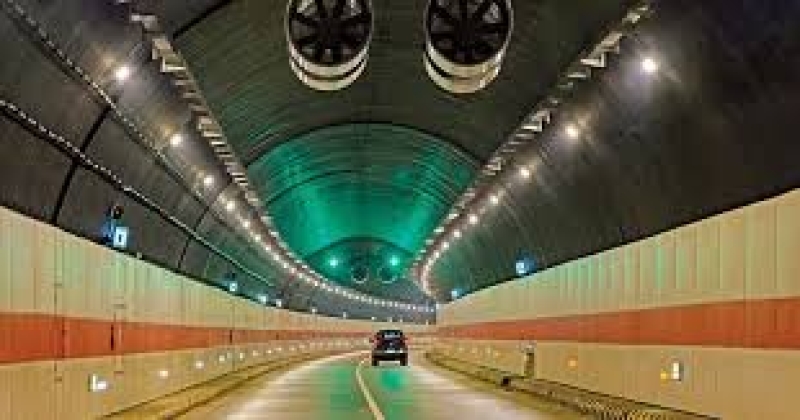
The Karnaphuli Tunnel is a landmark infrastructure project and the first underwater road tunnel in South Asia. Located in the port city of Chattogram, Bangladesh, the tunnel runs beneath the Karnaphuli River to connect the city's east and west banks, essentially implementing a "One City, Two Towns" model.
The entire route measures 9.39 kilometers, with the main tunnel segment spanning 3.32 kilometers, featuring dual two-lane tubes.
It was constructed using a slurry shield tunneling method by the China Communications Construction Company (CCCC). The project, part of China's "One Belt, One Road" initiative, cost around $1.1 billion, with partial financing from the Exim Bank of China.
The primary objective of the tunnel is to revolutionize transportation dynamics in the region. It is expected to significantly reduce travel time and alleviate traffic congestion on existing bridges, particularly easing the journey between Chattogram and the tourist hub of Cox's Bazar from four hours to potentially two.
It also provides a vital link to the Chattogram Port, Matarbari Deep Seaport, and the proposed industrial zones in the Anwara Upazila, fostering trade and investment.
However, the project has faced some initial challenges. Since its opening in October 2023, the tunnel has experienced lower-than-projected daily vehicle usage, leading to significant financial losses due to high maintenance costs and high tolls compared to nearby alternatives, reports UNB.