

- US urges global partners to increase contributions for Rohingyas |
- 18 Rohingyas rescued after boat capsizes off Teknaf, many missing |
- India Says Hasina Cannot Conduct Politics From Its Soil |
- Bangladesh’s Bat-Making Hub Eyes Global Cricket Market |
- Landslide Deaths: Rohingya Refugees Pay For A Warmer Climate |
Russia and Iran Strengthen Military Ties with New Treaty
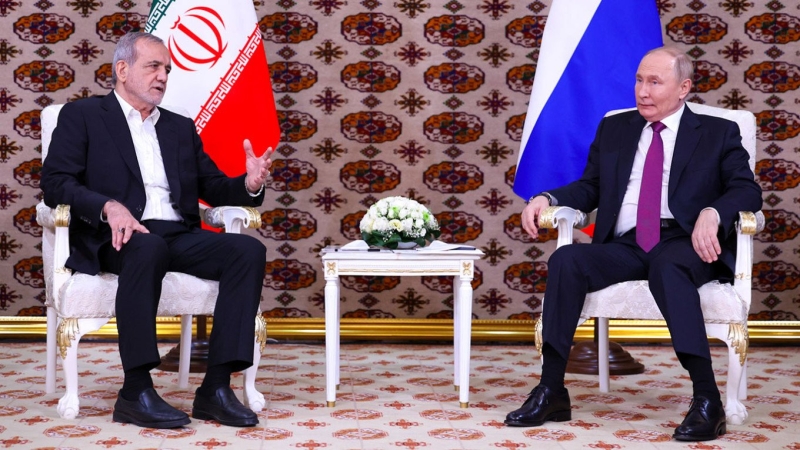
In a significant step toward enhancing bilateral relations, Russia and Iran signed a comprehensive 20-year treaty on Friday in Moscow, pledging to expand military and defense cooperation. The agreement, which was officially published by the Kremlin, marks a deepening of ties between the two nations, already closely aligned in their geopolitical and strategic objectives.
The treaty outlines a broad framework for increasing collaboration in various sectors, with a primary focus on security and defense. Both countries emphasized their commitment to strengthening military cooperation, which could involve joint training, technology exchanges, and the development of defense infrastructure. Additionally, the treaty envisions a strengthening of economic, scientific, and technological ties, further solidifying their alliance.
The partnership comes amid rising tensions in the Middle East and other global regions, with both Russia and Iran facing Western sanctions and diplomatic isolation. By reinforcing their military collaboration, they aim to counterbalance Western influence and expand their sphere of strategic influence. The signing of the treaty is seen as a signal of their growing alignment against common geopolitical adversaries.
Experts suggest the agreement could have far-reaching implications for regional security dynamics, particularly in areas such as Syria, where both nations have supported the government of Bashar al-Assad. The treaty also positions them as key players in an increasingly multipolar world, as both seek to challenge the global dominance of the United States and its allies.