

- Covered van hits Gazipur police patrol team, killing SI, BNP leader |
- Korean City scrambles to rescue dusky shark after it returns to canal |
- PM inspects Mongla Port, Sundarbans, proposed economic zone |
- Early winter cucumber brings hope of bumper harvest in Sirajganj |
- Saudi coalition intercepts Houthi missile after blasts in Riyadh |
Dhaka, Delhi Must Unite for Fruitful Ties: Verma
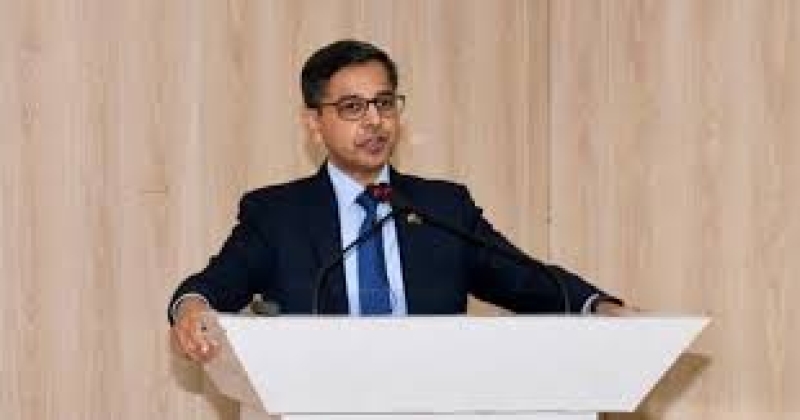
Indian High Commissioner to Bangladesh Pranay Verma has said Bangladesh and India should work together to strengthen their interdependencies and transform geographical proximity and growing economic capabilities into new opportunities for mutually rewarding cooperation.
He pointed out that Bangladesh and India, as two important economies of the region, are also important drivers for regional integration under the framework of BIMSTEC, whose secretariat is located in Dhaka and which envisions bridging the growth opportunities of South Asia with Southeast Asia.
The envoy said this as he was invited by the National Defence College of Bangladesh to address the 2025 NDC course participants on Monday (Sept 15), said the High Commission on Tuesday.
The High Commissioner said India will continue to seek a “stable, positive, constructive, forward-looking and mutually beneficial relationship” with Bangladesh based on mutual respect and mutual sensitivity, with people of both countries as the main stakeholders in this partnership.
He spoke about India’s foreign policy and development strategy, highlighting India’s growing engagement with the world to promote international cooperation, reforms of global governance and interests of the Global South, as well as to serve India’s quest for inclusive, sustainable and rapid national development.
The High Commissioner highlighted the long-term vision of India-Bangladesh relations under India’s foreign policy priorities of “Neighbourhood First”, “Act East Policy”, the MAHASAGAR doctrine, as well as India’s Indo-Pacific Vision, reports UNB.