

- UN secretary-general calls for climate justice compact |
- Indian, US Envoys Hold Meeting Amid Bangladesh-India Tensions |
- Parliament descends into chaos over fire at Nusrat's Kushtia home |
- PM Vows to Build Trillion-Dollar Green Economy |
- PM visits Bangladesh's Jute Pavilion at COP31 |
New UN Platform Targets $3 Billion for Disaster Protection
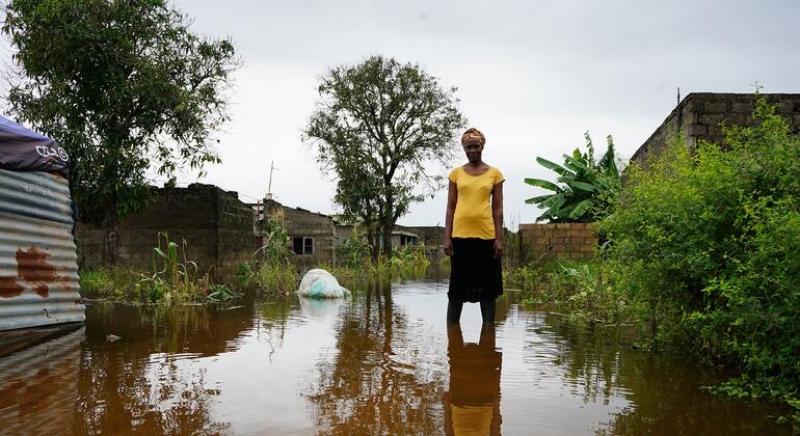
Major floods in the Magoanine neighbourhood of Maputo City in Mozambique in January 2026, submerged thousands of homes and left vegetation partially underwater.
UN agencies on Thursday launched a joint platform at COP31 in Antalya, Türkiye, to secure access to more than $3 billion in risk financing and protect 75 million people and their livelihoods from climate shocks and natural hazards by 2030.
“Disasters are increasingly predictable, yet the financing needed to act ahead of them remains slow and fragmented,” said Lisa Doughten, Director of Financing and Outreach at the UN Office for the Coordination of Humanitarian Affairs (OCHA).
The platform aims to make disaster-response funding more predictable, increase the resources available for early action during major crises and maximise the impact of funding by combining existing resources with private-sector support.
Participating agencies will share expertise, pool data and coordinate joint solutions, linking predictive analysis with financing so that early warnings can be translated into anticipatory action.
Collaboration with the insurance industry and financial markets will also be key to keeping costs down as financing expands.
The initiative has already delivered its first results. With support from specialist insurance teams at the World Food Programme (WFP), OCHA and the UN Children's Fund (UNICEF) have secured insurance policies that provide a financial safety net for their anticipatory action programmes.
“A robust forecast can give us days, sometimes even weeks, to act before a flood, storm or heatwave puts children at risk,” said Gernot Laganda, UNICEF Global Practice Director for Climate and Environment.
“Insurance ensures we have the money available to act on that warning, even in a year when several disasters come at once,” he added.
Significant funding gaps
Despite the growing focus on early action, pre-arranged financing accounts for less than two per cent of global humanitarian funding, far below what is needed.
The World Food Programme, the UN's largest user of this type of financing, has helped secure nearly $211 million in pre-arranged funding this year to protect up to 9.6 million people across more than 50 countries.
“For millions of refugees already on the frontlines of the climate crisis, acting early can save lives, protect livelihoods and prevent further displacement,” said Antón Leis García, UN High Commissioner for Refugees (UNHCR) Assistant High Commissioner for Operations.
The UN Disaster Risk Financing (DRF) Platform brings together the Food and Agriculture Organization (FAO), the International Organization for Migration (IOM), OCHA, UNICEF, UNHCR and WFP.