

- ‘Songs of Fired Earth’ Inaugurated at Alliance Francaise |
- Staff shortage cripples healthcare at Sunamganj Sadar Hospital |
- Moderate air quality recorded in Dhaka on Monday morning |
- PM urges vigilance against creating confusion in potics |
- Japanese sweet potato brings new hope to Brahmanbaria farmers |
Bangladesh at ‘High Risk’ From Measles, Warns WHO
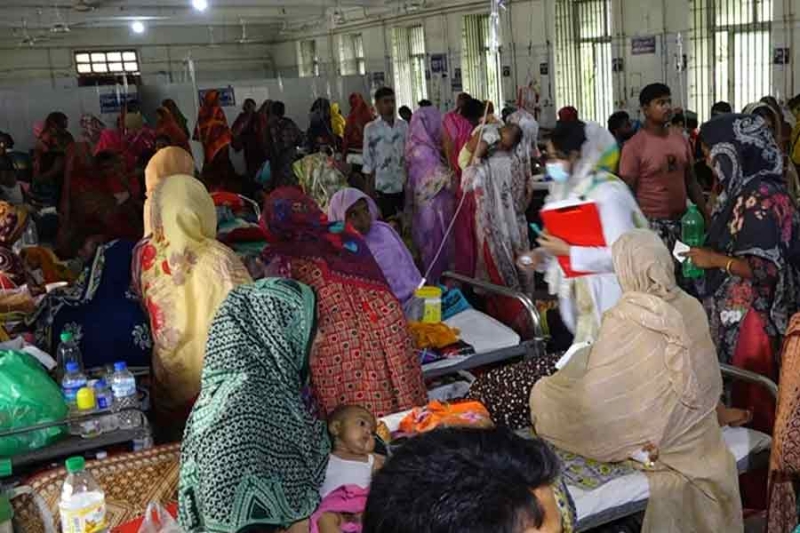
Bangladesh is facing a heightened threat from measles, with the World Health Organization (WHO) classifying the country as “high risk” amid a surge in infections and mounting public health concerns.
In a report released on Thursday, the global health body said sustained transmission of the highly contagious disease across multiple divisions has raised alarm, particularly due to the growing number of vulnerable children. The assessment followed a notification from Bangladesh’s National IHR Focal Point on April 4, which flagged a sharp increase in measles cases driven by ongoing domestic spread.
According to WHO, several factors are fuelling the current situation. These include widespread immunity gaps, a large population of unprotected children, and reports of suspected measles-related deaths. The agency noted that many of those infected had either not received any measles vaccine or had only been given a single dose, leaving them inadequately protected.
The report also pointed to systemic challenges that have weakened the country’s immunisation shield in recent years. A nationwide shortage of the measles-rubella (MR) vaccine between 2024 and 2025, coupled with disruptions in routine immunisation services, has significantly increased the number of susceptible শিশু. The absence of regular nationwide supplementary MR vaccination campaigns since 2020 has further compounded the problem, allowing immunity gaps to widen.
Health experts warn that measles, though preventable through vaccination, can spread rapidly in densely populated areas and among under-immunised communities. Children are particularly at risk of severe complications, including pneumonia, encephalitis, and death.
Data from mid-March to Thursday paints a grim picture. At least 39 people have died from laboratory-confirmed measles infections across the country, with children accounting for nearly all fatalities. The Dhaka Division has recorded the highest number of confirmed deaths at 25.
The broader toll is even more concerning. A total of 194 deaths have been reported among individuals showing symptoms consistent with measles, though not all have been laboratory confirmed. Of these, 90 occurred in the Dhaka Division and 66 in the Rajshahi Division, indicating widespread impact beyond a single region.
WHO has urged the government to take immediate and coordinated action to contain the outbreak. Key recommendations include strengthening routine immunisation, ensuring an uninterrupted supply of vaccines, and launching nationwide supplementary vaccination campaigns to reach missed children.
The agency also emphasised the importance of enhanced surveillance, rapid case detection, and community awareness to curb further transmission. Without swift intervention, health officials warn that the outbreak could intensify, putting thousands more children at risk.
Public health authorities in Bangladesh are now under pressure to close the immunisation gap and restore confidence in vaccination programmes, seen as the most effective defence against the resurgence of measles.