

- Stocks surge at DSE, CSE for second straight day |
- REHAB seeks Tk 3000 crore special fund support housing sector |
- Trump, Putin discuss Iran conflict, Ukraine settlement in phone call |
- US Launches ‘Most Intense’ Strikes as Iran Vows Response |
- Family Card Scheme to Cover 4 Crore Families in 5 Years |
Drought deepens irrigation crisis in Sunamganj’s haor belt
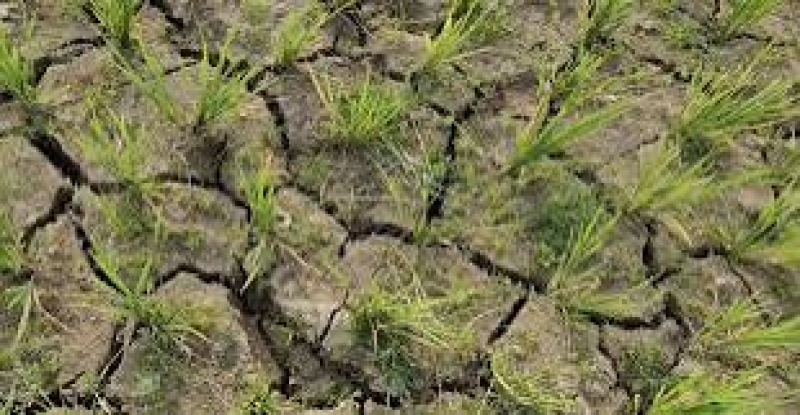
A prolonged dry spell has created a severe water crisis in the haor areas of Sunamganj, leaving Boro farmers worried about their crops and livelihoods.
With almost no rainfall in the region for nearly five months, croplands across several haors are facing an acute shortage of water, severely affecting Boro paddy cultivation this season.
Farmers said the lack of irrigation water has already begun to damage many paddy fields.
In some areas, plants are drying up due to drought while in others they are being attacked by insects and diseases.
If the situation continues, farmers fear that overall production may drop significantly, they said.
Most haor areas in the district depend heavily on natural water reservoirs and rainfall for irrigation.
But this year’s prolonged dry weather has left many fields without sufficient water.
Local farmers also alleged that some water bodies have been drained prematurely by unscrupulous people.
They said the absence of effective government initiatives to address the water shortage has added to their anxiety, with many fearing financial losses if the drought continues.
During a visit to Khushdar haor in Sunamganj Sadar upazila, UNB correspondent found large stretches of farmland suffering from severe water scarcity.
In some upstream areas of the haor, the soil has cracked due to drought. With no alternative irrigation system in place, farmers are anxiously looking to the sky hoping for rain.
Nazir Ali, a farmer from the Baraghat area, said he cultivated Boro rice on six khanis of land this season but the lack of water has put his crop at risk.
“The soil has cracked and the rice plants are turning reddish and drying up,” said the 50-year-old farmer. “I thought it would rain, but there has been no rainfall for a long time. If rain does not come soon, we will face heavy losses. Many farmers like me in the haor areas are in the same situation.”
According to the Department of Agricultural Extension (DAE), the target for Boro cultivation this season in the 12 upazilas of Sunamganj was 223,505 hectares of land.
In fact, slightly more land than the target has been brought under cultivation.
The production target was set at around 1.4 million tonnes of paddy.
However, officials now fear that the ongoing drought could negatively affect production.
Omar Faruk, deputy director of the Sunamganj DAE, said the current situation is unusual compared to previous years.
“This year we have not seen rainfall during the Boro season,” he said. “There is an irrigation crisis in many haors and paddy plants are being affected by drought. If the situation continues, there is also a risk of increased insect attacks.”
He, however, expressed hope that rainfall may occur later this week.
“If it rains, the croplands may recover and the situation could improve,” he added.
The prolonged dry spell has also affected other aspects of rural life in the haor region.
With fields and canals drying up, grass is not growing properly, leading to a shortage of fodder for cattle.
As a result, many cattle owners are also struggling, adding to the growing concerns of rural communities across the haor belt, reports UNB.