

- Global trade reaches record $35 trillion despite conflicts |
- Attack on Riyadh airport kills 12, injures over 300: Saudi |
- Dhaka ranks 6th most polluted city |
- El Niño Could Threaten 347 Million Children Worldwide |
- PM Assures Support for Waste-to-Fuel Technology |
Bangladesh to Shift Fiscal Year to April-March From 2028
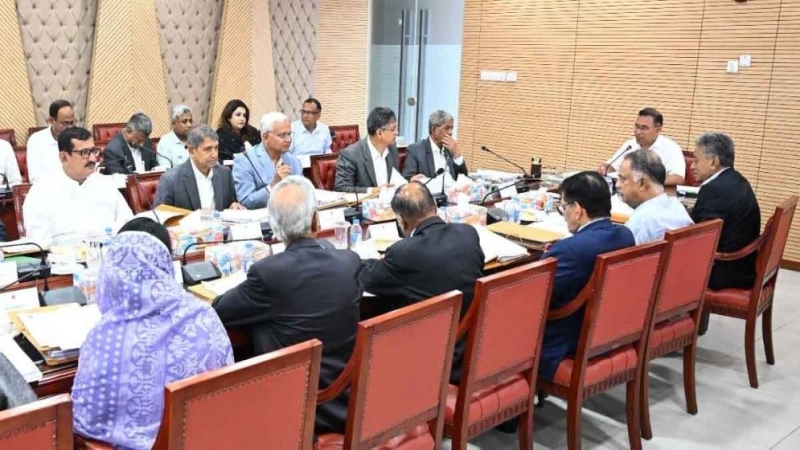
The government has decided to shift Bangladesh's fiscal year from the current July-June cycle to April-March, aiming to reduce delays in development projects and address quality concerns linked to monsoon-season construction.
The proposal was approved at a Cabinet committee meeting chaired by Prime Minister Tarique Rahman at his office on Sunday, according to a statement from the Prime Minister's Press Wing.
Under the new arrangement, the fiscal year will run from April 1 to March 31.
The 2027-28 fiscal year will be a transitional nine-month period, running from July 2027 to March 2028. The new April-March cycle will come into effect from FY2028-29.
According to the Finance Division's proposal, Bangladesh's existing July-June fiscal cycle often leaves a significant portion of Annual Development Programme projects unfinished toward the end of the financial year, particularly during the July-August monsoon.
Heavy rainfall can delay construction, affect project quality and cause public hardship. The government believes shifting the fiscal year will create greater scope to complete infrastructure work before the monsoon begins.
The reform will involve more than changing the budget calendar. Major technological adjustments will be required in government financial management systems, while amendments to the Constitution and the General Clauses Act, 1897 will also be necessary.
A committee comprising representatives from the Cabinet Division, Bangladesh Bank, National Board of Revenue, Legislative and Parliamentary Affairs Division and Finance Division, among other stakeholders, will be formed to oversee the legal, administrative and technical preparations.
The proposal to change the fiscal year has been discussed for years. Critics of the existing July-June cycle have pointed to pressure on government agencies to accelerate spending and development work near the end of the financial year.
In June, Opposition Leader Dr Shafiqur Rahman also proposed changing the fiscal year, suggesting a January-December cycle instead. He argued that implementing large portions of the ADP during the monsoon and periods of natural disasters could increase the risk of irregularities and wastage.
India and several other countries currently follow an April-March fiscal year.
The change is also expected to affect revenue collection and government spending. In the first 11 months of FY2025-26, the NBR collected Tk360,642 crore, leaving a shortfall of Tk81,442 crore against its revised target.
The FY2026-27 national budget has been set at Tk9.38 lakh crore.
If implemented, the new fiscal calendar will bring significant changes to budget preparation, revenue collection, government expenditure, banking operations, accounting and development project implementation.
The government plans to introduce the changes gradually through the nine-month transitional fiscal year.