

- US Proposes New Tariffs on Bangladesh, 13 Other Economies |
- India Reviewing Bangladesh’s Request to Extradite Hasina |
- Adani's 800MW Power Unit to Remain Shut for 25 Days |
- Dhaka Ranks 6th Among World's Most Polluted Cities on Wednesday |
- RMG Workers' Minimum Wage Raised 36% to Tk 17,000 |
US Proposes New Tariffs on Bangladesh, 13 Other Economies
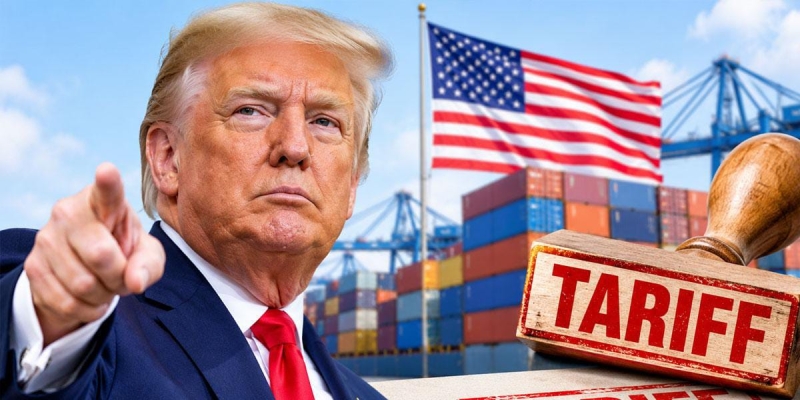
The United States has proposed imposing additional tariffs on 14 major trading partners, including Bangladesh, following investigations into what its administration describes as structural excess capacity and production imbalances in manufacturing sectors.
The proposed measures cover economies across Asia and Europe and were announced following investigations under Section 301 of the US Trade Act of 1974.
According to the Office of the United States Trade Representative (USTR), the proposed tariff rates vary by economy and product, with exemptions and adjustments applying to certain goods.
For Bangladesh, the USTR has proposed considering additional tariffs of up to 18% on goods imported from the country, net of existing Section 301 tariffs. The proposal also takes into account other existing US duties, ongoing consultations and relevant commitments under the bilateral reciprocal trade agreement.
China faces proposed additional tariffs of up to 20% on certain goods, while Vietnam could face duties of up to 35%. The proposals for other economies also vary according to the terms outlined by the USTR.
The 14 economies covered by the latest determinations are China, the European Union, Singapore, Switzerland, Indonesia, Malaysia, Cambodia, Thailand, South Korea, Vietnam, Taiwan, Bangladesh, Japan and India.
However, the investigations initially covered 16 economies. Mexico and Norway were not included in the latest determinations.
The USTR said on November 25 that it had determined that certain policies and practices in the 14 economies relating to excess manufacturing capacity and production were unreasonable and burdened or restricted US commerce.
The investigations were initiated on March 11, 2026. The US administration alleged that industrial policies, government subsidies, production incentives and export-oriented manufacturing in the economies concerned contributed to excess production and increased competition for American manufacturers.
For Bangladesh, the USTR cited industrial development plans, production incentives, labour protections, financial policies and the country's role in global manufacturing supply chains. It identified sectors including textiles, apparel, footwear, shipbuilding, cement and information and communications technology.
Public Consultation Before Implementation
The Trump administration is using Section 301 of the Trade Act of 1974 as the legal basis for the proposed measures.
The provision allows the US government to investigate foreign trade policies and practices it considers unjustifiable, unreasonable or discriminatory and that burden or restrict US commerce. It also allows Washington to take responsive action following an investigation.
The proposed tariffs will not take effect immediately. The USTR has opened a public consultation process and invited interested parties to submit written comments and requests to participate in hearings.
Written comments and requests to appear at the hearings are due by January 5, 2027. Public hearings on the proposed measures are scheduled to begin on January 25, 2027.
The consultation process could delay implementation until January 2027 or later, depending on the outcome and subsequent decisions.
The latest move comes after the US Supreme Court struck down some of President Donald Trump's earlier broad-based tariff measures, prompting the administration to pursue other legal avenues to impose trade restrictions.
The proposed Section 301 measures are therefore another significant development in Washington's trade policy and could have implications for Bangladesh's export-oriented industries, particularly its ready-made garment sector.