

- Govt pursuing zero tolerance against human trafficking, organised crime: Salahuddin |
- PM Seeks Japan’s Help to Build Technology, Innovation Hubs |
- Bangladesh Plans Bonded Warehouse Reforms to Diversify Exports |
- Dhaka ranks 4th among world's most polluted cities this morning |
- Lula re-elected Brazilian president in runoff |
Economy suffering from ‘overregulation’: Khosru
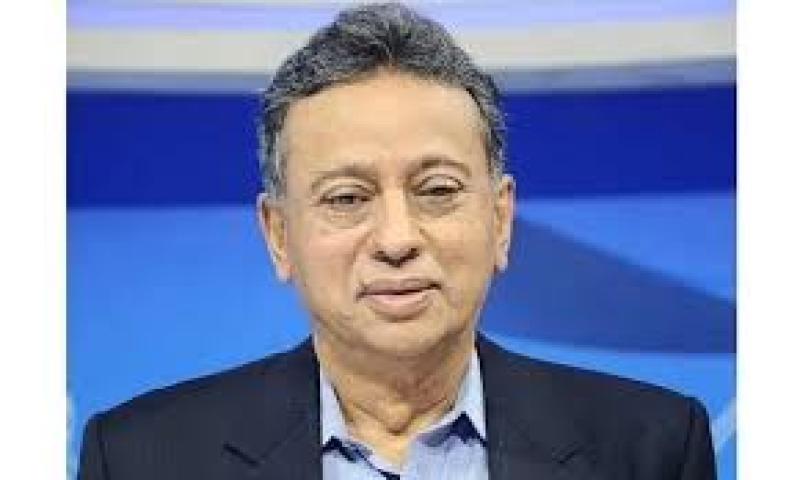
BNP Standing Committee member Amir Khosru Mahmud Chowdhury on Tuesday said Bangladesh’s economy, including its capital market, is currently being stifled by ‘overregulation’ and it must move towards deregulation and liberalisation to recover.
He made the remarks while speaking at a seminar titled ‘Post-Election 2026 Horizon: Economy, Politics, and Capital Market’, organised by BRAC EPL Stock Brokerage at a city hotel.
About the current political climate, Khosru emphasised that the nation is moving towards the 12 February election. "After 16 to 18 years, people will finally have the chance to form a government through their votes, a government that will be compelled to remain accountable to the people."
He said global fund managers and expatriate Bangladeshis are awaiting a fair election and a stable environment before investing in the capital market.
The former minister identified policy distortions as a major hurdle, pointing out that many existing laws conflict with free-market principles. "You either have a market system or you don't; you cannot have both simultaneously. To instill confidence in the market, it must be allowed to function independently," Khosru added.
Over the past 18 months, the BNP leader said, the economy has been trapped in a ‘low-level equilibrium’.
To break this cycle, he called for market-driven policies on exchange rates, the capital market and trade.
Khosru highlighted the stark disparity in market capitalisation, noting that while Bangladesh's market-cap-to-GDP ratio is below 10 per cent, it is nearly 60 per cent in India and 40 per cent in Pakistan.
The BNP leader, also a former commerce minister, said the capital market has been dysfunctional for over a decade.
This dysfunction, he argued, has forced a reliance on banks, creating a mismatch where banks use short-term deposits for long-term lending.
Khosru alleged that arbitrary loans were taken from banks, with a significant portion laundered abroad, devastating the financial sector.
He criticised the current trend of borrowing from the IMF with stringent conditions for large projects such as railway or aircraft purchases.
Amir Khosru suggested that government agencies, municipalities, or the railways could issue municipal or sovereign bonds instead of relying on foreign loans.
He claimed that institutions such as JP Morgan might be interested in Bangladeshi bonds if a transparent environment is established.
Khosru also highlighted that non-performing loans (NPLs) in the banking sector have officially reached nearly 36 per cent, warning that the actual figure could exceed 40 per cent if ‘window dressing’ (artificial accounting) were eliminated.
He called for a thorough cleansing of ‘garbage accounts’, stressing that concealing losses only deepens the crisis. "If the situation is bad, show it as bad. Investors' confidence will return only when they see a credible and transparent balance sheet."
When asked about his party’s plans for the first 100 days if elected, Khosru said they would prioritise listing both high-quality private and state-owned enterprises on the stock market.
He emphasised, however, that government agencies must first be allowed to operate independently and transparently. "If we come to power, we will liberalise regulations and ensure accountability. We want the market to run like a market."
Dr MA Razzaq, economist and chairman of think tank RAPID, gave a presentation on the topic.
The event also featured M Saifuddin CFA, Commissioner of BSEC; Mashrur Arefin, CEO of City Bank and Chairman of the Association of Banks Bangladesh (ABB); foreign investors Mattias Martinson, Chief Investment Officer of Tundra Fonder AB, and Takao Hiros, Managing Director of Contextual Investment LLC, Japan; Gordon Fraser, MD of BlackRock; and Ahsanur Rahman, CEO of BRAC EPL Stock Brokerage. Saiful Islam, Director of BRAC EPL Stock Brokerage, moderated the event, reports UNB.