

- Japan views Bangladesh as key dev partner: Jamaat Ameer |
- Credit cards emerge as a financial lifeline for middle-class |
- Call for a radical shift to solar, LNG to overcome energy crisis |
- Measles Death Toll in Children Surpasses 350 |
- Global Eid on Same Day ‘Not Practical’: Mufti Malek |
Govt Plans 10,000MW Renewable Energy Expansion
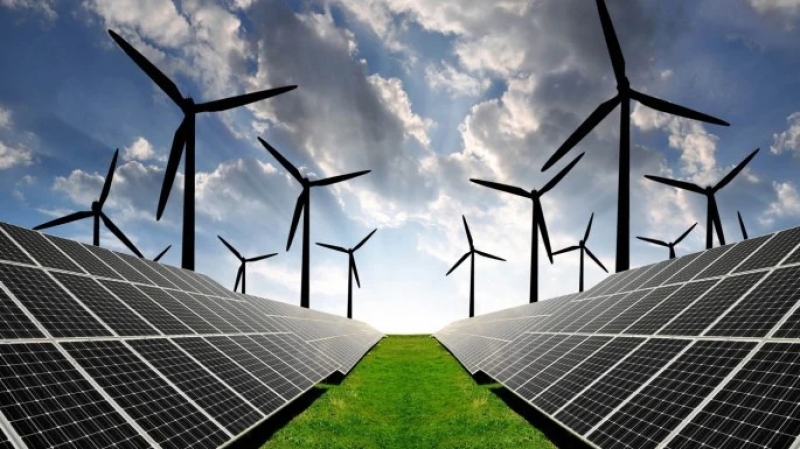
The government has decided to expand renewable energy generation by using public land, including areas within educational institutions and hospitals, while opening the sector further to private investment amid ongoing global energy challenges.
A committee has been formed to implement the initiative, with work expected to begin soon after final approval. Authorities may revise existing energy policies or introduce new legislation to speed up execution.
Cabinet Secretary Nasimul Ghani announced the decision at a press briefing at the Secretariat on Thursday night (16 April), following a cabinet meeting chaired by Prime Minister Tarique Rahman.
He said the plan involves a large-scale programme to generate renewable energy using state-owned land, with participation from private investors. The target is to produce 10,000 megawatts of solar power by 2030.
The proposal also includes expanding biogas and wind energy projects. Preliminary estimates suggest generation costs could range between Tk4 and Tk8 per unit.
On policy reform, Ghani said the focus is on simplifying regulations to create a more investment-friendly environment. Authorities are reviewing the use of government land, particularly around educational institutions and hospitals, for both small and large-scale energy projects.
He added that earlier solar initiatives did not deliver expected results, prompting a reassessment of planning and implementation models.
Regarding recent energy supply pressures, he said the government is working to stabilise distribution, though market volatility and business practices have contributed to challenges in the sector.
The cabinet also discussed expanding private sector participation in large power projects, supported by measures to improve the overall investment climate.