

- Rooppur Unit-1 Gets Approval for First Nuclear Reaction |
- DP World to Operate Chattogram Port NCT for 15 Years |
- Anne Carson Wins 2026 Nobel Prize in Literature |
- Workers Helping Feed the World but Starved of Dignity |
- They feed the world, but food workers are Earth’s most exploited |
Zero Tariff on Solar Imports Boosts Green Energy
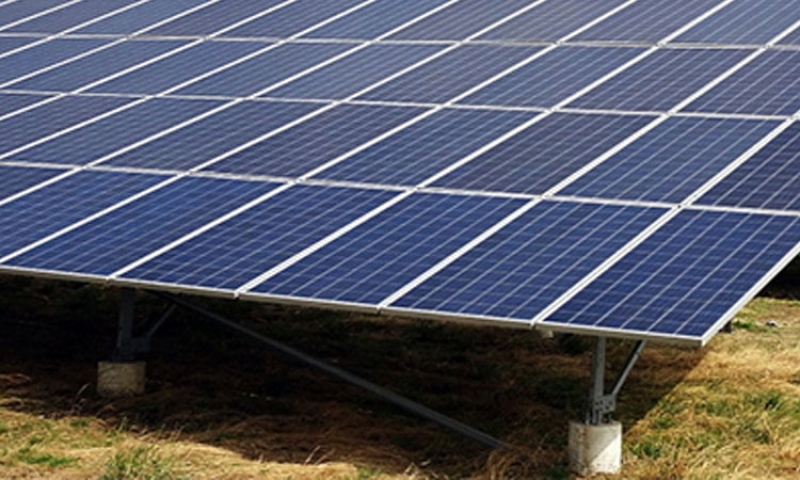
Bangladesh’s proposed budget for fiscal year 2026–27 has introduced a major policy shift aimed at accelerating renewable energy development, with a zero-percent tariff proposed on the import of solar equipment.
The move is being widely viewed as a significant step toward reducing dependence on fossil fuels, strengthening energy security and promoting environmentally sustainable power generation.
The government has identified renewable energy as a key pillar of its long-term energy strategy as it seeks to reduce reliance on imported fuels and lower exposure to global energy price volatility.
Currently, more than 40 percent of the country’s power generation capacity depends on natural gas. However, declining domestic gas production has forced Bangladesh to increase imports of liquefied natural gas (LNG), while rising costs of coal and fuel oil continue to put pressure on the energy sector.
In the proposed budget, the government reaffirmed its target of meeting 20 percent of the country’s electricity demand from renewable energy by 2030, with longer-term plans to raise the share to 30–50 percent by 2050.
As part of this strategy, Bangladesh aims to generate around 10,000 megawatts of electricity from solar power by 2030.
Industry stakeholders say high equipment costs remain one of the biggest barriers to solar expansion.
Most solar components—including panels, inverters, battery systems, charge controllers and mounting structures—are imported. Due to tariffs, VAT and other taxes, the total tax burden on these products can reach as high as 67 percent, significantly increasing project costs.
The proposed zero tariff on solar equipment imports until 2035 is expected to substantially lower installation costs and encourage broader adoption of solar power across households, businesses and industries.
The budget also proposes a five-percent tax rebate for consumers paying solar electricity bills, further increasing incentives for clean energy adoption.
Experts believe the new policy could unlock stronger private-sector investment and accelerate solar deployment in rooftop, industrial, agricultural and commercial sectors.
Lower installation costs are also expected to benefit households seeking alternatives to rising electricity costs and supply disruptions.
Renewable energy projects have already shown encouraging results across the country.
Small-scale solar systems are increasingly being used in homes, mosques, farms and rural businesses, demonstrating the growing viability of decentralized clean energy solutions.
According to the Sustainable and Renewable Energy Development Authority (SREDA), Bangladesh currently generates about 1,805 megawatts of electricity from renewable sources, of which solar contributes around 1,512 megawatts.
Despite this progress, renewable energy still accounts for a relatively small share of total power generation.
Energy analysts say the tax reduction could also help stimulate domestic manufacturing of solar panels, batteries, inverters and related equipment.
A stronger local manufacturing base could create jobs for engineers, technicians, installers and factory workers while encouraging technology transfer and industrial growth.
Beyond energy security, wider solar adoption could also ease pressure on foreign currency reserves by reducing imports of LNG, coal and other fuels.
However, industry leaders say broader policy support will be necessary to fully unlock the sector’s potential.
They argue that alongside tax incentives, the government should ensure easier financing, faster project approvals, expanded net metering and stronger support for domestic manufacturing.
Energy experts believe that with sustained policy backing, Bangladesh could significantly accelerate its renewable energy transition in the coming years and build a cleaner, more resilient power sector.