

- PM off to New York to attend UNGA |
- 8 Killed in Ashulia Garment Factory Fire |
- Apratim Murder Suspects Confessed, Says Home Minister |
- Dhaka's air decorded unhealthy for sensitive groups Sunday morning |
- Meet Earth’s newest wild cat species, the first named in over a century |
Colombia Faces Legal, Political Battles Over Amazon Oil Expansion
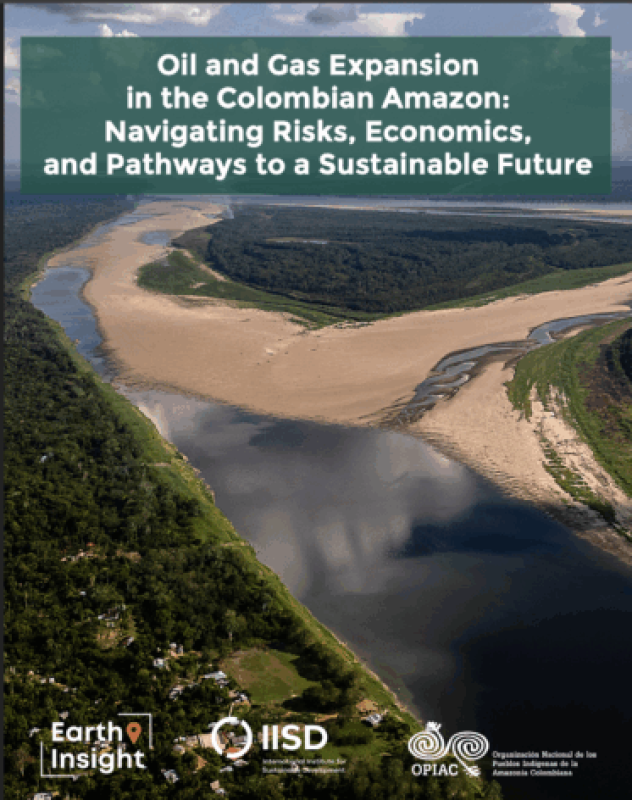
A report ‘Oil and Gas Expansion in the Colombian Amazon: Navigating Risks, Economics, and Pathways to a Sustainable Future, warns oil and gas projects threaten over 483,000 km² of Colombian Amazon forest, home to more than 70 indigenous groups, and risk becoming stranded assets as global fossil fuel demand declines.
A report warns that Colombia’s push to expand oil and gas exploration in the Amazon risks undermining environmental goals, Indigenous rights, and long-term economic stability, unless the government pivots toward sustainable development pathways.
The study, Oil and Gas Expansion in the Colombian Amazon: Navigating Risks, Economics, and Pathways to a Sustainable Future, highlights the stakes for one of the planet’s most biodiverse and climate-critical regions.
Colombia’s Amazon, covering nearly one-third of the country, is not only a biodiversity hotspot but also home to hundreds of Indigenous communities and vast carbon-storing forests. Beneath its soils lie oil and gas reserves that the government and industry see as potential drivers of energy security and economic growth.
According to the report, released by Earth Insight, the International Institute of Sustainable Development (IISD), and the National Organisation of Indigenous Peoples of the Colombian Amazon (OPIAC), the government has signaled openness to further exploration and production in the Amazon, despite public commitments to environmental protection and global decarbonisation efforts.
“The Colombian Amazon is at a crossroads. Decisions in the coming years will either lock in fossil fuel dependency and ecosystem degradation or open the door to a sustainable, diversified economy,” the report reads.
Oil and gas operations could trigger cascading ecological consequences: roads and seismic lines fragment forests, drilling risks oil spills, and increased human access accelerates deforestation and wildlife loss. “Infrastructure associated with oil and gas projects tends to create long-lasting environmental footprints beyond the drilling sites themselves,” the authors note.
The Amazon already faces threats from illegal mining, logging, and agricultural expansion. Industrial petroleum activity could push ecosystems toward tipping points, including irreversible changes to forest cover and carbon balance.
Ignacio Arroniz Velasco, Senior Associate for Nature & Climate Diplomacy at Earth Insight, said preserving 80 percent of the Amazon by 2025 is still possible with urgent measures to safeguard intact areas and restore degraded land.
While proponents argue oil and gas projects could generate royalties, jobs, and infrastructure, the report questions whether these benefits outweigh long-term costs. “Global demand for fossil fuels is projected to decline as the world moves toward net-zero emissions. New investments risk becoming stranded assets,” it warns.
Pablo Jamioy from OPIAC emphasised that enforcing environmental protections amid armed groups and illegal economies requires a comprehensive, long-term strategy that empowers Amazonian communities and respects Indigenous rights.
The report also highlights governance gaps, including weak enforcement of safeguards, lack of transparent data, and inadequate coordination between agencies. It proposes alternatives such as expanding renewable energy, investing in sustainable forest economies, and strengthening land tenure for Indigenous and rural communities.
International donors, including Norway, Germany, and the UK, as well as initiatives like the Amazon Fund, are encouraged to condition future support on clear progress toward phasing out high-risk extractive activities.
Industry representatives argue modern drilling can minimise environmental harm and that oil and gas revenues are essential for national development. Environmental advocates counter that long-term prosperity depends on avoiding extractive boom-and-bust cycles and protecting natural capital.
The report predicts intensified legal, political, and grassroots battles over new oil and gas blocks in the Colombian Amazon in the coming years.