

- Bangladesh Begins 18,000-Foot Gas Drilling in Brahmanbaria |
- Trump Pauses Hormuz Escort Mission Amid Deal Hopes |
- India's Interlinking of Rivers: An idea delinked from realities |
- Explosion at China fireworks factory kills 26 people |
- ‘US military adventurism’ responsible for new attacks on UAE |
India Turns Cow Dung Biogas Into Energy Alternative
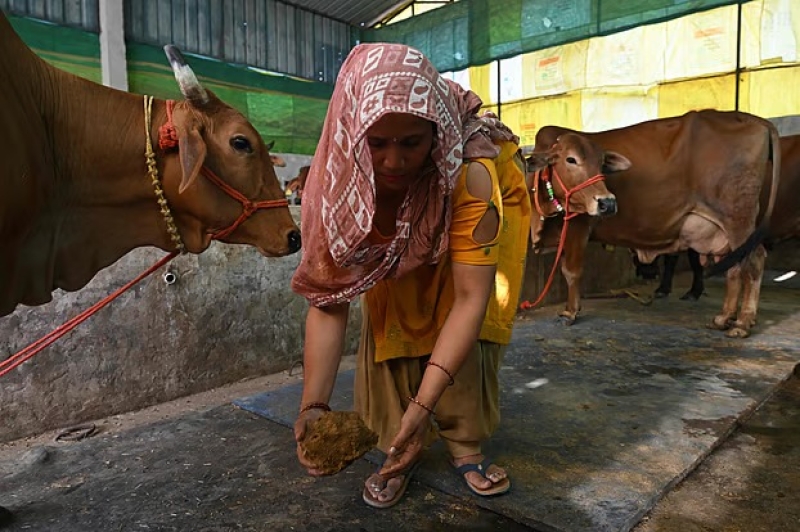
Across large parts of India, an energy shortage linked to the Iran conflict has led to long queues for cooking gas cylinders. But for Gauri Devi, that is not a concern.
In her courtyard kitchen in Nekpur village in Uttar Pradesh, about 90 kilometres from New Delhi, she cooks over a steady blue flame powered by biogas made from cow dung.
“It cooks everything,” said the 25-year-old. “If the pressure drops, we let it rest for half an hour and it works again.”
India consumes over 30 million tonnes of liquefied petroleum gas (LPG) every year, importing more than half of its requirement. While authorities say there is no official shortage, supply delays, panic buying, and black market activity have led to long queues for cylinders in several areas.
At the same time, India has been promoting biogas since the 1980s as a low-cost rural energy solution. More than five million household digesters have been installed, converting farm waste into methane for cooking and producing nutrient-rich slurry for fertiliser.
Gauri’s system works by mixing cow dung with water and feeding it into an underground tank. The gas produced is stored in a balloon-like chamber and piped directly to her stove.
It is reliable enough that she only uses LPG cylinders during emergencies or large gatherings. “We cook vegetables, tea, lentils, everything with it,” she said.
Farmers also benefit from the leftover slurry, which is used as fertiliser. They say it improves soil quality and reduces dependence on costly chemical alternatives, especially during global supply disruptions.
“The real benefit is not just gas, it is the slurry,” said farmer leader Pritam Singh. “It is like black gold.”
With nearly half of India’s 1.4 billion people engaged in farming and one of the world’s largest cattle populations, biogas is being seen as a practical rural energy option. The government has set targets to increase its share in the energy mix, including for transport and household use.
Large industrial plants are being developed, while smaller household units, often heavily subsidised, cost around 25,000–30,000 rupees.
However, adoption still faces challenges. Experts say biogas systems require proper installation, maintenance, and space, making LPG more convenient for many households.
“Biogas plants are like mini factories,” said A.R. Shukla, president of the Indian Biogas Association. “Without organised support, most households will treat it as a secondary option.”
In rural areas, interest is growing, especially amid recent fuel shortages. But for many, access remains difficult.
“We work all day on others’ farms. We don’t have land for this,” said labourer Ramesh Kumar Singh, standing in a long queue for LPG cylinders.
Others share similar frustrations as supply shortages continue to affect daily life, pushing more families to explore alternative energy sources like biogas.