
- Bangladesh Condemns Israeli Settlement Plan in West Bank |
- Remittance inflow rises 13.1pc in March-Aug |
- Bangladesh Has No Scope to Join BRICS Summit: Kabir |
- Dhaka’s air remains unhealthy Thursday morning |
- Williams sisters’ US Open return boosts ESPN viewership |
GEF Council Backs Green Pledges, Flags Barriers
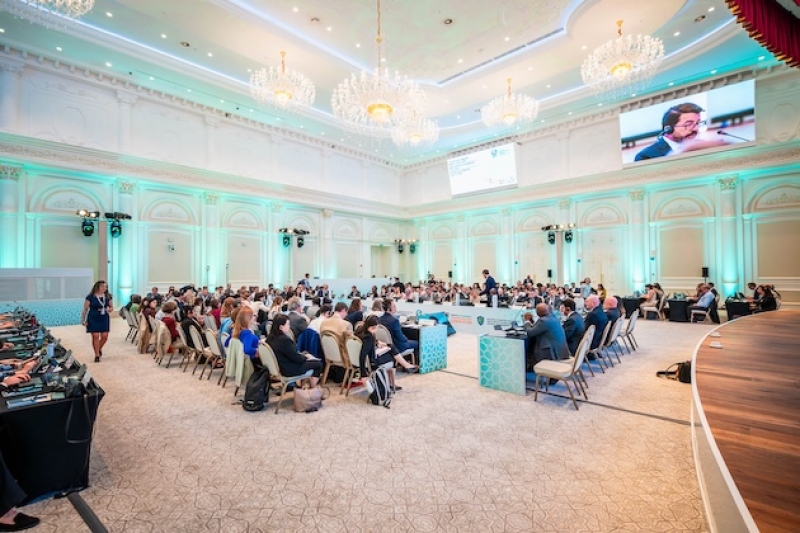
The Eighth Assembly of the Global Environment Facility (GEF) is currently taking place at the Congress Center of Samarkand, Uzbekistan. Nearly 150 country representatives are participating in the week-long assembly and associated meetings.
The 71st Council meeting of the Global Environment Facility (GEF) opened today amid a sharp divide, with donor nations urging broader and increased funding commitments while developing countries called for more equitable and accessible pathways to environmental finance.
In April, donor countries pledged an initial USD 3.9 billion to the GEF Trust Fund’s ninth replenishment cycle (GEF-9), which will support environmental projects worldwide from 2026 to 2030.
Government officials, development banks, philanthropies, and civil society groups welcomed the pledges and highlighted the GEF’s “whole-of-society” approach, aimed at involving governments, communities, businesses, and civil society organisations. However, discussions at the meeting ahead of the Assembly also reflected a growing challenge: environmental crises are becoming more urgent even as international aid budgets continue to shrink.
Developing countries repeatedly raised concerns over whether funding is reaching those who need it most and whether access to it remains fair.
Aziz Abdukhakimov, Adviser to the President of Uzbekistan on Environment and Chairman of the National Committee on Ecology and Climate Change, highlighted the urgency of collective action.
“We meet in Samarkand at a moment when the triple planetary crisis is becoming increasingly visible across all regions of the world. At the same time, the window for achieving our global environmental commitments is rapidly narrowing. This is why the role of the GEF is more important than ever,” he said.
Opening the Assembly, GEF Interim Chief Executive Officer Claude Gascon said GEF-9 is designed to “unlock major investments” through stronger cooperation among government agencies while continuing support for least developed countries (LDCs) and small island developing states (SIDS).
“The resources must reach countries more efficiently, where the impacts are greatest,” Gascon said, referring to reforms aimed at simplifying procedures and improving accountability.
According to the GEF Secretariat, its projects are already delivering large-scale environmental benefits. GEF blended finance operations have achieved an average co-financing ratio of 18:1, meaning every dollar invested by GEF has attracted significantly more funding from public and private sources for biodiversity, climate, land restoration, and pollution projects.
A More Inclusive GEF
A key feature of GEF-9 will be integrated programming, based on the understanding that environmental challenges such as climate change, biodiversity loss, and land degradation are interconnected and should be addressed together.
Ninety-eight countries, including 31 least developed countries and 26 small island states, are expected to participate in these programmes between 2026 and 2030.
More than 100 country-level workshops and consultations have already been held to help countries strengthen institutional capacity, align GEF funding with national priorities, and increase participation by women, Indigenous Peoples, local communities, and the private sector.
Donor countries highlighted what they view as progress. Norway welcomed larger allocations for LDCs and SIDS, along with funding targets aimed at directing more resources to countries with the greatest needs.
Representatives of Indigenous Peoples also described the replenishment process as a major step forward.
Speaking on behalf of the GEF Indigenous Peoples Advisory Group (IPAG), Giovanni B. Reyes said Indigenous communities had gained a stronger voice in shaping the new funding cycle.
“For the first time, we were at the table during replenishment discussions. For the first time, our work will be visible in the way it deserves,” Reyes said.
He added that commitments to establish a dedicated Indigenous Peoples policy, create procedures for Indigenous-led projects, and allow Indigenous organisations to become accredited implementing agencies represent meaningful institutional reforms rather than one-time promises.
New Partnerships Announced
Several partnerships were announced during the opening ceremony.
Gascon revealed a partnership with a US-based philanthropic organisation to support biodiversity conservation in Africa through the Africa Protected Areas Initiative.
The World Bank, trustee of the GEF Trust Fund, announced that USD 3.3 billion has already been confirmed for GEF-9.
Maitreyi Das, the World Bank’s Vice Director of Trust Funds and Partner Relations, said additional contributions are expected as donor approval processes continue. For the first time, countries will be able to make pledges throughout the replenishment period rather than only at the beginning.
“This replenishment reflects a shared commitment to advancing an ambitious environmental agenda at a difficult moment for overseas development assistance,” she said.
Developing Countries Seek Fairer Access
Despite the positive announcements, delegates from developing countries said access to climate and environmental finance remains a major challenge.
African representatives described GEF-9 as an important opportunity to address drought, food insecurity, land degradation, and biodiversity loss. However, they warned that available funding remains far below what is needed to meet global climate and biodiversity goals by 2030.
Several African countries cautioned that blended finance and private-sector investment require financial systems and risk-sharing mechanisms that many nations still lack.
“The region therefore calls for stronger grant-based financing, simplified access procedures, and capacity support to ensure equitable participation,” said Baixo Eduardo of Mozambique, representing southern African countries at the Assembly.
Small island states voiced similar concerns, stressing that predictable, adequate, and accessible funding remains essential to achieving environmental and sustainable development goals.
Brazilian delegate Simone Carolina Bauch welcomed commitments to allocate 35 per cent of GEF-9 funding to biodiversity and 20 per cent to Indigenous Peoples and local communities. However, she stressed that countries should remain in control of how projects are designed and implemented.
Representatives from China and India echoed calls for simpler and fairer access to green finance.
Responding to these concerns, Gascon said resources have been allocated for a country engagement strategy to help national focal points better understand funding opportunities and make informed decisions.
He added that further guidance on participation in integrated programmes will be presented to the GEF Council later this year, with formal expressions of interest expected in early 2027.
As discussions continue in Samarkand, the GEF said the window for new contributions to the GEF-9 replenishment will remain open throughout the Assembly, allowing countries to make additional pledges for the 2026–2030 funding cycle.