

- BB earns Tk 25,977 crore net profit in FY26; approves six bonuses |
- Sagar-Runi murder: ICT finds link to cultural figure |
- Tk 3,000cr North Bengal agro-refinance fund interest cut rate to 7% |
- Khulna University team shines in worldwide research competition |
- No more “Aynaghar”, perpetrators to face justice: President Fakhrul |
Mercury Fears Delay Motherhood in Gold Communities
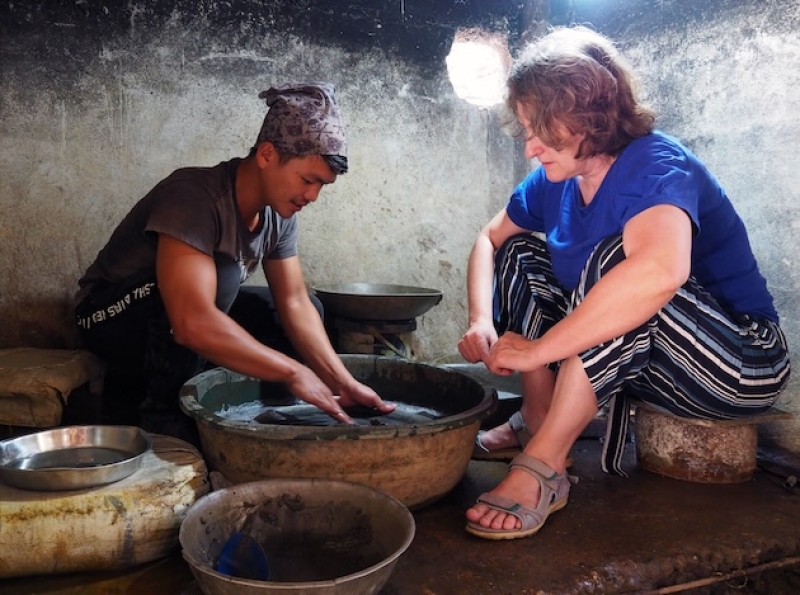
Monika Stankiewicz, Executive Secretary of the Minamata Convention on Mercury, learns how to pan for gold in a free-mercury mine in Baguio, the Philippines, in 2024
Women in artisanal gold mining communities are increasingly delaying motherhood over fears that mercury exposure could harm their unborn children, according to a senior United Nations official who warned of the growing human cost of the global gold rush.
In Tanzania’s northern Geita region, women miners in the Katoro goldfield say they handle toxic mercury with bare hands while extracting gold from crushed ore. Many also carry mercury-gold amalgam home and burn it in kitchens, exposing themselves and their families to hazardous fumes.
For many women in Tanzania’s artisanal mining communities, mercury use remains deeply tied to survival.
Globally, mercury used in artisanal gold mining contaminates rivers, enters fish and spreads through Indigenous food systems, affecting distant communities far from mining sites.
Monika Stankiewicz, Executive Secretary of the Minamata Convention on Mercury, warned this week that mercury pollution linked to artisanal gold mining continues to cause widespread harm, with some women so fearful of its effects that they are postponing pregnancy.
During visits to mining communities in different countries, Stankiewicz said she heard stories exposing the hidden human cost behind the global demand for gold, where poverty often forces families to choose between earning a livelihood and protecting their health.
“I’ve heard women saying they are afraid to get pregnant because they fear their children will be affected by mercury,” Stankiewicz said on the sidelines of the eighth assembly of the Global Environment Facility in Samarkand, Uzbekistan. “So it was really heartbreaking.”
Her account highlights the risks faced by women and children exposed to hazardous mercury in domestic settings, from Tanzania to Brazil’s Amazon, despite well-documented dangers to human health and ecosystems.
Mercury pollution linked to artisanal and small-scale gold mining remains one of the world’s largest sources of human-generated mercury emissions. In Tanzania, where roughly 1.2 million artisanal miners depend on gold for income, mercury remains widely used because it is cheap, accessible and effective at recovering gold.
Mercury attacks the central nervous system and can cause neurological damage, memory loss, tremors and respiratory illness from inhaling vapour, according to Stankiewicz. Exposure may also affect reproductive health and harm children’s developing nervous systems.
Children are especially vulnerable.
“Even low levels can affect brain development, learning, memory and motor skills,” she said.
Stankiewicz cited the example of Minamata disease in Japan, where high mercury exposure, particularly during pregnancy, caused severe and permanent neurological damage in children.
In many artisanal mining communities, women process ore, store mercury and supervise the burning of amalgam to prevent theft.
“If they are not processing directly, they are often trusted to store the mercury or watch over the amalgam as it burns to ensure it is not stolen,” Stankiewicz said. “They also face heightened risks during pregnancy, as mercury can affect the developing foetus.”
Mercury contamination has also polluted river systems, exposing downstream communities to health risks through contaminated water, fish and agricultural systems.
For families dependent on fishing or farming, contamination can reduce food safety and security, damage ecosystems and cut incomes from natural resources.
Stankiewicz said Indigenous communities in the Arctic continue to experience mercury contamination despite not engaging in artisanal mining, as mercury travels globally through the atmosphere and accumulates in colder ecosystems.
In Brazil, the crisis has taken on another dimension, with organised criminal networks allegedly linked to illegal gold mining, money laundering, illegal mercury supply chains and operations in protected Indigenous areas.
In East Africa, including Tanzania, widespread informality and illicit trade continue to undermine efforts to regulate mercury use.
Stankiewicz stressed that criminalising poverty would not solve the problem, recalling encounters with miners who had stopped using mercury but remained excluded from formal markets and fair gold prices.
“It’s important to work directly with miners and not push them underground, where activities become fully illegal and harder to regulate,” she said.
She urged miners to take immediate precautions, including avoiding the burning of amalgam in homes and residential areas.
“The most immediate and practical advice is for miners to protect themselves from mercury exposure and avoid harmful practices that put their health at risk,” she said.
Stankiewicz believes long-term progress depends on formalising mining operations and expanding access to mercury-free technologies.
The Minamata Convention has increasingly focused on supporting countries to strengthen public health responses, formalise mining and phase out dangerous mercury practices.
Although more countries have adopted national action plans and introduced mercury-free technologies, she warned that lasting improvements would depend on sustained action aligned with realities on the ground.
For many families in Tanzania and Brazil, the dilemma remains unresolved: gold provides income, but mercury carries lasting risks—forcing millions to weigh survival today against the health of future generations.