

- Only tourist police box on Kuakata beach about to disappear into sea |
- High Court Rejects Plea to Suspend Presidential Poll |
- PM calls for broader tax net, people-friendly revenue system |
- Women-only ‘Pink Bus’ service launched in Dhaka |
- Bangladesh to Convey Position to Myanmar Over Rohingya Claims |
Unified Policy Needed to Restore Urban Wetlands: Milton
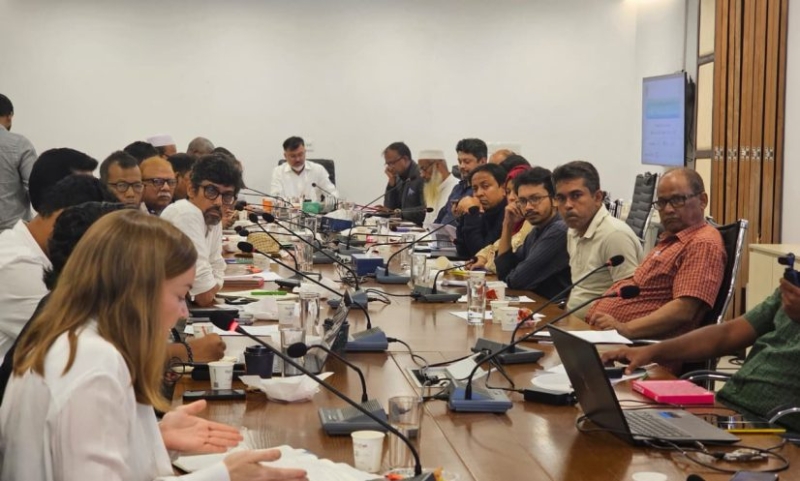
Dhaka North City Corporation (DNCC) Administrator Md Shafiqul Islam Khan Milton has called for a unified, policy-driven approach to restoring urban wetlands, saying a community-led pilot project at Gulshan-Banani Lake could serve as a model for the country.
Speaking at a knowledge-exchange event at the DNCC auditorium, Milton highlighted the achievements and challenges of the ReWET (Climate Impacted Dwellers-Led Agro-ecological Stewardship for Restoring Wetlands) project, a joint initiative of DNCC and River & Delta Research Consultants (RDRC).
The project focuses on restoring the ecological health of Gulshan-Banani Lake through community participation and collaboration with researchers and academics. Similar community-led restoration approaches have been identified as a potential model for wider urban wetland recovery in Bangladesh.
Milton said the project's community-based approach gives it strong potential for success because many local residents depend on the lake for their livelihoods and agricultural activities.
“If implemented correctly and expanded, the ReWET model can stand as an effective model for the entire country in restoring urban wetlands,” he said.
He, however, pointed to a lack of coordination among government agencies, including RAJUK, Dhaka WASA and city corporations, as a major obstacle to implementing such projects.
The DNCC administrator called for stronger coordination at the policy level so that all relevant agencies can work together to ensure the long-term sustainability of wetland restoration efforts.
He also stressed the need for regular water-quality testing to ensure that restoration activities do not pose risks to public health. He called for research into whether activities around the lake could contribute to mosquito-borne diseases such as dengue.
“We must ensure that as we bring nature back to the city, we are also protecting the health of our citizens,” Milton said.
The ReWET project includes community participation, ecological restoration and experimental vegetation platforms designed to create habitats for fish, birds and beneficial insects.
Project officials said further tests are being conducted on heavy metals in the lake’s soil, vegetables grown on floating platforms and fish. The results are expected to be shared with DNCC.
Speakers at the event said the experience of restoring Gulshan-Banani Lake could be scaled up to other urban wetlands if government agencies, private organisations, researchers and local communities work together.
The Gulshan-Banani Lake is part of Dhaka’s wider urban wetland system and faces pressure from pollution, encroachment and rapid urbanisation. Previous research has highlighted the significant ecological, social and economic benefits that could result from restoring the lake.