

- Dhaka's air 5th worst in the world this morning |
- Around 7,500 Bangladeshis imprisoned in Saudi Arabia: Shama Obaed |
- Bangladesh Outperforms India in Global Hunger Index 2026 |
- Covered van hits Gazipur police patrol team, killing SI, BNP leader |
- Korean City scrambles to rescue dusky shark after it returns to canal |
UNAIDS Warns HIV Services Face Crisis Amid Funding Cuts
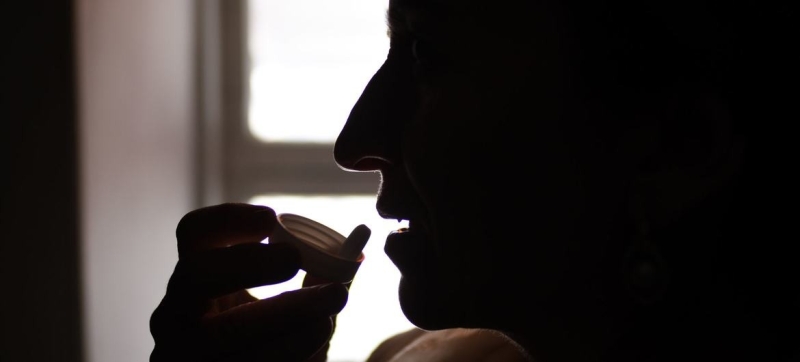
A woman living with HIV takes antiretroviral medication at home in Khatlon, Tajikistan. (file)
Decades of progress in the fight against AIDS are under increasing threat as donor funding declines and community-based health services collapse in some of the world’s most vulnerable countries, the head of the Joint United Nations Programme on HIV/AIDS has warned.
The sharp drop in funding is hitting the global HIV response “like a shock wave,” said Winnie Byanyima, Executive Director of UNAIDS, adding that “the world is pulling back just when we need to push forward.”
She said many countries are not prepared to sustain programmes previously supported by international funding, with prevention and support services already weakening or shutting down in several regions.
According to UNAIDS, 9.3 million people living with HIV are still waiting to begin treatment, while 1.3 million new infections were recorded worldwide in 2024.
‘Real consequences’ on the ground
Byanyima warned that the funding crisis is having “real consequences” in developing countries, where treatment expansion is slowing and community organisations are being forced to scale back or shut down. These groups often form the backbone of HIV prevention and care.
In Uganda, uptake of PrEP (pre-exposure prophylaxis), which can reduce the risk of sexual transmission of HIV by up to 99%, fell by 31% between December 2024 and September 2025. In Burundi, uptake dropped by 64% over the same period.
Even basic prevention tools are becoming less available. In Nigeria, condom distribution fell by 55% between December 2024 and March 2025.
Heavy reliance on external funding
UNAIDS said HIV programmes in several countries remain heavily dependent on external support. In eight countries where the agency operates, 99.9% of HIV prevention services are funded externally, leaving systems highly exposed to sudden aid reductions.
Byanyima said fiscal pressure in heavily affected countries is making the situation worse.
In 2024, around 570 girls and young women were infected with HIV every day. At the same time, 60% of women-led HIV organisations have lost funding or shut down completely.
Services shutting down
Key community services are also being disrupted. In Kenya, most drop-in centres serving key populations, including LGBTQ communities, have closed. Nigeria has lost at least five similar clinics.
In Uganda, 45% of programmes supporting key populations have partially or fully shut down, while in Zimbabwe, services for sex workers, including testing and treatment, have collapsed in 2025.
Science offers hope
Despite the setbacks, Byanyima said scientific advances still offer a path to ending AIDS as a public health threat by 2030.
She pointed to long-acting prevention and treatment options now available, saying these innovations could transform the global response if properly funded.
However, she warned that sudden funding cuts and growing resistance to human rights protections are pushing the world further away from that goal.