

- Ismail Elfath, referee for England-Argentina semifinal |
- BSEC approves liquidation of Vanguard AML BD Finance Mutual Fund One |
- 200 economists for urgent action to tackle AI's impact on jobs, economy |
- PM Launches National Startup Platform for Entrepreneurs |
- HSC Examinees Block Roads, Demand Exam Suspension |
DRC Ebola Outbreak Grows at Record Pace, Warns WHO
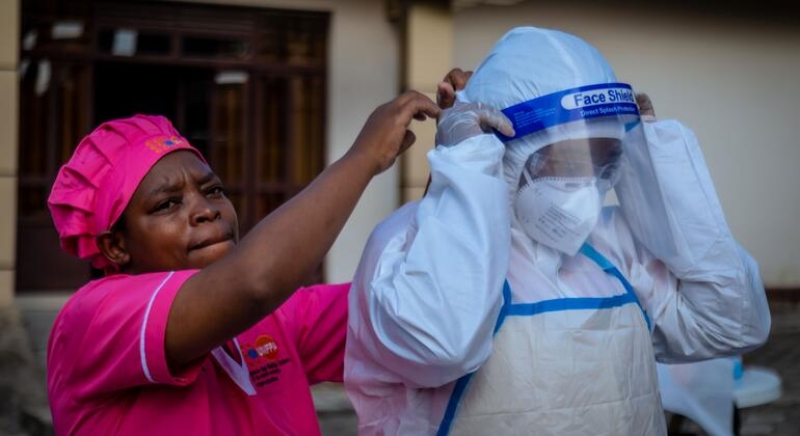
Health workers in North Kivu, eastern DR Congo, prepare to treat patients as the Ebola outbreak continues.
The Democratic Republic of the Congo (DRC) is experiencing the fastest-growing outbreak of the Bundibugyo strain of Ebola ever recorded, with most new infections linked to unknown chains of transmission, the World Health Organization (WHO) warned on Tuesday.
The outbreak has become the third-largest Ebola epidemic on record. As of July 11, nearly 2,000 confirmed cases and more than 700 deaths had been reported across five provinces.
Speaking in Geneva after returning from Bunia in eastern DRC's Ituri Province, the epicentre of the outbreak, Dr. Chikwe Ihekweazu, Executive Director of WHO's Health Emergencies Programme, said the number of infections has risen at an unprecedented pace.
"We've seen the fastest growth in a single month since the outbreak started and across all the Ebola outbreaks that we have managed," he said.
"Over the last few days, we've recorded some of the highest daily infection numbers, including more than 80 confirmed cases within 24 hours," he added.
Unknown Transmission Chains
Dr. Ihekweazu described the growing number of deaths occurring outside health facilities as one of the most alarming developments.
Many victims died in their communities without receiving medical care, increasing the risk of further transmission.
Despite improvements in diagnostics and high rates of contact tracing, around 80 per cent of newly confirmed cases are not linked to known contacts.
"Eighty per cent of new cases are outside our contact lists and are coming from unknown chains of transmission," he said.
Declared nearly two months ago, the outbreak could ultimately be two to four times larger than current official figures, according to WHO modelling.
"You have to imagine that this is a fire," Dr. Ihekweazu said. "Something is driving the fire at its core, and it is expanding at the same time."
Although up to 95 per cent of new infections remain concentrated in Ituri Province, the virus has recently spread to the neighbouring provinces of Haut-Uele and Tshopo.
WHO is pursuing a two-pronged response strategy by intensifying efforts in Ituri while closely monitoring travel routes and identifying areas at risk of new outbreaks.
Dr. Ihekweazu urged the international community not to lose hope despite the rapid spread of the disease, stressing that response efforts are producing results.
"Now is not the time to drop the ball," he said.
Treatment and Community Trust
Several experimental therapies are currently undergoing clinical trials, but there is still no approved treatment specifically for the Bundibugyo strain of Ebola. However, early supportive care significantly improves patients' chances of survival.
"We must find cases earlier and bring patients into care as soon as possible," Dr. Ihekweazu said, noting that early treatment also helps reduce community transmission.
Addressing recent attacks on healthcare workers and medical facilities, he said building trust with local communities remains essential.
Before opening new treatment centres, WHO invites community leaders to visit the facilities, observe the care being provided and speak directly with healthcare workers.
Preventing attacks depends on reassuring communities that patients will receive treatment, food, family access and continued support throughout their care.
Call for Global Action
Dr. Ihekweazu warned of a growing gap between the scale of the Ebola threat and the international response.
"We need the world to come together, not just out of charity or support for the DRC, but in our own enlightened self-interest," he said. "The more we do now, the better prepared we will be for future outbreaks."
He also noted that WHO member states are negotiating the Pathogen Access and Benefit Sharing (PABS) annex under the WHO Pandemic Agreement. The mechanism aims to ensure that genetic information on dangerous pathogens is shared quickly and that vaccines and treatments are made available to developing countries.