

- Ismail Elfath, referee for England-Argentina semifinal |
- BSEC approves liquidation of Vanguard AML BD Finance Mutual Fund One |
- 200 economists for urgent action to tackle AI's impact on jobs, economy |
- PM Launches National Startup Platform for Entrepreneurs |
- HSC Examinees Block Roads, Demand Exam Suspension |
Sajib Wazed Urges UN to Publish List Behind 1,400 July Killings
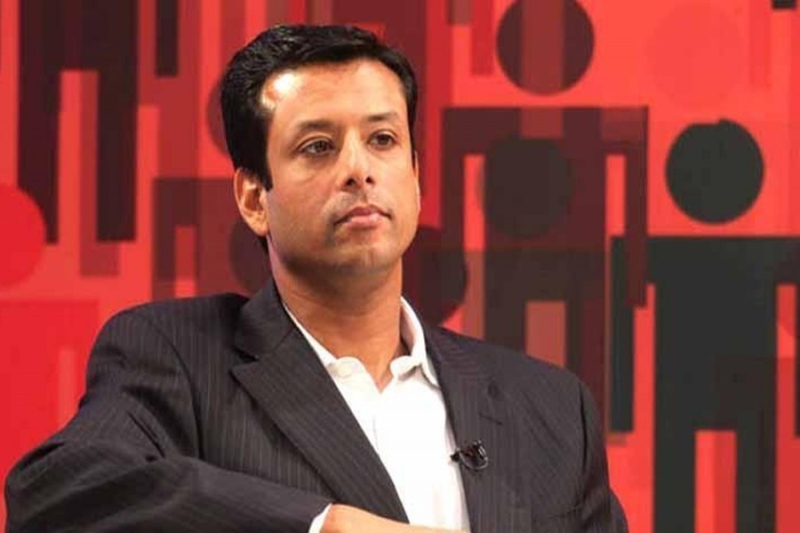
Sajeeb Wazed Joy
The Global Center for Democratic Governance (GCDG), Canada hosted an international seminar entitled "Bangladesh at a Democratic Crossroads: Human Rights, Political Inclusion, and the Future of Democratic Governance" on Monday, 13 July 2026, at the Leonard Wolfson Auditorium, Wolfson College, University of Oxford.
The seminar attracted a full audience at the auditorium. All invited speakers participated in the hybrid event.
The online panel featured Sajeeb Wazed, Former Adviser to the Prime Minister of Bangladesh; Paulo Casaca, Former Member of the European Parliament and Executive Director of the South Asia Democratic Forum, Belgium; Professor Tarun Khaitan, Professor of Public Law and Research Director, LSE Law School, United Kingdom; and Sir Vincent Lyn, Deputy Ambassador and Commissioner, International Human Rights Commission, Switzerland.
The in-person panel comprised Syed Badrul Ahsan, Dr Rayhan Rashid (University of Oxford), Advokat Mona Haghgou Strindberg, Dr Ashfaque Alam (King's College London), and Dr Naila Haq (University of London). The discussion was moderated by Chris Blackburn, Human Rights Activist, United Kingdom. The seminar opened with introductory remarks by Professor Dr Md Habibe Millat, President of the Global Center for Democratic Governance (GCDG), Canada.
In his keynote remarks, Sajeeb Wazed challenged the United Nations to publish the list of the 1,400 alleged killings referred to in its report, arguing that full transparency was essential for credibility and accountability. He further stated that elections conducted without the participation of the country's largest political force could not be regarded as genuinely participatory or broadly acceptable.
Mr Wazed also argued that no government could remain in power indefinitely through exclusion and that no political democratic and popular party Bangladesh Awami League should not be banned. He said that, in his view, the policies pursued by the interim and current governments risk pushing Bangladesh towards greater political instability. He also expressed the view that the majority of political parties in Bangladesh, including many within the BNP, opposed Jamaat-e-Islami.
Dr Naila Haq spoke about the prolonged detention of her father, the former Chief Justice of Bangladesh, and called for his immediate release. She urged the international community to give greater attention to his case and to the broader issue of judicial independence and the rule of law.
Dr Rayhan Rashid called for the withdrawal of the ban on the Bangladesh Awami League, arguing that sustainable democracy requires political inclusion and the participation of all major political parties.
Advocate Mona Haghgou Strindberg called for the release of journalist Shahriar Kabir and others whom she described as having been detained in politically motivated cases.
The seminar concluded with a broad discussion on democratic governance, political inclusion, human rights and the rule of law. Participants emphasised the importance of peaceful dialogue, democratic accountability and inclusive political participation in securing Bangladesh's democratic future. – Press release