

- Nation Votes Tomorrow in 13th Poll, Referendum |
- Key in your hands, use it wisely: Prof Yunus tells voters |
- Yunus Urges Voters to Shape a ‘New Bangladesh’ |
- Bangladesh Polls: Campaign Ends as Voters Weigh Pledges |
- Bangladesh Heads to First Gen Z-Driven Competitive Poll |
Measles Cases in Europe, Central Asia Fall 75% in 2025
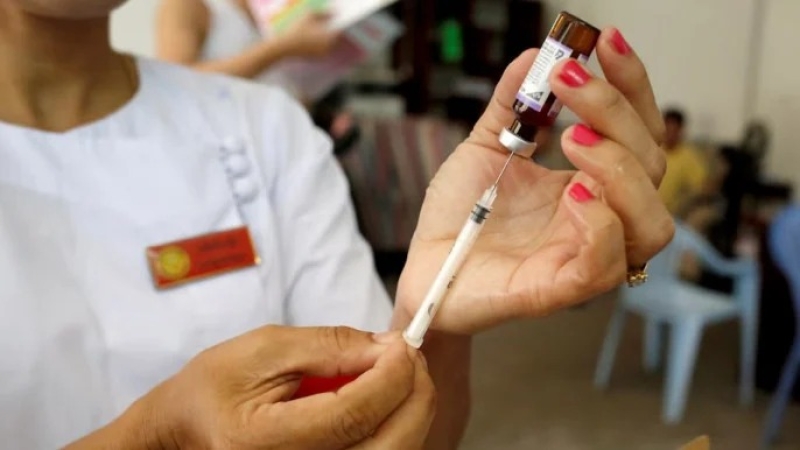
A nurse prepares a measles-rubella vaccine in Yangon, Myanmar, November 26, 2019.
Measles cases across Europe and Central Asia dropped 75% in 2025 compared with the previous year, according to preliminary data from 53 countries in the WHO European Region. However, UNICEF and the World Health Organization (WHO) warned that the risk of new outbreaks remains.
The countries reported 33,998 cases in 2025, down sharply from 127,412 in 2024. Despite this decline, the total was still higher than in most years since 2000, with some countries seeing increases compared with the previous year. Cases have continued to appear in early 2026.
UNICEF Regional Director Regina De Dominicis said stronger routine vaccination and faster outbreak response could prevent many cases. “Until all children are reached with vaccines and misinformation-driven hesitancy is addressed, children remain at risk of death or serious illness,” she said.
In September 2025, the European Regional Verification Commission for Measles and Rubella Elimination reported that the number of countries with ongoing or re-established endemic measles transmission rose from 12 to 19, marking the region’s largest setback in recent years.
WHO Regional Director Hans Henri Kluge said the virus will continue to circulate unless communities achieve 95% vaccination coverage. “Unless immunity gaps across all ages are closed, this highly contagious virus will keep spreading,” he warned.
UNICEF and WHO said they are continuing to work with governments and partners, including Gavi and the European Union, to strengthen immunization programmes, improve surveillance, and enhance outbreak preparedness.