

Monday, September 21, 2026
News update
- 8 Killed in Ashulia Garment Factory Fire |
- Apratim Murder Suspects Confessed, Says Home Minister |
- Dhaka's air decorded unhealthy for sensitive groups Sunday morning |
- Meet Earth’s newest wild cat species, the first named in over a century |
- Bus torched in Mymensingh early Sunday |
Why the Right to Development Is a Human Right
By Daniel Dickinson
Human rights
2026-09-21, 1:25am
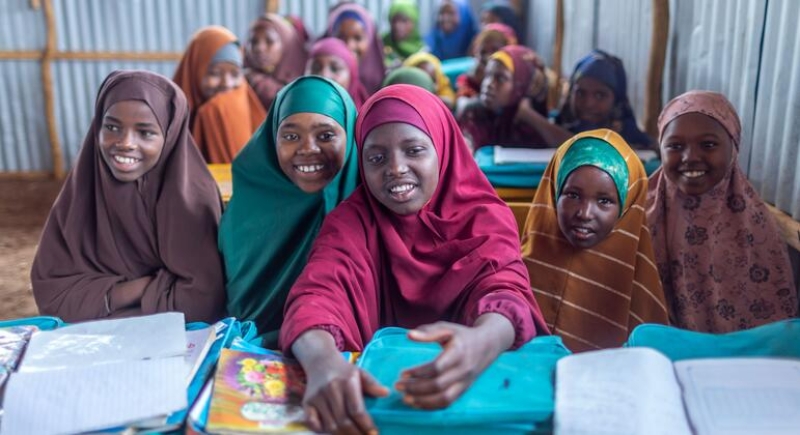
Girls attend a school for displaced children in Baidoa, Somalia.
Consider two children born in the same year: one grows up in a country with functioning schools, social services, fair elections and a dynamic economy, while the other is born in a nation devastated by poverty, conflict, climate change or corruption.
Neither child chose those circumstances. Yet one is likely to live longer, earn more and have a greater say in decisions that shape their life.
The United Nations considers this disparity not simply unfair, but a matter of the right to development.
Since 1986, the UN has recognised development not merely as economic growth, but as a human right belonging to everyone.
The right encompasses economic, social, cultural and political rights and seeks to reduce inequality while creating conditions in which people can participate in and benefit from development.
According to the World Inequality Report 2026, supported by the UN Development Programme (UNDP), the poorest half of the world's population owns just 2 percent of global wealth, while the wealthiest 0.001 percent—around 56,000 billionaires—hold three times more wealth than all of the world's poorest people combined.
The UN human rights office says the right to development is intended to address precisely this widening inequality within and among countries.
‘Inalienable Human Right’
The Declaration on the Right to Development, adopted by UN Member States in 1986, describes the right to development as an “inalienable human right” that enables every person and people to “participate in, contribute to and enjoy” economic, social, cultural and political development.
Importantly, it also recognises people's sovereignty over their natural wealth and resources.
Why Does It Matter?
The right to development “is not about charity, but enablement and empowerment”, according to the UN.
Over the decades since the end of the Second World War, economic growth has not been distributed equally. Persistent inequality, when left unaddressed, can fuel poverty, unrest, migration and mistrust in institutions.
The right to development is built around several key principles:
People-centred development: People should be the central subjects and beneficiaries of development.
Participation: Everyone should have the opportunity to participate freely and meaningfully in decisions affecting their lives.
Equity: The benefits of development should be distributed fairly.
Non-discrimination: No one should be excluded based on factors such as race, sex, language or religion.
Self-determination: People should have a say in the use of their natural resources.
Do These Principles Change Lives?
When applied effectively, these principles can help communities benefit more equitably from development.
In Morocco, vocational training programmes are helping women establish income-generating activities.
In Colombia, Indigenous groups have participated in the country's peace process.
In communities in Afghanistan, India and Palestine, people have learned approaches to sharing resources fairly rather than competing for them.
What Happens When Development Leaves People Behind?
The consequences can be tangible.
In Kenya, the Endorois, a community of roughly 60,000 people who had lived around Lake Bogoria for generations, were excluded from decisions to turn their land into a game reserve.
Without meaningful consultation or a fair share of the reserve's benefits, they lost grazing land that supported their livelihoods, contributing to the deaths of large numbers of their cattle.
The COVID-19 pandemic also exposed major inequalities in access to vaccines. Developing countries generally had less access to vaccines, highlighting disparities in global health resources.
A UN official said that more than 600,000 deaths could have been prevented if all countries had been able to meet the World Health Organization's vaccination target by the end of 2021.
Among the barriers to advancing the right to development are disagreements among states over binding obligations, weak international cooperation and a lack of political will.
How Relevant Is It Today?
The issue remains highly relevant as climate shocks, conflict and migration intersect with worsening poverty and inequality.
A more equitable development system could help address these challenges by expanding opportunities and ensuring that the benefits of development reach those who are most vulnerable.
Why Is the UN Focusing on It Now?
2026 marks 40 years since the UN adopted the Declaration on the Right to Development.
Member States are scheduled to meet at UN Headquarters in New York on September 23 to renew their commitment to ensuring that everyone has a fair opportunity to live with dignity, opportunity and hope.
World leaders are expected to reflect on progress over the past four decades and discuss how countries can work together to reduce poverty, expand opportunities and address inequalities that continue to prevent millions of people from fully benefiting from economic and social development.