

- Dhaka's air 5th worst in the world this morning |
- Around 7,500 Bangladeshis imprisoned in Saudi Arabia: Shama Obaed |
- Bangladesh Outperforms India in Global Hunger Index 2026 |
- Covered van hits Gazipur police patrol team, killing SI, BNP leader |
- Korean City scrambles to rescue dusky shark after it returns to canal |
Myanmar Vote a ‘Facade’ to Cement Military Rule: Expert
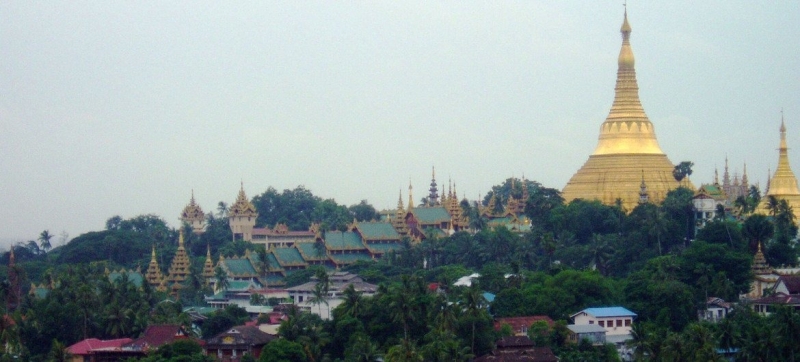
A scene of Yangon, the commercial hub of Myanmar.
An independent human rights expert has urged the international community to reject the electoral process organised by Myanmar’s military government after the first round of voting revealed widespread coercion, exclusion, and violence.
In a statement issued on Thursday, Tom Andrews, the UN Human Rights Council–appointed Special Rapporteur on human rights in Myanmar, reinforced earlier warnings from senior UN officials that the polls lack democratic credibility.
The initial phase of voting on 28 December exposed what he described as a “junta-orchestrated sham” designed to entrench military rule rather than reflect the will of the people.
“By all measures, this is not a free, fair, nor legitimate election,” he said. “It is a theatrical performance that has exerted enormous pressure on the people of Myanmar to participate in what has been designed to dupe the international community.”
Mr Andrews—who is not a UN staff member and does not speak on behalf of the UN Secretariat—urged member states to reject the process, isolate the junta, and pressure its leaders to cancel the remaining two phases of voting.
“The international community should make clear that Myanmar’s future belongs to its people,” he added, “not to those who imprison, silence, and terrorise them.”
Myanmar’s military authorities planned the staged voting process nearly five years after seizing power in a February 2021 coup.
Since then, the country has descended into widespread armed conflict between the ruling military and numerous ethnic armed groups, triggering mass displacement, economic collapse, and deepening humanitarian needs, further compounded by devastating earthquakes in March 2025.
Two further rounds of voting are scheduled for 11 and 25 January, although the junta has already ruled out holding polls in at least 65 townships and thousands of wards and village tracts, underscoring its lack of control over large parts of the country.
Very low turnout reported
According to reports cited by the independent expert, voter turnout in the first round was very low despite threats and intimidation.
The National League for Democracy, which won sweeping victories in the 2015 and 2020 elections, was barred from participating after being dissolved by the military. Its leader, Aung San Suu Kyi, has been detained since the coup, and her whereabouts and current condition remain unknown.
Official results indicate that the junta’s proxy, the Union Solidarity and Development Party, won nearly 90 per cent of the contested seats in the lower house of parliament.
“It should surprise no one that the military-backed party has claimed a landslide victory,” Mr Andrews said. “The junta engineered the polls to ensure victory for its proxy, entrench military domination, and manufacture a façade of legitimacy while violence and repression continue unabated.”
Threats and coercion
Mr Andrews said junta forces used the threat of conscription to compel young people to vote. “This is not political participation; it is coercion,” he said.
Displaced people, students, civil servants, and prisoners were also reportedly pressured to take part under threats of being denied humanitarian aid, education, immigration documents, and other essential services.
“You cannot have a free, fair, or credible election when thousands of political prisoners are behind bars, credible opposition parties have been dissolved, journalists are muzzled, and fundamental freedoms are crushed,” he said.
Mr Andrews also called on all armed groups to refrain from targeting civilians following reports of deadly attacks on election officials. “Attacks against civilians, by any combatants, are illegal and unacceptable,” he said.
Deep concerns
UN officials have repeatedly cautioned that elections held under current conditions risk worsening instability.
Ahead of the vote, UN High Commissioner for Human Rights Volker Türk warned that civilians were being compelled from all sides in a climate of fear, violence, and mass repression, leaving no space for free or meaningful participation.
Special Rapporteurs are independent experts mandated and appointed by the UN Human Rights Council to monitor and report on human rights situations. They are not UN staff, do not speak on behalf of the UN Secretariat, and do not receive a salary for their work.