

- Banks get Tk 75,903cr liquidity support till June 6: Khosru |
- PM, Kazakh Counterpart Agree to Boost Bilateral Ties |
- US-Iran Talks Continue Amid Nuclear Inspection Dispute |
- BSF attempt to push 9 people into Bangladesh foiled: BGB |
- IMF seeks removal of Bank Company Act’s Section 18(A) for loan package |
Gaza Faces ‘Massive Famine’ as Aid Agencies Warn
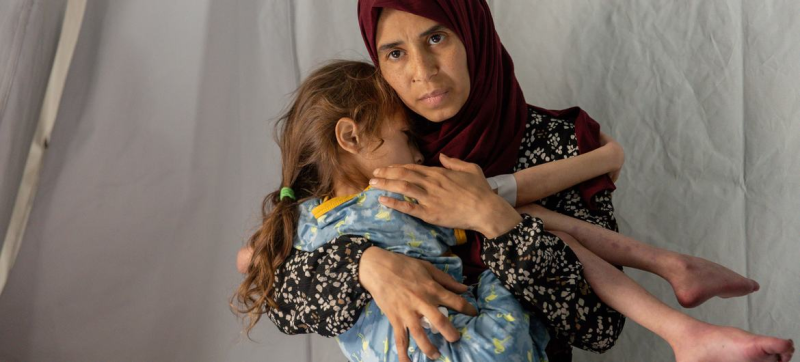
A seven-year-old patient with severe acute malnutrition and dehydration was transferred to a field hospital in southern Gaza in April amid a looming famine in the north.
Amid reports of intensified Israeli military operations across Gaza City on Friday, UN aid agencies issued urgent warnings of worsening famine and a likely rise in preventable diseases, linked to dire living conditions in the war-shattered enclave.
“We are on a descent into a massive famine,” said Jens Laerke, spokesperson for the UN aid coordination office OCHA. “We need massive amounts of food to get into the Strip and be safely distributed across Gaza.”
Referring to the latest catastrophic assessment of food insecurity from the UN-backed IPC group, Laerke noted that 500,000 people are already in the worst possible situation, with another 160,000 expected to join them in the coming weeks.
“They all need food,” he told journalists in Geneva. “The entire Gaza Strip needs food. There would not have been a declared famine if sufficient food were available.”
In a related development, the UN World Health Organization (WHO) highlighted the growing risk of communicable diseases in Gaza, with 94 suspected cases of Guillain-Barré Syndrome reported. The disease can cause paralysis and is treatable in hospitals with intravenous immunoglobulin or plasma exchange, but these treatments are at zero stock, along with anti-inflammatories, according to WHO spokesperson Christian Lindmeier. He stressed that deliveries must be urgently expedited, along with surveillance and testing capabilities.
Between 20 and 26 August, out of 89 attempts to coordinate relief missions with Israeli authorities across Gaza, 53 were facilitated, 23 were initially approved but later impeded on the ground, seven were denied, and six had to be withdrawn, OCHA said in an update.