

- US Pledges $2 Billion for UN Humanitarian Aid, Covers Bangladesh |
- Postal Ballots Sent to Over 376,000 Bangladeshi Voters Abroad |
- Arms smuggling attempts rise ahead of BD polls: Home Adviser |
- Dense fog blankets Dhaka as wintry chill disrupts normal life |
- BGB must maintain strategic relations with neighbours: Adviser |
US pledges $2bn for UN humanitarian aid, includes Bangladesh
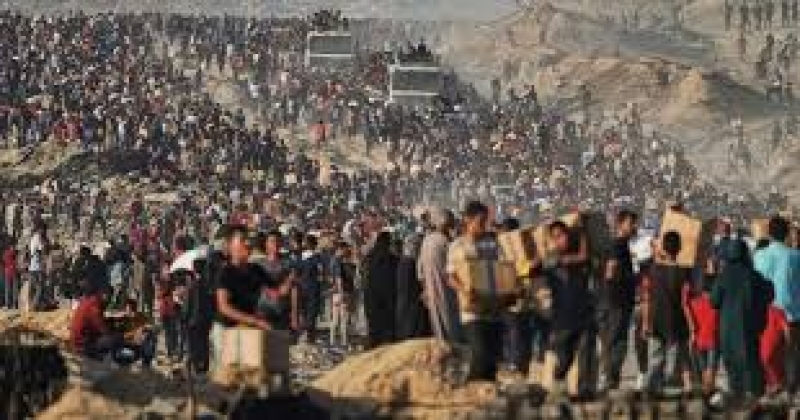
The United States on Monday pledged $2 billion for U.N. humanitarian aid, even as President Donald Trump’s administration continues to cut U.S. foreign assistance and urges United Nations agencies to “adapt, shrink or die” amid new financial realities.
While the amount is only a fraction of past contributions, the administration considers it a generous sum that maintains the U.S.’s position as the world’s largest humanitarian donor.
The funding will be distributed through an umbrella fund, which will allocate money to individual agencies and priorities—a key part of U.S. demands for sweeping reforms across the U.N, reprots AP.
This approach has raised concerns among humanitarian workers and led to significant reductions in programs and services.
At its core, the reform project will help establish pools of funding that can be directed either to specific crises or countries in need.
A total of 17 countries will be targeted initially, including Bangladesh, Congo, Haiti, Syria and Ukraine.
One of the world’s most desperate countries, Afghanistan, is not included, nor are the Palestinian territories, which officials say will be covered by money stemming from Trump’s as-yet-incomplete Gaza peace plan.
According to U.N. data, the $2 billion represents only a small portion of traditional U.S. humanitarian funding for U.N.-backed programs, which has reached up to $17 billion annually in recent years.
U.S. officials say only $8 to $10 billion of that is voluntary contributions while the U.S. also pays billions annually in dues as part of its U.N. membership.
Critics argue that Western aid cutbacks are shortsighted, driving millions toward hunger, displacement, or disease, and damaging U.S. influence globally.
US seeks consolidated aid approach
A senior State Department official, speaking anonymously before Monday’s announcement at the U.S. diplomatic mission in Geneva, said the United States wants “more consolidated leadership authority” in U.N. aid delivery.
Under the plan, Fletcher and OCHA “are going to control the spigot” for distributing funds to agencies, the official added.
“This humanitarian reset at the United Nations should deliver more aid with fewer tax dollars — providing more focused, results-driven assistance aligned with U.S foreign policy,” said U.S. Ambassador to the United Nations Michael Waltz.
U.S. officials described the $2 billion as an initial installment for OCHA’s annual appeal, announced earlier this month. Fletcher, noting the shifting aid landscape, had already reduced this year’s request. Other traditional donors, including Britain, France, Germany, and Japan, have also cut funding and sought reforms.
“The agreement requires the U.N. to consolidate humanitarian functions to reduce bureaucratic overhead, unnecessary duplication, and ideological creep,” the State Department said. “Individual U.N. agencies will need to adapt, shrink, or die.”
“Nowhere is reform more important than the humanitarian agencies, which perform some of the U.N.’s most critical work,” the department added. “Today’s agreement is a critical step in those reform efforts, balancing President Trump’s commitment to remaining the world’s most generous nation, with the imperative to bring reform to the way we fund, oversee, and integrate with U.N. humanitarian efforts.”
The project reflects Trump’s longstanding view that the U.N. has great potential but has strayed from its mission, undermining U.S. interests, promoting radical ideologies, and engaging in wasteful, unaccountable spending.
A challenging year for aid
The pledge comes after a difficult year for many U.N. organizations, including refugee, migration, and food aid agencies.
The Trump administration has already cut billions in foreign aid, forcing agencies to reduce spending, scale back projects, and eliminate thousands of jobs. Other traditional Western donors have also trimmed contributions.
The U.S. pledge, targeting U.N. programs—the world’s largest provider of humanitarian assistance and top recipient of U.S. humanitarian aid—follows a preliminary deal with the U.N. Office for the Coordination of Humanitarian Affairs (OCHA), led by Tom Fletcher, a former British diplomat.
Even as U.S. aid declines, global needs have surged. Famine has struck parts of conflict-hit Sudan and Gaza, while climate-driven disasters like floods and droughts have claimed lives and displaced thousands.
Cuts will significantly impact U.N. agencies such as the International Organization for Migration, the World Food Program, and UNHCR.
They have already received billions less from the U.S. this year compared with previous Biden-era allocations or even Trump’s first term.
Fletcher’s office, which launched a “humanitarian reset” last year to improve efficiency, accountability, and impact, will now serve as the main channel for U.S. and other aid funds, rather than distributing contributions across multiple appeals, reports UNB.