

- $7.3 Trillion Fuels Nature Destruction, Guterres Warns |
- Infantino apologizes for World Cup furore but critics unhappy |
- Teesta irrigation project: Water in canals inadequate to enter fields |
- Biodiversity Targets Lag as UN Warns of a War on Nature |
- 18 railway coaches made in India set to arrive this afternoon |
Gaza: Over 340 Children Killed Despite Ceasefire, UNICEF Says
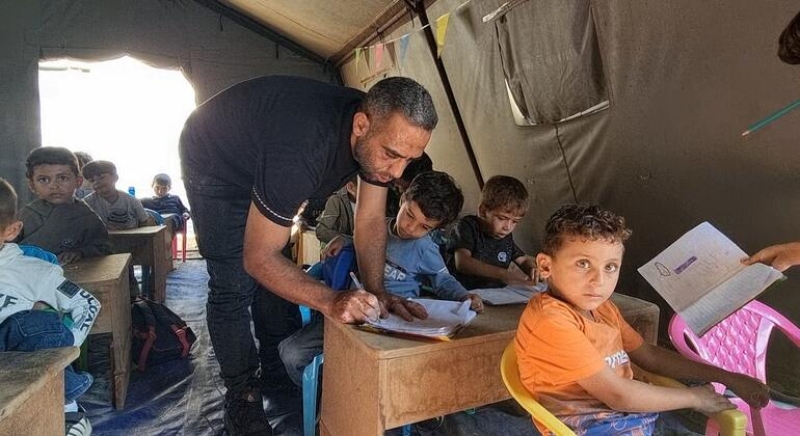
More than 340 children have reportedly been killed in Gaza despite a ceasefire agreement announced between Hamas and Israel, while hundreds more have been injured, the UN Children’s Fund (UNICEF) said on Friday.
Speaking to journalists in Geneva, UNICEF spokesperson Ricardo Pires said the deaths showed that the ceasefire had not brought an end to the suffering of children and their families.
Over the past two weeks alone, five boys and two girls were reportedly killed in Gaza, while at least 33 children sustained serious injuries in airstrikes, drone strikes and gunfire across the territory. Two other boys died from injuries sustained earlier, Pires said.
“For families mourning the loss of their children, those terrible statistics do not equate with a ceasefire,” he said.
Children face danger across Gaza
The consequences of the Israel-Hamas war continue to affect nearly every aspect of children’s lives, including where they sleep, what they eat and whether they can access education, Pires said.
He shared the story of Norhan, a 16-year-old girl whose mother was shot while eight months pregnant. Her mother gave birth before dying the following day.
Norhan’s father lives with a disability, leaving her responsible for caring for her one-year-old sister, Narjis, and helping manage the household. Her three other siblings attend a UNICEF-supported learning centre, and Norhan helps them with their studies after class.
Pires also stressed the importance of maintaining an uninterrupted flow of humanitarian and commercial supplies into Gaza, following reports that private traders had halted cooperation with Israeli authorities over commercial food deliveries.
He recalled that supplies were severely restricted before the ceasefire, when UN-backed food insecurity experts declared famine in Gaza.
“We can’t go back to a situation where children and families are not getting all the supplies, goods and services that they require,” he said, warning that children need essential assistance to survive and retain hope for the future.
Winter raises new threats
As temperatures fall, displaced families are struggling to protect themselves from rain and cold. Some have been filling empty flour bags with sand to prevent rainwater from entering their tents.
The damaged sanitation system is another major concern. Israeli bombardment has severely affected Gaza’s drainage network, leaving large pools of wastewater in several areas.
Pires warned that the Sheikh Radwan stormwater basin in Gaza City was partly filled with wastewater and needed to be pumped out before heavy winter rains arrived.
Contaminated water could overflow into residential areas, creating potentially life-threatening risks for children and their families. Children have drowned in sewage-contaminated water in the past, he added.
Hundreds of thousands of children lack shelter
According to UNICEF, around 800,000 children remain displaced in Gaza, with most living in tents or damaged buildings that may be unsafe.
An estimated 60,000 children have lost one or both parents during the war or since the ceasefire, while nearly every child needs some form of mental health support to recover from the conflict.
Despite the challenges, UNICEF has helped more than 560,000 children return to learning since the ceasefire, including through more than 200 agency-supported learning centres.
The agency has also provided digital cash assistance to more than 380,000 people and safe water to 1.2 million people.
Pires emphasised that continued humanitarian access and the delivery of essential supplies were critical to protecting children as Gaza faces another winter amid widespread displacement, damaged infrastructure and continuing insecurity.