

- PM Proposes Five Urgent Steps to Resolve Rohingya Crisis |
- Govt Appoints Indonesian Firm to Operate Cox’s Bazar SPM |
- ADB lowers Bangladesh’s growth forecast to 4 % in FY2027 |
- El Niño Tests Global Readiness for a Changing Climate |
- Dhaka's air quality recorded moderate on Wednesday morning |
Industrial Growth Without Harm: UN Vision for the Future
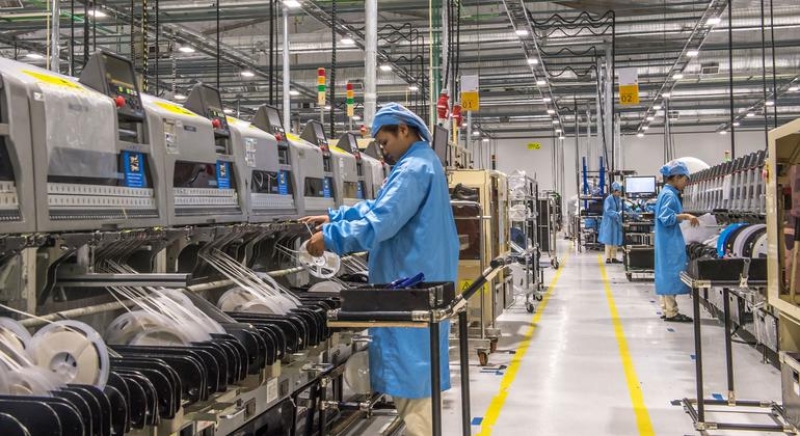
Workers at a factory in Laos assemble electronic products for export.
Since the 19th century, industrialisation has had a transformative impact on the world, both positive and negative. It has created jobs and lifted millions out of poverty. However, it has also caused devastating consequences—destroying ecosystems, polluting the air, and driving the climate crisis that threatens to make large parts of the planet uninhabitable.
But it does not have to be this way. The UN Industrial Development Organization (UNIDO), a technical agency established in 1966 to support industrial development in the Global South, is committed to ensuring that countries progress in ways that benefit both people and the planet.
At the Global Industry Summit in Riyadh, Saudi Arabia, Fatou Haidara, Managing Director of Global Partnerships and External Relations at UNIDO, reflected on the organisation’s evolving priorities and explained why its role is more important than ever as it approaches its 60th year.
When UNIDO was created, industry was largely viewed as a polluter, and industrial policy was not seen in a positive light. Environmental concerns were also far less prominent. Over time, however, it has become clear that industrialisation is not only about manufacturing. It involves policymaking, strengthening institutions, and helping small and medium-sized enterprises become competitive.
Haidara said no single actor can address these challenges alone, making partnerships essential. She emphasised collaboration with governments to create the right environment for investment, alongside engagement with the private sector to adopt modern and sustainable technologies.
She noted that UNIDO continues to support countries even during conflict, arguing that such moments make international assistance even more critical. While activities are carried out cautiously, the organisation works with governments to prepare industrial strategies, often without the need for a physical presence in conflict zones.
Environmental concerns, she said, are integrated into all of UNIDO’s work, though approaches vary depending on national contexts. For some countries, the priority is energy access; for others, it is reducing emissions from major industries or improving energy efficiency. Climate considerations are central, but solutions are tailored rather than uniform.
Addressing questions about the relevance of multilateral institutions, Haidara said the UN remains essential in an increasingly unstable world. As a neutral and inclusive platform, it brings countries together to address shared challenges.
She added that UNIDO promotes an inclusive development model that balances economic growth with social and environmental responsibility, drawing on decades of global experience to benefit all member states. While not a humanitarian agency, she said, UNIDO remains committed to standing with people and supporting sustainable development.