

- State mourning begins, state funeral for Khaleda Zia at 2 pm |
- Kamal Hossain: Khaleda Zia was ‘a patriot and democratic guardian' |
- High medicine prices threaten healthcare of poor communities |
- Curtain falls on a political giant as Khaleda Zia passes into history |
UN General Assembly approves $3.45bn regular budget for 2026
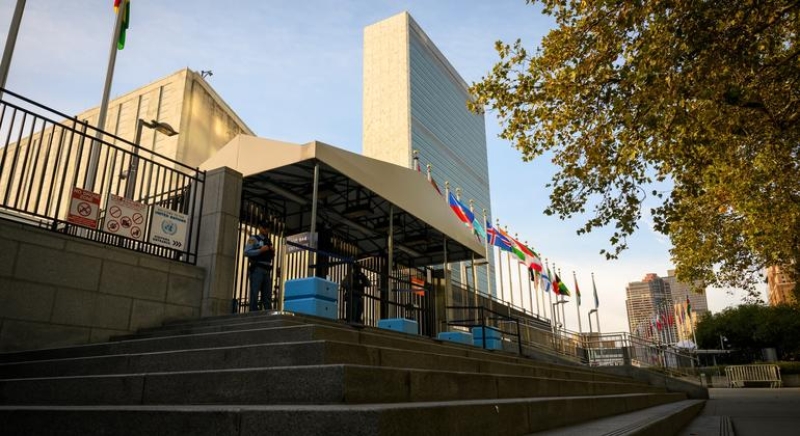
A view of the entrance to the UN Headquarters with the Secretariat building in the background.
The General Assembly has approved a $3.45 billion regular budget for the United Nations for 2026, following weeks of intensive negotiations and one of the organization’s most significant reform initiatives, known as UN80.
The budget—approved by the 193-member General Assembly on Tuesday—authorizes $3.45 billion for the coming year, covering the organization’s three core pillars of work: peace and security, sustainable development, and human rights.
The budget largely reflects the Secretary-General’s proposed 15 percent reduction in financial resources and a nearly 19 percent cut in staffing.
The regular budget finances the UN’s core activities, including political affairs, international justice and law, regional cooperation for development, human rights, humanitarian affairs, and public information.
It is separate from the United Nations peacekeeping budget, which operates on a 1 July to 30 June fiscal cycle, while the regular budget follows the calendar year.
Consensus after intense negotiations
Addressing delegates as the Fifth Committee—the Assembly’s main administrative and budgetary body—wrapped up negotiations, UN Controller Chandramouli Ramanathan praised the committee for steering a complex and compressed process to a timely conclusion.
“It has been a year of challenges,” he said, noting that the Secretariat had been tasked with assembling an entire budget in less than six weeks, producing hundreds of tables and responding to thousands of questions from oversight bodies and Member States.
He underscored that, despite often arduous negotiations, the committee once again reached agreement by consensus, a hallmark of the budgetary process. “That is something remarkable that you should not underestimate,” he told delegates.
Challenges ahead
Looking ahead, the controller warned that adoption of the budget marks the beginning—not the end—of a demanding implementation phase.
As of 1 January 2026, he said, 2,900 positions will be abolished, while more than 1,000 staff separations have already been finalized, requiring careful management to ensure affected personnel continue to receive salaries and entitlements during the transition.
Mr. Ramanathan also welcomed what he described as a record level of potential advance payments by Member States toward the 2026 budget and appealed for the continued prompt payment of assessed contributions.