

- Govt pursuing zero tolerance against human trafficking, organised crime: Salahuddin |
- PM Seeks Japan’s Help to Build Technology, Innovation Hubs |
- Bangladesh Plans Bonded Warehouse Reforms to Diversify Exports |
- Dhaka ranks 4th among world's most polluted cities this morning |
- Lula re-elected Brazilian president in runoff |
U.S. Pullout From Global Bodies Sparks Widespread Alarm
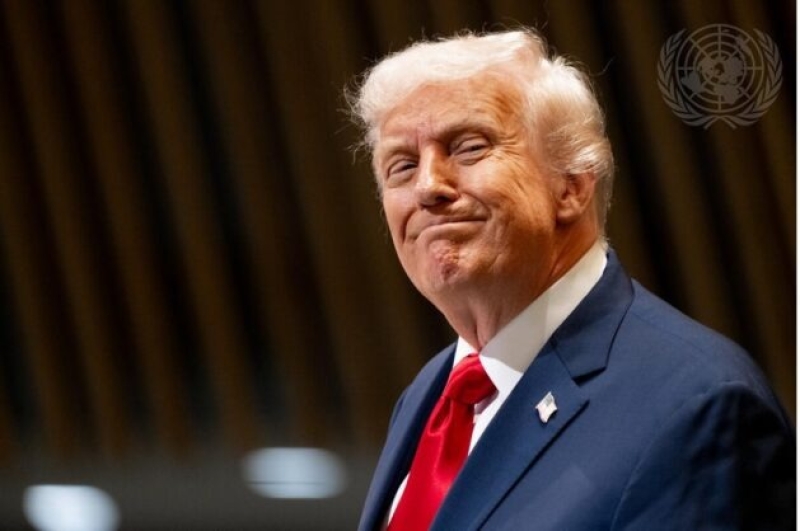
Donald Trump, President of the United States of America, addresses the general debate of the General Assembly’s eightieth session in 2025.
President Donald Trump’s executive order to halt U.S. support for 66 international organisations, including 31 United Nations (UN) bodies, has drawn strong opposition from those organisations, the global community, humanitarian experts, and climate advocates. Critics warn the move could undermine global cooperation, sustainable development, and international peace and security.
The executive order follows earlier U.S. withdrawals from the World Health Organization (WHO), the United Nations Relief and Works Agency for Palestinian Refugees in the Near East (UNRWA), the United Nations Human Rights Council (UNHRC), and the United Nations Educational, Scientific and Cultural Organization (UNESCO). The United States has also recently reduced its funding for foreign aid organisations.
Most of the affected bodies focus on issues such as climate change, labour, peacekeeping, migration, and civic space. In a statement, the U.S. Department of State said a review found these organisations to be “wasteful, ineffective, and harmful,” arguing that American taxpayer dollars were being used to fund “progressive ideologies” that do not align with U.S. national interests.
The executive order primarily affects organisations working on climate change, labour rights, peacekeeping, migration, and civic space conditions. The State Department described them as vehicles for “progressive ideologies” funded by U.S. taxpayers and misaligned with national priorities.
“The Trump administration has found these institutions to be redundant in their scope, mismanaged, unnecessary, wasteful, poorly run, captured by the interests of actors advancing agendas contrary to our own, or a threat to our nation’s sovereignty, freedoms, and general prosperity,” said U.S. Secretary of State Marco Rubio.
“President Trump is clear: it is no longer acceptable to be sending these institutions the blood, sweat, and treasure of the American people with little to nothing to show for it. The days of billions of dollars in taxpayer money flowing to foreign interests at the expense of our people are over.”
The order instructs all executive departments and agencies to begin implementing the withdrawals immediately. For the affected UN agencies, this involves ending U.S. participation and halting funding. Rubio also confirmed that reviews of additional international organisations are still underway.
Humanitarian experts and representatives of many affected bodies have voiced alarm and condemnation, warning of severe consequences for climate action, human rights, peacebuilding, multilateral governance, and global crisis-response systems—particularly at a time of rising international instability.
“Today, we are witnessing a complete shift from global cooperation towards transactional relations,” said Yamide Dagnet, senior international vice president at the Natural Resources Defense Council (NRDC).
“It is becoming less about shared principles, the rule of law, and solidarity, thereby risking greater global instability. By choosing to step away from addressing some of the biggest environmental, economic, health, and security threats on the planet, the United States stands to lose significantly,” Dagnet said. She warned of diminishing credibility, lost competitiveness, and missed opportunities for job creation and innovation, as leadership in science and technology shifts to other countries.
She called on world leaders to commit to multilateralism.
“The world is bigger than the United States—and so are the solutions to our problems, which require global cooperation more than ever, including among states, provinces, and cities. This is the moment for world leaders to resolutely commit to multilateral collaboration if we are to overcome these global threats and ensure a safe and sustainable future for all,” she said.
Many critics have also questioned the U.S.’s à la carte approach to international obligations, supporting only those operations and agencies aligned with President Trump’s priorities.
“What we’re seeing is the crystallisation of the U.S. approach to multilateralism, which is essentially ‘my way or the highway,’” said Daniel Forti, head of UN affairs at the International Crisis Group. “It’s a very clear vision of international cooperation on Washington’s own terms.”
Historically, the United States has been the largest financial contributor to the UN, providing about 22 percent of its regular budget and roughly 28 percent of peacekeeping funding.
The withdrawal of U.S. support from 31 UN bodies is expected to create major budget shortfalls, lead to cuts in humanitarian staffing, and result in the loss of critical technical expertise provided by U.S. personnel. These setbacks could slow progress toward the Sustainable Development Goals (SDGs), reduce food assistance and medical services in protracted crises, and embolden authoritarian governments to resist humanitarian oversight.
“The U.S. decision to disengage from dozens of UN programmes and agencies, along with other international bodies, is President Trump’s latest assault on human rights protections and the global rule of law,” said Louis Charbonneau, UN director at Human Rights Watch.
“Whether withdrawing from the Human Rights Council or defunding the UN Population Fund, which supports millions of women and girls worldwide, this administration has sought to dismantle the very institutions the U.S. helped build over the past 80 years. UN member states should resist this effort and ensure that vital UN programmes receive the funding and political backing they need,” he added.
At a press briefing at UN headquarters, spokesperson Stéphane Dujarric said the organisation remains committed to helping people in need, regardless of U.S. participation.
“As we have consistently underscored, assessed contributions to the UN regular and peacekeeping budgets, as approved by the General Assembly, are a legal obligation under the UN Charter for all member states, including the United States,” Dujarric said.
“All UN entities will continue to implement their mandates as given by member states. The United Nations has a responsibility to deliver for those who depend on us, and we will continue to carry out our work with determination.”