

- Covered van hits Gazipur police patrol team, killing SI, BNP leader |
- Korean City scrambles to rescue dusky shark after it returns to canal |
- PM inspects Mongla Port, Sundarbans, proposed economic zone |
- Early winter cucumber brings hope of bumper harvest in Sirajganj |
- Saudi coalition intercepts Houthi missile after blasts in Riyadh |
Detained Suu Kyi Casts Shadow Over Junta Election Poll
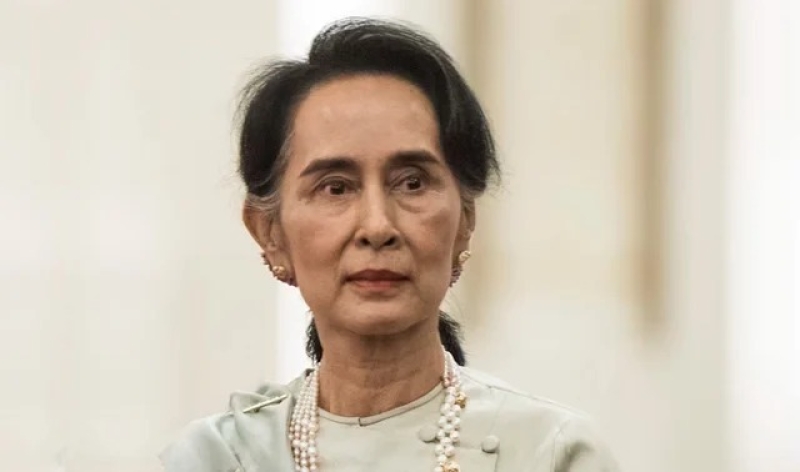
Myanmar’s ousted civilian leader Aung San Suu Kyi has remained in strict military detention since the 2021 coup, yet her presence continues to loom over elections being staged by the ruling junta as a supposed return to democracy.
Once celebrated internationally and revered at home, the Nobel Peace Prize laureate led her National League for Democracy (NLD) to a landslide victory in the 2020 general election. The military annulled the result, dissolved the party and jailed Suu Kyi in total isolation, effectively ending Myanmar’s decade-long experiment with democratic rule.
Her removal from public life sparked widespread resistance. Peaceful protests quickly gave way to armed rebellion, plunging the country into a nationwide civil war that continues to rage.
Now in her late seventies, Suu Kyi — widely known as “The Lady” — remains imprisoned as the generals press ahead with a tightly controlled, multi-phase election process that overwrites her 2020 mandate. The latest phase began on Sunday, including voting in her former constituency of Kawhmu near Yangon, contested only by parties approved by the military authorities.
Abroad, Suu Kyi’s reputation suffered severe damage over her government’s response to the Rohingya crisis, particularly her defence of the military against allegations of atrocities. At home, however, she remains a powerful symbol of democratic aspirations. For many of her supporters, her absence from the ballot is proof that the polls cannot be free or fair.
Suu Kyi’s life has been deeply intertwined with Myanmar’s military despite her long opposition to it. The daughter of independence hero Aung San, founder of the armed forces, she spent nearly two decades in various forms of detention under successive juntas.
Her rise as a democracy icon began unexpectedly in 1988, when she returned from abroad to care for her ailing mother and found herself at the forefront of mass protests crushed by the army. Charismatic and defiant, she endured years of house arrest, refused exile and was awarded the Nobel Peace Prize while detained.
Released in 2010, she later led a civilian government after a decisive election victory, raising hopes of lasting reform. Those hopes were shattered by the military’s renewed seizure of power following her party’s triumph in 2020 — a move that restored full army rule and returned Suu Kyi to prison, once again defining Myanmar’s fractured political future.