

- Covered van hits Gazipur police patrol team, killing SI, BNP leader |
- Korean City scrambles to rescue dusky shark after it returns to canal |
- PM inspects Mongla Port, Sundarbans, proposed economic zone |
- Early winter cucumber brings hope of bumper harvest in Sirajganj |
- Saudi coalition intercepts Houthi missile after blasts in Riyadh |
Iran Protests Intensify, Fueling Sharp Global Tensions
Escalating protests in Iran have pushed already fraught relations between Tehran and Washington into deeper crisis, raising fears that the standoff may be nearing a breaking point.
Demonstrations that began in Tehran’s bazaars on December 28 have spread to more than 100 cities, drawing unprecedented crowds and prompting an increasingly violent response from security forces. Medical workers at several hospitals have reported being overwhelmed by casualties, describing severe injuries caused by live ammunition. Some protesters said hospitals were filled with bodies and wounded civilians as clashes intensified in the capital.
Protesters say the atmosphere shifted dramatically after a televised address by Supreme Leader Ayatollah Ali Khamenei on Friday night. Shortly afterwards, security forces launched a sweeping crackdown, with the Revolutionary Guards warning that national security was a “red line” and vowing to protect public property at all costs.
The unrest has unfolded against a backdrop of heightened international tension. The United States has openly voiced support for Iranian protesters, with senior officials issuing warnings to Tehran over the use of force. President Donald Trump said Iran was in “big trouble” and cautioned against shooting demonstrators, while Iranian leaders accused Washington of inciting unrest and urged the US to focus on its own domestic issues.
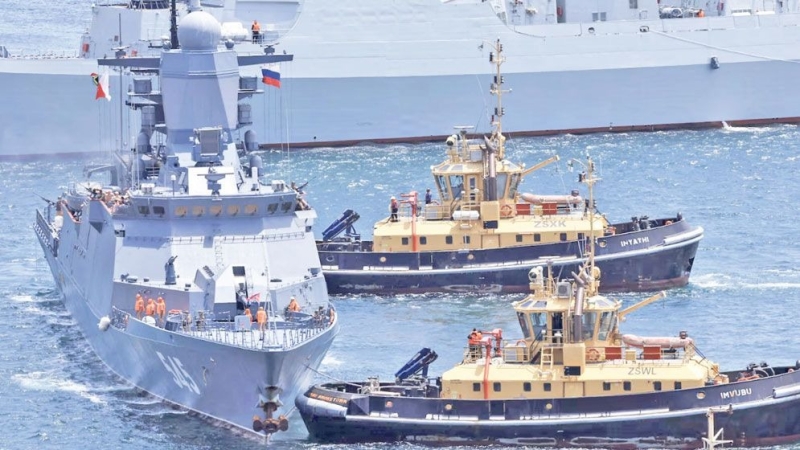
At the same time, Iran has joined China and Russia in joint naval exercises in waters off South Africa, part of a broader BRICS Plus initiative aimed at strengthening maritime cooperation. The drills, involving several emerging economies, come amid strained relations between Washington and multiple members of the expanded BRICS group, which includes countries across Asia, Africa and the Middle East.
Critics within South Africa have questioned the timing of the exercises, saying they undermine claims of neutrality, while military officials insist the drills are non-political and focused on improving operational capacity and information sharing.
With internet access restricted and phone lines cut inside Iran, assessing the full scale of the protests has become increasingly difficult. Rights monitors estimate that at least 65 people have been killed and more than 2,300 detained since the unrest began, while state media reports casualties among security forces and maintains that order is being restored.
Meanwhile, Reza Pahlavi, the US-based son of Iran’s former shah, has urged protesters to move beyond street demonstrations and attempt to seize and hold city centres, signalling a potentially more confrontational phase in the uprising.
As violence intensifies at home and rival power blocs manoeuvre abroad, Iran’s internal turmoil is fast becoming a flashpoint with far-reaching global implications.