

- BYD Expands Future of New Energy Mobility with Triple-Model Launch in BD |
- High reliance on VAT, AIT fuel inflation, denting investment |
- DMP steps up Eid-ul-Azha security, vows crackdown on crime |
- JUCSU blockade Dhaka-Aricha highway, protest non-arrest of rape suspect |
- ‘Songs of Fired Earth’ Inaugurated at Alliance Francaise |
Epstein files: What the names don't tell
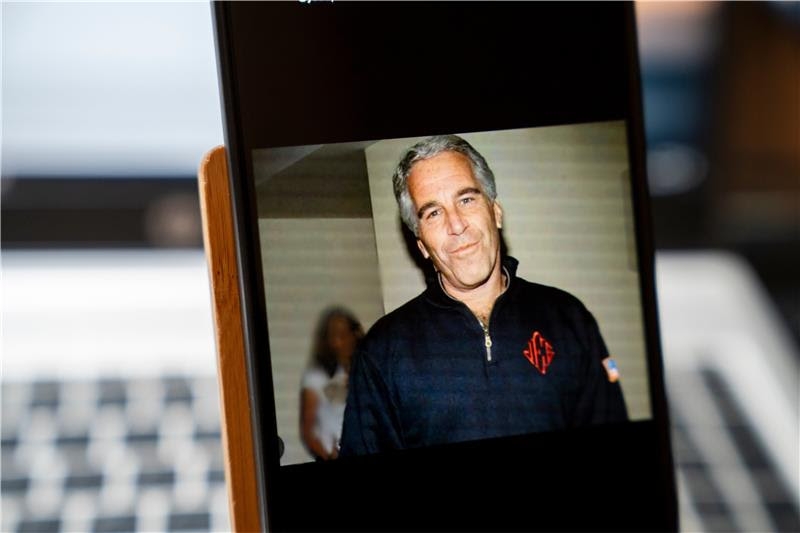
Epstein died in a New York jail in August 2019 while awaiting trial on sex trafficking and conspiracy charges. Photo- Shutterstock via TI
Former presidents, CEOs, ministers, bankers, celebrities and members of royal families appear in the 3.5 million pages related to Jeffrey Epstein, released by the US Department of Justice at the end of January. Since then, the headlines have not stopped. Among the latest names to dominate global coverage: Peter Mandelson, former European Commissioner and senior UK government minister, arrested and released on Tuesday, and Andrew Mountbatten-Windsor, brother of Britain's King Charles, arrested and released last week.
The files are not just a roster of powerful names. They expose how far democratic institutions still fall short in bringing powerful networks into the open. Weak lobbying rules, unenforced ethics codes and a persistent tolerance for informal influence created the conditions in which accountability was avoided for years.
An international network of influence
Epstein's connections extended far beyond the United States. Transparency International chapters across several countries have been tracking the fallout, demanding answers from their governments and institutions.
In the UK, Transparency International UK has called for a meaningful reform of the country’s lobbying system and stronger misconduct laws. Without the US Justice Department's disclosure, the public might never have learned that a government minister allegedly sought to "amend" a government decision following private discussions with a businessman and convicted sex offender. The same opacity shielded the relationship between former prince Andrew and Epstein. He was arrested on suspicion of misconduct in public office when he was a UK trade envoy, and released hours later. The police investigation is ongoing. He denies any wrongdoing.
In Brussels, the European Commission has requested that the European Anti-Fraud Office (OLAF) open an investigation into Peter Mandelson's time as EU trade commissioner, a step Transparency International EU has been pressing for. In the UK, Mandelson faces allegations that he leaked sensitive information to Epstein, which he denies. Should similar misconduct be proven at EU level, Transparency International EU is calling for his Commissioner's pension to be revoked – and for OLAF to ensure that accountability is delivered for European citizens and for Epstein's victims.
In Norway, an investigation has been opened against three people – two charged with gross corruption and one with complicity. Transparency International Norway has been urging authorities to ensure that formal proceedings address the full extent of the relationships between prominent Norwegian officials and Epstein. Norway's parliament has also announced the appointment of a commission of inquiry to examine the issues raised by the documents. The revelations have already prompted serious questions about political integrity.
In Venezuela, Transparencia Venezuela has long documented allegations that the engineering company Derwick Associates overcharged the government by $2.9 billion in energy-related contracts. One of its co-founders – who has so far avoided legal consequences across multiple jurisdictions – appears in the Epstein files on a list of recommended business contacts. That his name surfaces here is consistent with a broader pattern: wealth and connections cross borders freely, while accountability does not.
The system that made it possible
Epstein's method relied on gifts, travel, parties, introductions and hospitality that cultivated dependency and blurred the line between public duty and private interest, compromising judgement and allowing serious abuse to persist in plain sight.
Those conditions were not accidental. Recent research shows that lobby register information is publicly available online in only 28 out of 128 countries. Secrecy is not a side effect of these networks. It is how they function.
Even high-scoring countries on our Corruption Perceptions Index (CPI) are not immune to hidden influence that may have a disproportionate impact on public decision-making. The Epstein case is a stress test for institutional integrity, one that exposes how quickly abuse can be enabled when transparency is optional, oversight is weak, and accountability is negotiable.
The solutions do not require reinventing governance. They require enforcing it. Oversight bodies must have the mandate, resources and operational independence to monitor integrity rules and investigate breaches without political interference. Lobbying transparency needs to be fit for purpose, with public records of all interactions intended to influence public decisions, including those that happen outside offices. Trading in influence and serious forms of official misconduct should be criminalised, with clear definitions and standards. Gifts, hospitality, travel and loans must be subject to meaningful thresholds, public disclosure and verification – not voluntary declarations. The tools exist. What has been missing is the political will to implement and enforce them.
The Epstein files will continue to generate headlines. Beyond the names, Transparency International is committed to ensuring that attention translates into reform, so that when the spotlight moves on, the pressure for accountability does not. – Transparency International