

- Bangladesh Bank Injects $100 Million Into Forex Market |
- Iran Says Bangladesh Ships Must Follow Hormuz Directives |
- Bangladesh Draft Law Seeks Court Approval Before Arresting Journalists |
- ECNEC Approves 13 Projects, Defers Decisions on Four |
- New RMG Wage Structure to Take Effect in December |
Bangladesh Draft Law Seeks Court Approval Before Arresting Journalists
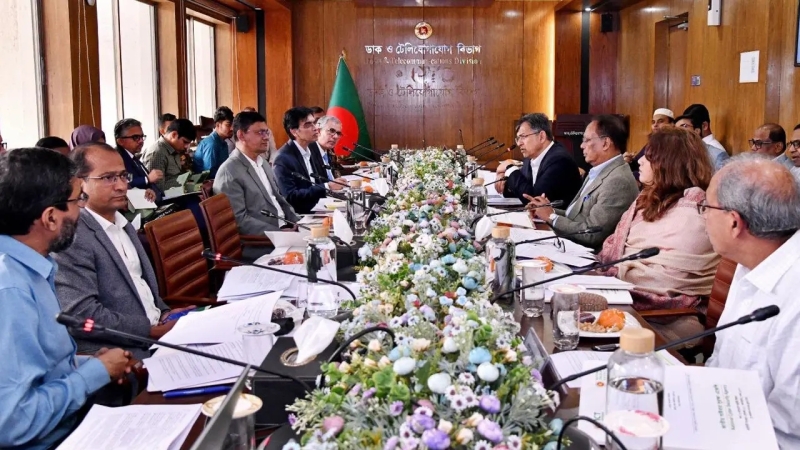
Meeting of the Cabinet Committee to review the draft Cyber Security (Amendment) Act. Photo: Collected
Bangladesh’s draft Cyber Security (Amendment) Act, 2026, proposes requiring court approval before arresting journalists, media owners or responsible media personnel over the publication or dissemination of news.
A meeting of a ministerial committee reviewing the draft reached a policy-level consensus on including such a provision to protect journalists and media freedom. Discussions also covered clarifying definitions of defamation, rumours and misinformation, excluding mobile court provisions, and ensuring accountability in decisions to block online content.
The meeting was held on Wednesday (November 4) in the conference room of the Posts and Telecommunications Division at the Secretariat. It was convened to review and finalise the draft legislation.
Fakir Mahbub Anam, minister for posts, telecommunications and information technology, chaired the meeting. Home Minister Salahuddin Ahmed and State Minister for Foreign Affairs Shama Obaed Islam also attended.
Participants emphasised revising the draft in light of feedback from journalists, media representatives and other stakeholders. They stressed that the law should not become a tool for harassing journalists, media organisations or independent journalism.
The meeting also discussed reorganising relevant provisions to distinguish defamation, degradation and cyberbullying. Participants proposed making the definition of cyberspace more precise.
They stressed that definitions and penalties relating to defamation should remain consistent with the Penal Code. They also called for clearer, more precise definitions of rumours and misinformation to prevent vague or overly broad provisions from undermining press freedom.
Other proposals included excluding mobile court provisions from the law, informing individuals or organisations of the reasons for removing or blocking content, and setting deadlines for deciding appeals seeking the restoration of blocked content.
The meeting also considered requiring written notice and giving media outlets or other organisations an opportunity to defend themselves before action is taken against them.
Discussions covered the membership structure of the Cyber Security Council, representation for the media and consultation with international stakeholders. Participants emphasised coordination with relevant ministries to engage the United Nations, development partners and international technology platforms such as Meta.
The committee discussed revising the draft based on stakeholder feedback and recommendations before publishing it on a website for public consultation. The aim is to make the proposed law more acceptable, effective and relevant to current needs.
Participants said the legislation must balance the prevention of cybercrime with the protection of citizens’ rights, freedom of expression and media freedom. They said efforts to finalise the draft would continue, taking constructive feedback from all relevant stakeholders into account.
The National Cyber Security Agency presented a briefing at the meeting. Senior officials from relevant ministries and divisions also attended, including ICT Division Secretary Md. Mamunur Rashid Bhuiyan and Posts and Telecommunications Division Secretary Dr. Md. Kamruzzaman.