

- RMG exports to UK almost $1bn in first two fiscal months |
- Trump Rejects Iran Proposal to Reopen Strait of Hormuz |
- Govt to Buy Rooftop Solar Power at Tk 10.50 Per Unit |
- Over 30 tourism clusters being developed in country: PM |
- Bangladesh, US sign strategic civil nuclear cooperation agreement |
Reversing Brain Drain: Somalia’s Two-Way Skills Exchange
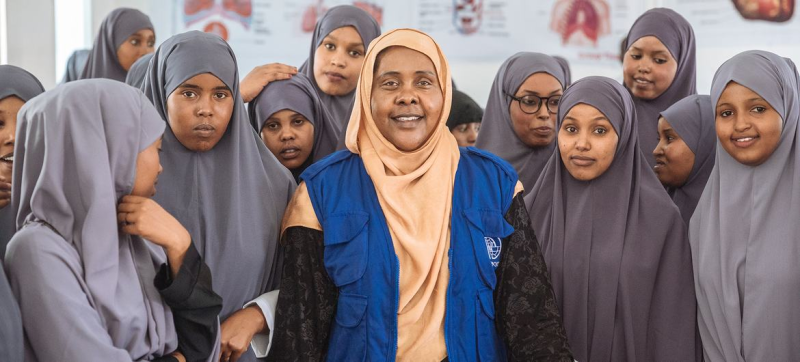
Through the MIDA program, diaspora are returning to Somalia to help build the capacity of local institutions.
For many countries in crisis, brain drain can feel like an unbreakable loop. Armed conflict, climate shocks, and economic downturns drive out local experts, taking with them the know-how essential to reversing the crisis.
So the crisis continues. And the brain drain intensifies.
But what if there were a way to reverse brain drain? This is the question the International Organization for Migration (IOM) has been asking about Somalia.
“There has been a lot of brain drain in Somalia. How do we bring back those skills that they have gained in their country of residence to their country of origin?” said Yvonne Jepkoech Chelmio, an IOM official focused on labour and migration in Africa.
The IOM’s Migration in Africa for Development Programme (MIDA) selects members of the Somali diaspora who are experts in their fields and places them in local hospitals, schools, and national ministries to build Somalia’s self-sufficiency.
In the past 20 years, MIDA has sponsored the return of over 400 Somalis from 17 different countries. These returnees have worked in education, health, climate action, urban planning, and the rule of law — all with the aim of advancing sustainable development in Somalia.
The Somali Civil War, which began in 1991, provoked mass displacement both internally and externally. More than 30 years later, security remains an issue, hampering sustainable development.
“What happens in countries like Somalia is someone becomes skilled in a field, gets educated, and doesn’t want to stay here. So you lose talent and skill,” said pedagogy expert Shire Salad, a diaspora participant in the MIDA programme who was placed in the Ministry of Education to work with its evaluation development team.
With two million Somalis living abroad, the diaspora has long played a vital role in the economy. The remittances they send home — over $2 billion annually — sometimes surpass direct foreign aid, making up at least one-third of national GDP.
But MIDA focuses beyond the economic impact, creating pathways for return that emphasise technical skills, expertise, and global networks.
“[The diaspora] serve as bridges, ambassadors, drivers of change, and development actors,” said Nasra Sheikh Ahmed, an IOM official in charge of the programme.
As a member of the Somali diaspora herself, Ms. Ahmed notes that many want to return.
“[The diaspora] still see it as their home. They’re not immigrants in another country — they still see themselves as Somalis, just living somewhere else.”
While MIDA operates in many sectors, education has been a main focus.
When Dr. Gure began his studies years ago, Somalia offered no doctoral degrees in education, so he studied abroad. Today, he sees a new problem: too few Somalis want to become teachers, and those who do often believe they need no formal training.
“Teachers in the classroom do not have training in being a teacher. This will affect the quality of education in Somalia in the long term,” Dr. Gure said.
Over the years, he and other diaspora professionals developed a new curriculum and formed a lasting partnership with the University of Helsinki in Finland. The benefits are already visible — students are learning more, and online collaborations with Helsinki students are building an international network of expertise.
“All this training is a resource for the country. The curricula developed will remain and be used by lecturers who can train others,” Dr. Gure said.
Partnerships like Dr. Gure’s ensure the MIDA programme’s long-term impact, allowing contributions to continue after diaspora professionals leave.
“We have not just provided skills transfer to two people — these two can now transfer skills to four more. There’s more sustainability in the process,” Ms. Chelmio explained.
But challenges remain. Many diaspora returnees have been away for decades, and the Somalia they return to is very different.
“Although you may speak the language and understand the culture, they still see you as a foreigner,” said Dr. Salad, who left Somalia young and “returned with grey hairs.”
Adapting expertise to the Somali context is vital, and local professionals play a key role in guiding diaspora experts.
“[The diaspora] don’t fully understand the dynamics of the country. The local expert can give them perspective,” Ms. Chelmio said.
MIDA has made modest gains in reversing decades of brain drain, bringing back hundreds of diaspora members. Even if they don’t stay permanently, their skills remain.
But many Somalis continue to leave, risking their lives on dangerous journeys to the Gulf or Europe — journeys that often end in tragedy.
Dr. Salad hopes that one day, brain drain will no longer be an issue.
“If they had hope in this country, they would have stayed. If they believed this country was going to be better, they would have stayed. My hope is that younger generations will have that hope — and they will stay.”