

- War Fallout: Urge to Revive Strategic Autonomy of President Zia |
- Trump cancels Pakistan talks trip, says Iran war on hold |
- Trump assures first lady, VP safe; White House event postponed |
- Bank Resolution Act criticised for allegedly favouring looters |
- Trump says no longer sending Witkoff and Kushner to Pak for Iran talks |
War Fallout: Urge to Revive Strategic Autonomy of President Zia
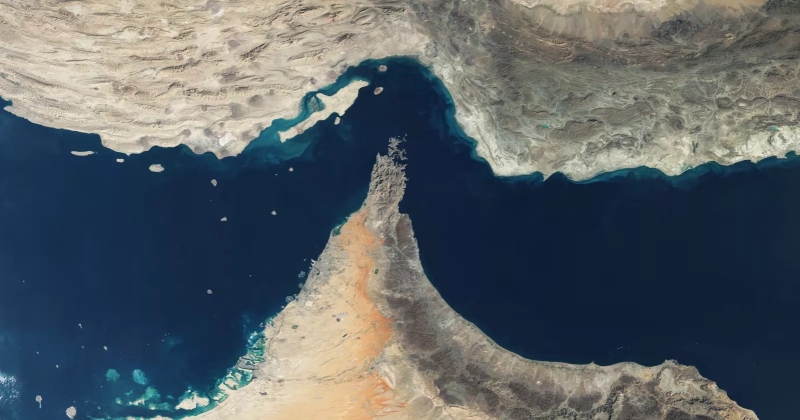
Strait of Hormuz
Special Correspondent
Strategic and diplomatic experts of Bangladesh at an informal discussion in Dhaka City on Tuesday underlined the need for ending the country’s diplomatic and strategic inertia by reviving the assertiveness of the late seventies and taking the people along through national unity.
The discussion on Iran’s survival of Asymmetric Endurance, Regional Alignment and Global Fallout organised by the Foundation for Strategic and Development Studies (FSDS) was told the tenacity of the Persian country should be a lesson for a country like Bangladesh to chart a dependable path to sovereignty, freedom and prosperity.
Brig Gen Shafaat Ahmed ndc, psc, who was the keynote speaker at the discussion held with FSDS Chairman, Maj Gen Fazle Elahi Akbar ndc. Psc. (retd) in the chair, told the meeting it was the Iranian people’s resolve to safeguard the country and reliance on their own military technology backed by their own strategic objectives and narratives that they held the ground against the number one super power of the World and the militarily most advanced Israel.
Iran keenly kept eyes on its adversaries, took preparations over the decades, developed the most advances missile and drone systems that were used with pin point accuracy at set targets to achieve its objectives of fighting back with hard response and endurance. Not even the killing of their supreme leader Ayatulah Ali Khamenei and the frontline military commanders did dampen their military capabilities as the command structure was decentralised well in time.
Iran’s strategic depths in terms of a large land area and a large population were of help. But the most important thing was the people’s resolve and the technological competence to hit back at attackers. Iran was the publisher of the fifth largest number of scientific research papers in the world, Brig Gen Shafaat said.
General Secretary of FSDS Dr. Isharaf Hossain moderated the discussion which was also addressed by former Ambassador Nasim Ferdous, Director General of the Bangladesh Institute of International and Strategic Studies, Major General ASM Ridwanur Rahman, former IGP Md Ashraful Huda, former ambassador Maj Gen AKM Humayun Kabir (retd), Director of Osmany Centre, Commodore Mohammad Abdur Razzak, former Ambassador Admiral Mostafizur Rahman, Air Commodore Shafiqul Islam (retd) Brig, Gen Manzur Quader (retd), AUB Registrar Dr. Shahidul Islam Khan, journalist Sabedin Ibrahim, Young politician and researcher Alauddin Mohammad and IUB teacher and researcher Tahmid Rezwan.
The speakers lamented Bangladesh’s lacking of strategic autonomy in the absence of strong political leadership for a long time and its inertia even against the atrocities of non-state actors like the Arakan Army which in the recent past abducted at least 500 Bangladeshi fishermen. There was neither any military response nor diplomatic protest against provocative attacks on Bangladesh border from Myanmar even when a BGB member was killed while on patrol duty was killed.
During the current Iran War Bangladesh protested Iranian missile attacks on US assets in Gulf countries but failed to take a principled stand against the war which most of the world called unjust and illegal. During the late seventies when President Ziaur Rahman was the President, Bangladesh won a seat in the UN Security Council by contesting against Japan, and abstained from UNSC meeting as sanction against Iran at that time by President Jimmy Carter was viewed as not helpful. But that did not cost Dhaka the friendship of either Tokyo or Washington, they said.
The speakers also noted that Bangladesh should not rely too heavily on any friendly country for energy, imports or exports to the extent of neutralising its freedom to voice against visible injustice. Strategic autonomy cannot be pursued by ignoring public opinion or keeping the people in the dark about development that take place at different fronts. They said while 90 percent of the people of Bangladesh were against the Iran war the government maintained an entirely opposite posture. Even a small country like Singapore had taken a strong principled stand over the war. And Maldives which relied mostly on income from tourism had prohibited Israeli tourists during the war to assert its sovereignty.
The speakers pointed out that Bangladesh’s foreign policy of Friendship with all and malice to none needs to be reframed to make it responsive to the shifts in relations between and among countries. The Iran war proved despite the ability of US and Israel to kill its frontline leadership that country had sufficient military secrets away from the view of the attackers. Iran managed to hit back will drones and missiles every time it was hit with airstrikes.
The lesson here for Bangladesh is to seek the sustainable ways of guarding sovereignty with active participation of the people and make regional alignments in a way that furthers Bangladesh’s national interests. National heroes should be encouraged and honoured to create the incentive for the growth of new heroes. If SAARC cannot be revitalised because of the opposition of big countries, Bangladesh should seek an alliance of smaller countries of the region, one speaker suggested, underlining that regional cooperation cannot suffer just for such a reason.
Even friends consider Bangladesh weak because of the lack of its freedom of choice to act, the speakers said. If a nation cannot strongly rally behind its sovereignty, it cannot pursue effective diplomacy. A strong political leadership is needed for this. The Rohingya issue would not have dragged so long had Bangladesh dealt with the situation with an iron resolve as had been done in the early seventies under President Ziaur Rahman. During Rohingya exodus of that time Bangladesh had made military deployments at the Myanmar border, they pointed out. At the core of Ziaur Rahman’s foreign policy was prioritising national sovereignty, they said.
Major General Fazle Elahi Akbar said lesson of the Iran war was whether we were also thinking of standing on our own feet. We should tune our economic and trade policies is such ways that we can dilute compulsions that undermine our sovereignty. Our people, our bureaucracy should collect courage and debate on issues instead of remaining timid. Iran has shown us we can survive without big guns and big tanks. The Arab World is now understanding the geopolitical shift that’s taking place in the Middle East. It’s likely that the due to the Iran War the Indo-Pacific Strategy may suffer a nose drive giving China scope to become more active in the region, he added.