

- Tree logging in Bangladesh has fallen in last two years: Study |
- Unsafe Food Kills 1.5 Million Yearly, WHO Warns Report |
- Masud Khan Appointed New BSEC Chairman in Shake-up |
- Verdict in Ramisa rape-murder case on June 7 |
Iran War Raises Questions Over US Global Power
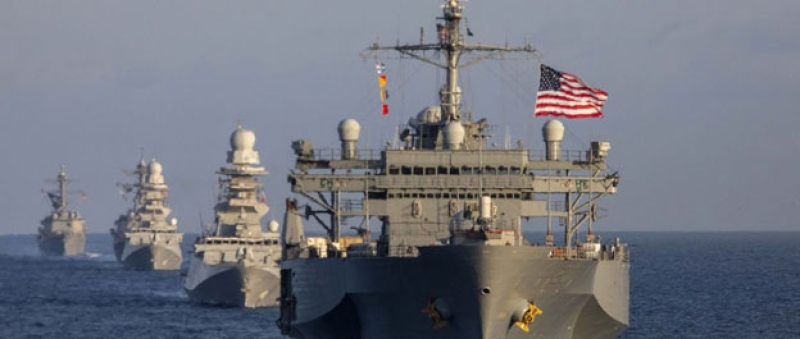
Picture alliance/abaca. Even the world’s strongest fleet is reaching its limits.
The outcome of the current war involving Iran remains uncertain, but one consequence is already becoming clear: it has weakened the United States’ ability to project power globally. While many are asking who won, the more important question may be what the war has cost.
The Gulf’s geo-economic importance means that this conflict, though short and relatively limited by historical standards, could have lasting global consequences. One of the most significant concerns is the future of US power projection.
Gains and Losses
The losses include damage to the environment, the suffering of people in Iran and Gulf states, and growing food insecurity affecting poorer regions. Russia has benefited from higher oil sales but risks losing Gulf investment and diplomatic support due to its backing of Iran. Ukraine, meanwhile, has reportedly benefited as several Gulf states seek its drone technology and technical assistance.
Among the main parties to the conflict, Israel appears to have gained greater freedom of action in Gaza and Lebanon. However, analysts warn that it may also be creating long-term challenges, similar to those that followed its escalation in Lebanon during the early 1980s.
Iran, meanwhile, may be viewed as having secured a strategic advantage by avoiding defeat, while the United States risks being seen as having lost by failing to secure a clear victory — a perception that could affect its ability to project power in the years ahead.
This issue has both material and non-material dimensions. The material aspect relates to military capability and coercion, while the non-material aspect concerns political influence.
The US reportedly struck more than 13,000 targets in Iran during 39 days of fighting, using a significant share of its stealth cruise missiles, Tomahawk missiles, and Patriot interceptor systems. Analysts suggest that replenishing some of these stockpiles could take years.
Despite concerns, the US still maintains vast military capabilities, though it may need to adjust how it uses force in future conflicts.
Limits of Military Influence
Critics argue that the extensive use of weapons yielded few strategic gains. Even if the war had achieved all its stated goals, the depletion of military stockpiles would still remain a concern.
While some fear the US military is now less prepared for future crises, senior officials insist the country retains the ability to respond to multiple threats.
However, the conflict has also highlighted the limits of military superiority. Political influence often depends on perceptions of overwhelming strength, but the war has raised questions about how effectively military force can achieve long-term political goals.
Although Iran’s military infrastructure suffered damage and its economy remains under pressure, the country’s leadership remains in power. Reports also suggest Iran retained a significant portion of its missile capabilities.
Meanwhile, issues such as Iran’s enriched uranium programme and security in the Strait of Hormuz remain unresolved, requiring diplomatic negotiations rather than military action.
Strategic Challenges Ahead
Analysts argue the conflict illustrates a broader lesson: military power alone does not necessarily guarantee political success.
Some compare the situation to past US military entanglements, including Vietnam, where military superiority failed to deliver political victory.
Observers say the war may further strain US alliances, as some partners question Washington’s strategic direction and decision-making.
Although the United States remains the world’s most powerful military force, experts caution that military strength does not automatically translate into political influence or diplomatic success.
In the longer term, allies may increasingly seek to reduce dependence on Washington, potentially reshaping global power dynamics.
Dan Smith, a senior fellow at the United Nations Institute for Disarmament Research (UNIDIR), focuses on peace, security, and international politics, particularly in the Middle East and North-East Asia.