

- Saint Martin’s Island to Reopen for Tourists on Nov 1 |
- France Arrests More Than 1,300 After Nationwide Protests |
- Dhaka ranks world's third most polluted city this morning |
- Soldiers Guard Milan as Thousands Protest Across Europe |
- Cheese Industry Thrives In Thakurgaon Villages |
Interim govt completes one year tomorrow
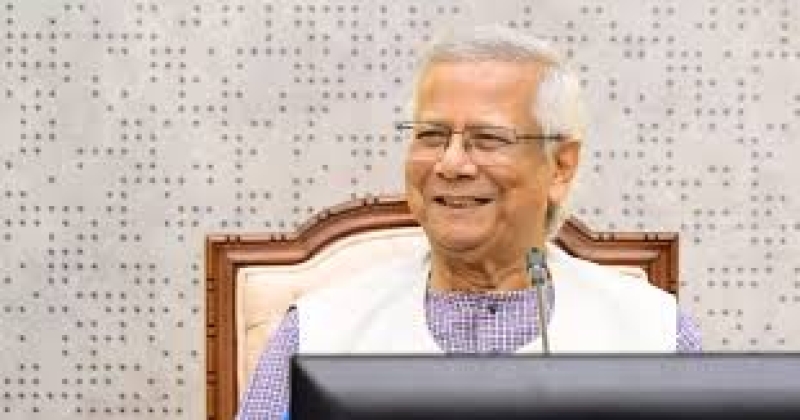
The interim government, led by Nobel Laureate Professor Dr Muhammad Yunus, completes its first year in office tomorrow, having taken oath on August 8, 2024. It assumed power following the ouster of Sheikh Hasina’s government on August 5 through a mass uprising that resulted in significant casualties among students and civilians.
Over the past year, the interim administration has undertaken major reforms aligned with the aspirations of the July Uprising, aiming to reshape governance, the electoral system, press freedom, law and order, the judiciary, and economic policy.
On August 5, observed as Mass Uprising Day, the government unveiled the “July Declaration,” reaffirming its commitment to democratic transition. The July Charter—currently in its final stages—has been shaped through extensive consultations with political parties under the National Consensus Commission.
In a televised address marking the anniversary, Chief Adviser Dr Yunus announced that the next general election would be held in February 2026, before the month of Ramadan. A formal request was sent to the Election Commission (EC) on August 6 to make necessary arrangements.
Following this, the EC convened a meeting at Nirbachan Bhaban in the capital’s Agargaon. Election Commissioner Brig. Gen. Abul Fazal Md. Sanaullah (Retd.) told reporters that the election schedule would be announced in the first half of December.
As part of its reform agenda, the interim government formed multiple commissions, including those on electoral, police, judicial, anti-corruption, public administration, health, media, labour, and women’s rights reforms. Many of these bodies have submitted their reports, with implementation already underway in several sectors.
The government’s efforts have begun to reflect in key economic indicators. In June, overall inflation dropped to 8.48%—the lowest in 35 months. Dr Yunus expressed optimism that food inflation would fall to 6% by December, identifying inflation control as a major challenge.
He also highlighted how early flood damage in the north and south had threatened food prices. “Thanks to timely interventions, market monitoring, and curbing middleman influence, we averted a crisis. Since Ramadan, markets have remained stable,” he said.
He credited the stability in the forex market to growing confidence among expatriate Bangladeshis. Remittances hit a record $30.33 billion in the last fiscal year, while export earnings rose by 9%. This contributed to the strengthening of the taka, which has appreciated against the US dollar for the first time in years.
Over the past 11 months, Bangladesh paid $4 billion in debt servicing—its highest ever—while maintaining a steady foreign exchange reserve, the Chief Adviser added.