

- USS Warrior Arrives in Chattogram for CARAT Bangladesh 2026 |
- Garment Workers’ Protest Shuts Five Metro Rail Stations |
- Govt Forms Six-Member Wage Board for Garment Workers |
- Dhaka ranks 4th among world's most polluted cities this morning |
- Dhaka Launches Company-Operated Buses on Six Routes Today |
Dhaka’s target of "10,000 MW solar power by 2030 attainable”
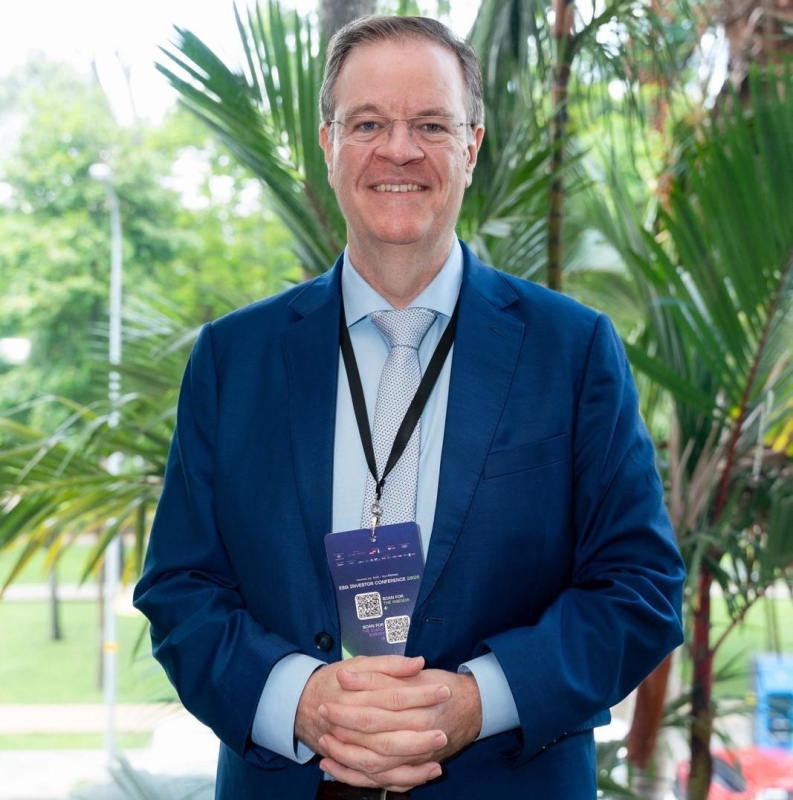
John Grimes, Chief Executive Officer Renewable Energy Council Asia-Pacific (RECAP).
John Grimes, Chief Executive Officer Renewable Energy Council Asia-Pacific (RECAP), says
Amid global energy crisis and uncertainty, the Bangladesh government has set a target of producing 10,000 MW renewable energy by 2030 to overcome challenges in the sector. As Bangladesh has around 1,450 MW of solar today, the country should produce about 2,000 MW a year to attain the target.
John Grimes, Chief Executive Officer, Renewable Energy Council Asia-Pacific (RECAP)" has expressed this view while giving a written interview with Imtiaz Ahmed and Samia Tabassum. John Grime came to Dhaka on a “seven-day” visit to Bangladesh recently.
On energy security, and how to reach 10,000 MW of solar by 2030, John Grimes said “The Bangladesh Government deserves real credit here. Energy security through solar is being driven from the very top, with the Prime Minister and cabinet treating it as a key national priority. Few governments in the region have moved this quickly or this seriously.
The early steps have been excellent. The government has reduced import duties on solar equipment, is putting solar on government buildings, has made low-interest finance available, and is running a public campaign to explain what solar means for households, businesses and the nation: lower bills, greater energy security and a more resilient economy. That is exactly the right package.
It matters all the more given the global situation. Bangladesh imports much of the fuel it uses for power, so conflicts and price shocks overseas are felt by Bangladeshi households and factories. I won't comment on the conflicts themselves, but the lesson is clear. Sunshine is a domestic resource that no one can blockade.
The 10,000 MW target is ambitious and achievable. Bangladesh has around 1,450 MW of solar today, so the pace needs to reach about 2,000 MW a year. With the foundations the government has laid, the next steps are:
1. Rooftops at scale. At least half the target can come from rooftops. The garment sector alone could add close to 3,000 MW, and European buyers are actively seeking cleaner supply chains. Simple, fast net metering will unlock it.
2. Land, grid and auctions. For large solar parks, preparing land and transmission and then running transparent competitive auctions will draw strong investor interest.
3. Building on the duty reductions. Lower equipment costs are already helping. Extending that approach to batteries and other components will speed things up further.
4. One door for investors. A one-stop service with clear timelines for approvals and grid connection will turn strong interest into signed projects.
5. Storage and skills. Batteries let solar power the evening peak, and accredited installers make sure systems are safe and last 25 years.
Australia is a natural partner. About one in three Australian homes has rooftop solar, and at times our grid runs on very high shares of solar. We have learned a great deal about installer standards, grid integration, storage and consumer protection. RECAP works closely with the Bangladesh Sustainable and Renewable Energy Association, and we are ready to support the government, industry and investors by sharing that experience and helping bring in investment.”
To a question of the business environment in Bangladesh, John Grimes, the chief executive of the renewable energy Council, Asia Pacific, said”
The direction is very encouraging, and investors are noticing. Bangladesh has a clear target, leadership from the highest levels of government, and practical measures already in place: lower import duties, low-interest finance, solar on public buildings, and early progress on rooftop solar and net metering.
Global investors are looking for large, growing markets where governments are serious about clean energy. Bangladesh now ticks both boxes. Building on this momentum, the things that will bring capital in fastest are stable and predictable tariffs, straightforward access to land and grid connection, reliable payment for power, and approvals with clear timelines. Bangladesh is one of the biggest renewable energy opportunities in Asia, and the government's actions are helping the world see it.
On prospects for the Blue Economy, "John Grimes, Chief Executive Officer, Renewable Energy Council Asia-Pacific (RECAP)", said “This isn't my core field, so I'll speak to the energy side, where the prospects are exciting. Bangladesh has limited land and abundant water, which makes floating solar on reservoirs, ponds and other water bodies a very practical option to scale. Offshore wind in the Bay of Bengal also deserves serious study, starting with good wind resource data. Australia is building its own offshore wind industry and is well placed to share lessons on planning and regulation. Clean power for ports and coastal and fishing communities is another natural fit.
On working together on climate change, he said “Bangladesh is among the countries most exposed to climate change, despite contributing very little to it. It has used its voice in global negotiations to great effect, and its leadership on adaptation is respected around the world.
Cooperation should cover both sides of the challenge. On adaptation, Australia and Bangladesh can share expertise in disaster preparedness, water management and resilient infrastructure. Solar and batteries help here too, keeping cyclone shelters, clinics and telecommunications running when the grid goes down. On emissions, the government's solar push is the fastest way to replace imported fossil fuels, and it deserves strong international support, including climate finance. With Australia leading the negotiations at COP31, there is a timely opportunity to put the needs and achievements of countries like Bangladesh at the centre.”