

- US Envoy Sergio Gor Meets PM Tarique Rahman in Dhaka |
- Fifa Scraps World Cup Investment Plan After Member Backlash |
- Dhaka Air Quality Remains Moderate, Ranks 18th Globally |
- US urges global partners to increase contributions for Rohingyas |
- 18 Rohingyas rescued after boat capsizes off Teknaf, many missing |
Scientist Solves 40-Year Mystery With New Pink Seaweed
A scientist has solved a mystery spanning more than four decades after confirming the discovery of a rare new seaweed species found in ancient underwater maerl beds in the United Kingdom.
Professor Christine Maggs first spotted the tiny pink-striped seaweed during her PhD research in the 1980s while studying maerl beds. Suspecting that it could be an unknown species, she spent years searching for enough samples to identify it.
Maerl beds are underwater habitats formed by thousands of pieces of hard, coral-like seaweed. They provide shelter and breeding grounds for a wide range of marine species.
Although Prof Maggs occasionally found traces of the unusual seaweed over the years, she could not collect enough material to confirm its identity. The breakthrough came two years ago when researchers surveying maerl beds off the coast of Cornwall discovered a specimen believed to be the long-sought species.
Prof Maggs preserved the sample in a wine fridge, using the cool, dark environment to maintain and grow the seaweed before conducting DNA tests. The genetic analysis eventually confirmed it as a new species.
The newly identified seaweed has now been added to the collection of the Natural History Museum.
The discovery was made during a project led by Natural England to monitor the condition of Cornwall’s maerl beds. Researchers said the underwater habitat is home to diverse marine life, including spider crabs, starfish, king scallops and goby fish.
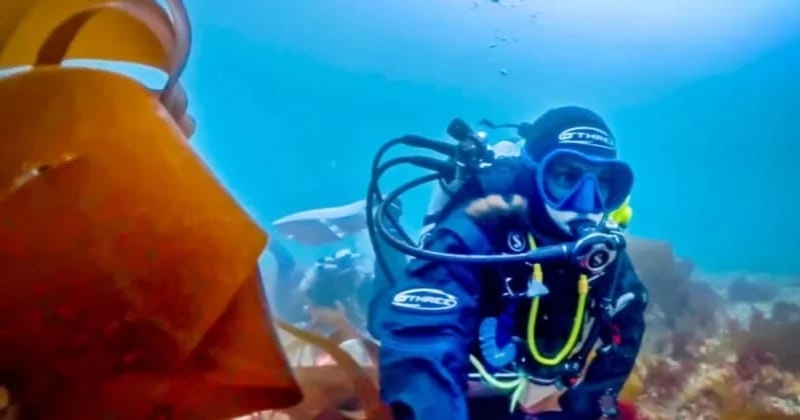
Marine biologist Francis Bunker collected the crucial samples after recognising the tiny pink-banded seaweed while diving. He sent the specimens to Prof Maggs, who needed to grow the plant before DNA sequencing could be completed.
Prof Maggs said obtaining genetic information was essential to solving the mystery, which had remained unanswered for more than 40 years.
The discovery highlights the importance of marine research and conservation efforts in protecting rare underwater ecosystems and identifying previously unknown species.