

- Dhaka's air 5th worst in the world this morning |
- Around 7,500 Bangladeshis imprisoned in Saudi Arabia: Shama Obaed |
- Bangladesh Outperforms India in Global Hunger Index 2026 |
- Covered van hits Gazipur police patrol team, killing SI, BNP leader |
- Korean City scrambles to rescue dusky shark after it returns to canal |
Hormuz Strait Shut Again as Iran Cites US Blockade
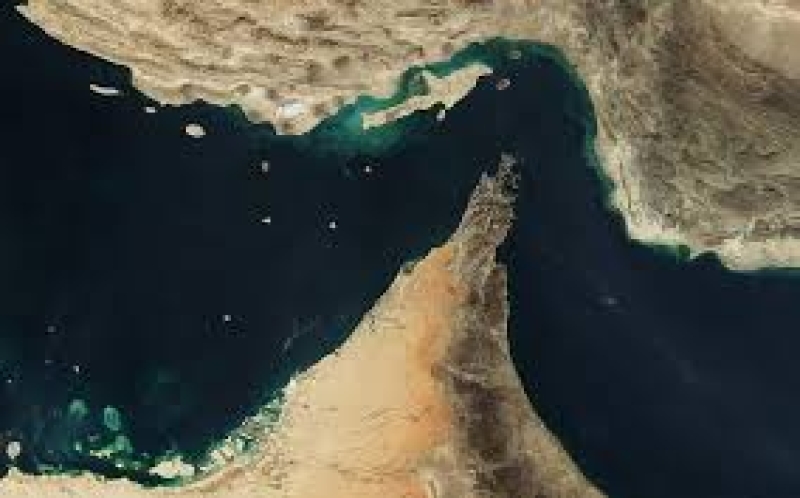
Photo: Collected
Iran has once again closed the Strait of Hormuz, only hours after reopening the vital shipping route, deepening uncertainty in global energy markets and raising tensions in an already volatile region.
The announcement came on Saturday, with Iran’s military command stating that the strategic waterway had returned to “strict management and control” of the armed forces. The move followed Washington’s decision to maintain a naval blockade on Iranian ports, which Tehran cited as the main reason behind the renewed closure.
The reversal unfolded rapidly. Just a day earlier, Iran had declared the strait open following a ceasefire agreement linked to fighting in Lebanon. That decision had sparked optimism in global markets, with oil prices dropping sharply on expectations of restored energy flows.
However, the situation shifted again after the United States made clear that its blockade would remain in place until a broader deal with Iran is reached. In response, Tehran signalled it would shut the strait once more if restrictions on its own shipping continued.
At the time of the latest closure, more than a dozen commercial vessels were in the process of transiting the narrow waterway. Maritime tracking data showed ships attempting to pass quickly through the corridor, many staying close to Iranian territorial waters as instructed. Some vessels even broadcast their identities as neutral countries, apparently to reduce the risk of confrontation.
The confusion led to erratic movements at sea. Several ships that had begun heading towards the strait abruptly turned back amid uncertainty, while others managed to complete their journeys. At least two oil tankers that had departed from Gulf ports towards India were seen reversing course after the situation escalated.
The Strait of Hormuz remains one of the world’s most critical maritime chokepoints, carrying roughly one-fifth of global oil and significant volumes of liquefied natural gas. Any disruption has immediate consequences for energy prices, shipping routes and global trade.
The latest developments also cast doubt on earlier optimism expressed by US President Donald Trump, who had suggested that a peace agreement to end the ongoing conflict was close. With only days left in a fragile two-week ceasefire, uncertainty continues to dominate the diplomatic landscape.
Efforts to secure a lasting deal are ongoing, with Pakistan playing a central mediating role. Senior officials from Islamabad have held high-level meetings with Iranian leadership, while parallel diplomatic outreach has taken place across key regional capitals, including Saudi Arabia, Qatar and Turkey.
A new round of talks is expected soon, with hopes of ending a conflict that began on 28 February when the United States and its ally launched large-scale strikes on Iran. The escalation quickly spread across the region, drawing in multiple actors and threatening broader instability.
Despite the tensions, there are limited signs of normalisation. Iran’s civil aviation authority has announced the reopening of its airspace, allowing international flights to transit through the eastern part of the country. Still, major issues remain unresolved, particularly around Iran’s nuclear programme and control over key maritime routes.
Disagreements persist over Iran’s stockpile of highly enriched uranium. While US officials have indicated that Tehran may be willing to hand over material enriched to near weapons-grade levels, Iranian authorities have firmly rejected any such move, insisting the stockpile will remain under national control.
Meanwhile, the impact of the conflict continues to be felt domestically. Internet restrictions imposed at the start of the war remain largely in place, leaving much of the population cut off from global online access.
The repeated opening and closing of the Strait of Hormuz highlights the fragile nature of the current ceasefire and the high stakes involved. With military pressure and diplomatic efforts unfolding simultaneously, the situation remains fluid.
For now, the waterway’s status appears tied directly to the broader geopolitical standoff. Until a comprehensive agreement is reached, disruptions in one of the world’s most vital shipping lanes are likely to continue, with ripple effects across the global economy.