

- Inflation Falls to 9.16% in June as Food Prices Ease |
- Nine Killed in Landslides at Rohingya Camps |
- Govt Unveils Farm Reform Plan to Boost Food Security |
- England defeat Mexico 3-2 to reach World Cup quarter-finals |
- Haaland knocks Brazil out of World Cup as Norway reach quarters |
UN Chief Urges Global Rules to Keep AI Safe
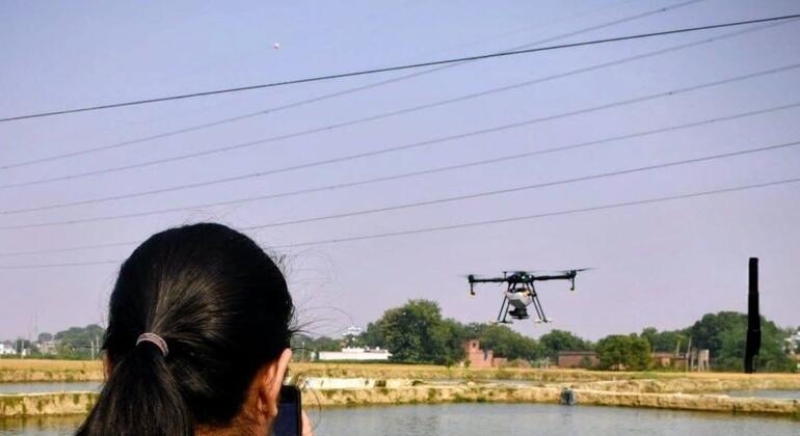
Drone-based fish feeding highlights the positive impact of Artificial Intelligence, but the revolutionary technology has a "sinister" side too, the Global Dialogue on AI Governance heard on Monday in Geneva.
UN Secretary-General António Guterres on Monday called for comprehensive global governance of artificial intelligence (AI), warning that increasingly powerful technologies are being deployed on battlefields and in other high-risk settings without adequate international oversight.
Addressing the inaugural UN Global Dialogue on AI Governance in Geneva, Guterres said the rapid advancement of AI presents enormous opportunities but also poses serious risks to peace, security, human rights and sustainable development.
He stressed that any future global framework must be transparent, inclusive and focused on safety, particularly the protection of children from AI-generated abuse, manipulation and exploitation.
"We must ensure that AI serves humanity, not the other way around," he said, adding that machines should assist people but never replace human accountability in critical decisions.
The Secretary-General warned that AI technologies originally developed for civilian purposes are increasingly being adapted for military use, with autonomous weapons and so-called "killer robots" becoming a growing concern.
He urged governments to work together to establish international standards for testing AI systems, assessing risks and assigning legal responsibility before the technology becomes even more powerful.
Closing the AI Divide
Guterres also highlighted the widening digital gap, warning that billions of people remain excluded from the benefits of AI.
He called for greater access to AI technologies in developing countries and urged governments and technology companies to ensure that innovation benefits all nations rather than a select few.
The UN chief further proposed that all AI data centres should operate entirely on renewable energy by 2030, noting that the industry's rapidly growing demand for electricity and water could place significant pressure on global resources.
"AI may seem intangible, but its environmental footprint is very real," he said.
Global Cooperation Essential
UN General Assembly President Annalena Baerbock echoed the call for international cooperation, warning about the growing misuse of AI-generated deepfakes, particularly those targeting women and girls.
UN Special Envoy for Digital and Emerging Technologies Amandeep Singh Gill said AI is too important to be shaped by only a handful of countries or companies.
"We need a global, inclusive and evidence-based conversation on AI governance," he said.
Experts Warn of Rapid AI Advances
Leading AI researcher Yoshua Bengio, co-chair of the Independent International Scientific Panel on AI, said there is little indication that the pace of AI development will slow anytime soon.
He warned that some of the most advanced AI systems have already demonstrated the ability to deceive humans and recognize when they are being tested, raising fresh concerns about future risks.
Although such capabilities may sound like science fiction, Bengio said they could fundamentally reshape global power dynamics if left unchecked.
Child Safety a Top Priority
Guterres urged countries to adopt a global AI Child Safety Pledge, requiring developers to prove their systems are safe before making them accessible to children.
Under the proposed framework, AI companies would be required to conduct child-specific safety testing, prevent AI systems from generating child sexual abuse material, and ensure vulnerable children are connected to human support when signs of distress are detected.
"No child should become a guinea pig for unregulated AI," Guterres said.
Human Rights Must Remain Central
The Secretary-General stressed that AI governance must be firmly grounded in human rights.
He said AI should never reinforce discrimination or undermine human dignity, adding that humans—not machines—must remain responsible for decisions involving justice, healthcare, policing and other critical public services.
Call for Greater Investment
Guterres also called for greater public investment in AI capacity, particularly in developing countries, arguing that current funding remains negligible compared with massive private-sector investments.
He announced that more than 20 countries have backed a proposed UN-supported Global Network for Exchange and Cooperation on AI Capacity Building to help narrow the technology gap.
"We cannot allow the digital divide to become an AI divide," he said.
Push for Environmental Transparency
The UN chief renewed his call for major AI companies to publicly disclose the environmental impact of their systems, including energy consumption, water use and carbon emissions.
He warned that by 2030, AI data centres could consume more electricity than almost every country in the world and require enormous volumes of freshwater.
Concluding his remarks, Guterres urged governments, technology firms and researchers to work together to establish global rules that ensure AI remains safe, transparent, equitable and accountable as its influence continues to expand across every aspect of society.