

- PM Proposes Five Urgent Steps to Resolve Rohingya Crisis |
- Govt Appoints Indonesian Firm to Operate Cox’s Bazar SPM |
- ADB lowers Bangladesh’s growth forecast to 4 % in FY2027 |
- El Niño Tests Global Readiness for a Changing Climate |
- Dhaka's air quality recorded moderate on Wednesday morning |
AI Innovation in Global South Transforms Lives
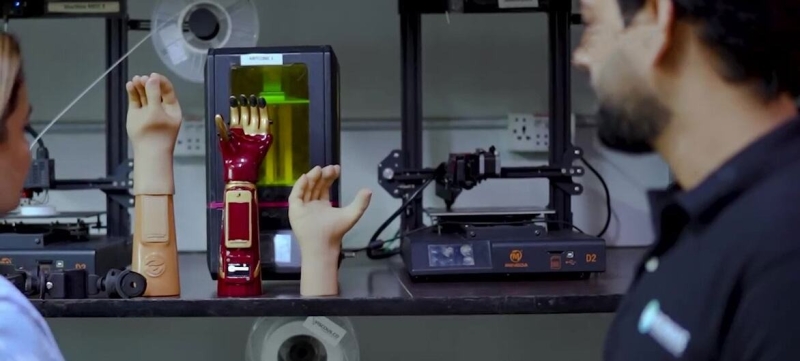
Prosthetics from Bioniks Technologies, created using AI tools.
Artificial intelligence is no longer the sole preserve of rich Western nations. Its applications across the Global South, in areas ranging from health to agriculture and industry, are transforming people’s lives.
Fodder cutters are fearsome machines with huge circular blades spinning at high speed, powered by small generators. Operated by rural workers in several developing countries, including India, Pakistan and Kenya, they pose a constant risk. Many workers have lost hands or arms in accidents.
The consequences are devastating. Tasks that shape daily life, harvesting crops, kneading dough, stitching embroidery, suddenly become impossible. Thousands of women are left with reduced independence, lost livelihoods and, too often, social exclusion.
Until recently, advanced prosthetics were far beyond their reach. Now, home-grown AI tools are opening the door to the same kinds of sophisticated devices available in wealthier countries.
Karachi-based Bioniks Technologies partnered with UN Women to design and deliver prosthetic limbs tailored specifically for affected female workers in Pakistan’s Sindh province. The initiative harnessed frontier technologies such as 3D modelling, digital scanning and artificial intelligence to create lightweight, durable and intuitive bionic arms capable of transforming daily life.
“Through this collaboration, we provided advanced prosthetic arms, hands-on training, psychological support and awareness sessions to help communities understand safety practices and prevent such injuries in the future,” said Ayesha Zulfiqar, co-founder of Bioniks.
“Watching these incredible women regain their mobility, dignity and independence, and return to hand embroidery, their main source of income, has been profoundly inspiring. This is more than technology; it is about restoring hope, confidence and opportunity.”
India AI Impact Summit
This initiative is a powerful example of what can be achieved when AI is accessible to innovators in the Global South.
Democratising AI is a major priority for the United Nations, which is working to ensure that this rapidly evolving technology is developed ethically and benefits people everywhere.
At the India AI Impact Summit, taking place from 16 to 20 February in New Delhi, several UN agencies will showcase initiatives they are supporting in India and across developing nations.
The summit is the first major event of its kind in the Global South. Building on the momentum of the 2023 AI Safety Summit convened by the UK and the 2025 AI Action Summit in France, it will also feature UN Secretary-General António Guterres and Amandeep Gill, his Special Envoy for Digital and Emerging Technologies.
Speaking to author and podcaster Anirudh Suri ahead of the conference, Mr Gill said the UN is focused on bridging the growing “AI divide” between wealthy and developing economies, as well as between the rich and poor within countries, and making AI more accessible to people everywhere.
“The concentration of economic and technological power is our biggest concern at the United Nations,” Mr Gill said. “We’ve seen this story before during previous industrial revolutions, when those who missed steam power found themselves 50 years behind in terms of development. We cannot afford to let that happen again.”
Despite these concerns, Mr Gill pointed to regions that have put plans in place to capitalise on AI and avoid being left behind.
“I see this in Southeast Asia, in many parts of Africa and in India, where the government is taking the lead, subsidising access to AI for researchers, developers and smaller companies.”
Although the AI Impact Summit is not a UN event, Mr Gill has been involved in shaping the agenda and considers it an important moment on the path to international governance.
“It’s exciting to see the focus on bridging the AI divide, building capacity and involving citizens in a democratic approach to the technology,” he said.