

- Rooppur NPP: Rosatom installs automated control system at Unit-1 |
- Mount Everest season opens late, despite huge ice block, high travel costs |
- 2 more children die with measles-like symptoms in Sylhet |
- Dhaka again ranks world’s most polluted city Friday morning |
- Speed up nationality verification for ‘illegal’ migrants: Delhi |
Kuakata: Bangladesh’s Coastal Gem After Cox’s Bazar
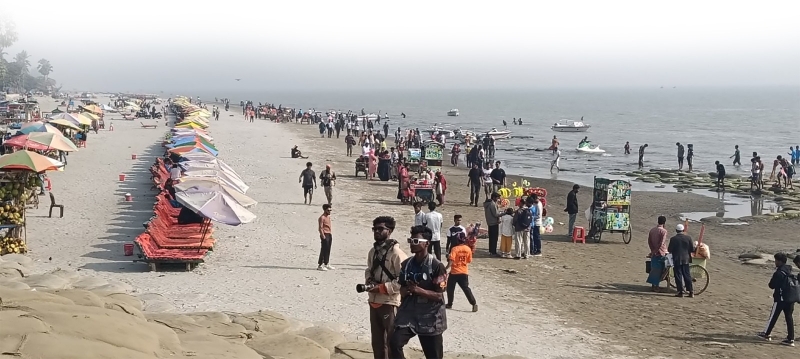
Kuakata, a coastal treasure in southern Bangladesh, has transformed from a quiet town into the nation’s second most popular tourist destination, trailing only behind the famed Cox’s Bazar. Often called “Shagor Konnya” or the Daughter of the Sea, Kuakata offers a rare combination of natural charm, cultural heritage, and serene landscapes that make it stand out among the country’s many scenic spots. Unlike the bustling crowds of Cox’s Bazar, Kuakata retains a calmer and more intimate environment, allowing visitors to enjoy the Bay of Bengal’s beauty at their own pace.
The history of Kuakata extends far beyond its recent rise as a tourism hub. The aborigine Rakhaines were the first settlers, arriving under the leadership of Aunjuey Maung in 1784. With guidance from two brothers, Jhungary Maung and Hangary Maung, they cleared the dense forests to establish settlements. Scarcity of fresh water posed an early challenge, which they overcame by digging wells known locally as “Kuas.” The town’s name, Kuakata, is believed to derive from this practice, combining “Kua” (well) and “Kata” (digging). A large, preserved well still exists today, a testament to the area’s early history.
During the Second World War, the British and American governments established military cantonments on Kuakata’s sand hills and beach. Equipped with electricity, these cantonments witnessed seaplanes and aeroplanes landing frequently, and soldiers patrolling the area. After the war, the cantonments were removed, but the historical imprint remains, adding to Kuakata’s heritage. During the Jatiya Party rule, former President Hussain Muhammad Ershad once spent 18 hours at Kuakata Duck-Bungalow, briefly elevating the town to a temporary capital. In 1998, the government officially recognised Kuakata as a tourism centre, giving the town formal recognition on the national map.
Kuakata’s spiritual significance adds to its appeal. For centuries, Hindus have considered the waters of the Bay of Bengal at Kuakata sacred. Every Ras Purnima during Ras Puja, thousands of devotees travel from across Bangladesh to bathe in these holy waters. Both Hindu and Muslim saints participate in these rituals, reflecting an inclusive cultural tradition. Alongside religious practices, the local Rakhine community preserves markets, historical sites, and traditional settlements, offering visitors a glimpse into the area’s enduring cultural landscape.
Geographically, Kuakata covers three unions—Latachapli, Dhulasar, and Khapravanga—spanning 38,065 acres. The region boasts an 18-kilometre-long sea beach, sand hills, the Gongamoti mangrove forest, Gongamoti Lake, Tengragiri forest, and Fatra Bans areas including Sonar Char, Haser Char, and Kotka. Visitors can explore the ancient Misripara Bouddha Vihar, Sot Sango Ashrom in Mombi Para, and bustling local fisheries and cockle markets. Tamarisk gardens and a large eco-park maintained by the Forest Department complement numerous hotels and motels, ensuring visitors enjoy both comfort and nature. Well-maintained roads connect Kuakata with Dhaka, Chittagong, Rajshahi, and Khulna, making travel straightforward.
What makes Kuakata truly unique in South Asia is the ability to witness both sunrise and sunset from the same beach. Early risers can enjoy the sun emerging over the Bay of Bengal, while evening visitors watch it melt into the sea. The tranquil night environment, combined with the rhythmic roar of the waves, creates a peaceful, almost meditative atmosphere. Unlike the often crowded Cox’s Bazar, Kuakata offers a more intimate connection with the sea, making it ideal for travellers seeking both beauty and serenity.
During peak seasons, especially Eid-ul-Fitr, Kuakata attracts tens of thousands of tourists. The centre can host 25,000 to 30,000 visitors daily. Around 250 hotels, both government and private, provide a range of amenities including AC and non-AC rooms. Well-known accommodations include Parjatan Corporation’s Holiday Homes, Pantha Nibas, LGED Rest House, BWDB Rest House, Roads and Highways Rest House, T&T Rest House, Sikder Resort and Villa, Kuakata International, Hotel Nilanjona, Sky Palace, Banani, Hotel Graver, and Sea View.
Tourists enjoy a variety of activities, from speed boat and trawler rides along the sea to horse and motorbike rides along the shore. The gentle waves and soft sands make sunbathing and swimming pleasurable, with safety measures ensuring a calm environment. Families, young couples, and solo travellers all find the beach’s atmosphere invigorating. For those seeking a more leisurely pace than the busy Cox’s Bazar, Kuakata offers a perfect blend of adventure and relaxation.
Accessibility to Kuakata is well established. It is roughly 320 kilometres south of Dhaka and can be reached by bus or launch. Bus journeys take around six hours, costing between Tk 650 and Tk 850 per person, while launch services depart daily from Sadarghat in the evening. Comfortable launches to Barisal cost Tk 1,500–2,000, followed by a local bus or vehicle covering 36 kilometres from Patuakhali or 90 kilometres from Barisal.
Culinary options are modest but satisfactory, with local restaurants, resorts, and motels serving a variety of meals. While shopping is not the primary attraction, visitors can buy handicrafts and local products as mementos. Rakhine women’s markets and beach stalls add a cultural touch to the visit, complementing the natural scenery.
During festivals, the beach becomes vibrant. Families, groups of students, and local and foreign tourists fill 25 to 30 designated picnic spots along the shore. Eid and Durga Puja vacations are particularly lively, with children, students, and adults contributing to a festive environment while the waves continue their endless dance against the sand.
Local authorities and tourism officials ensure safety and convenience. Kuakata Police, DB Police, and local administrative units manage crowd control and security, while business owners prepare accommodations, transport, and leisure services in advance. This coordinated effort ensures visitors can fully enjoy the beach without worry.
Kuakata’s natural beauty, historical significance, and cultural richness make it a must-visit destination. Its combination of sand hills, mangrove forests, lakes, eco-parks, and vibrant local communities offers a comprehensive experience for all types of travellers. Whether enjoying the sunrise and sunset, riding along the shore, relaxing by the roaring sea at night, or participating in cultural festivals, Kuakata provides memorable experiences that linger long after departure.
For those seeking a retreat from urban life, Kuakata delivers a restorative experience. The calm environment, natural scenery, and cultural depth make every visit unique, offering a rare chance to reconnect with nature and heritage.
Standing on Kuakata’s golden sands, watching the Bay of Bengal stretch to the horizon, it is clear why this beach has risen to become Bangladesh’s second most popular tourist destination, after Cox’s Bazar. Its serene atmosphere, combined with historical and cultural significance, distinguishes it from other coastal spots, giving travellers a more intimate and peaceful experience. Kuakata is not merely a beach; it is a living canvas of history, culture, and nature. From the legacy of the Rakhaines to wartime cantonment traces, from sacred rituals to modern holiday crowds, Kuakata embodies the diversity and beauty of Bangladesh.
In every sense, Kuakata is a treasure waiting to be explored—a place where nature’s rhythms, centuries-old traditions, and modern leisure converge. Its extensive sands, scenic forests, and charming lakes ensure every visitor leaves with memories to cherish. With its unmatched ability to present sunrise and sunset from the same spot, combined with comfortable facilities and cultural richness, Kuakata truly deserves its title as the Daughter of the Sea—a serene yet vibrant coastal gem of Bangladesh.