

- Infantino apologizes for World Cup furore but critics unhappy |
- Teesta irrigation project: Water in canals inadequate to enter fields |
- Biodiversity Targets Lag as UN Warns of a War on Nature |
- 18 railway coaches made in India set to arrive this afternoon |
- 8 BGB platoons deployed in Naogaon to ensure Durga Puja security |
Honduras Gun Attacks Leave 25 Dead in Coastal Raids
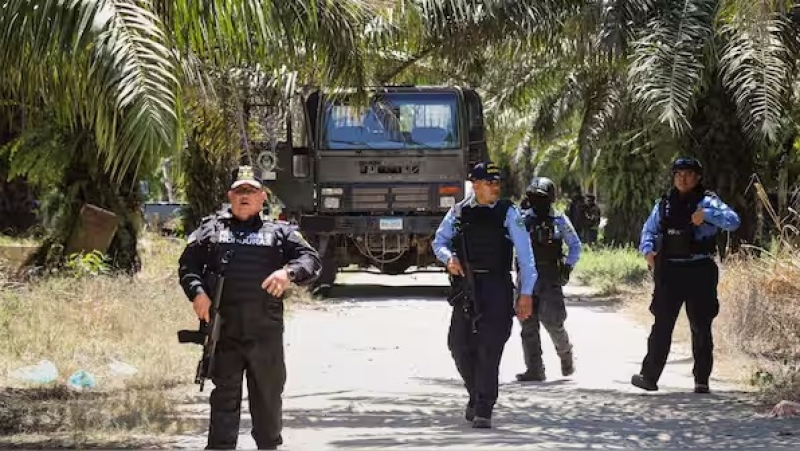
Police officers patrol near the site of a massacre in Trujillo, Honduras on May 21, 2026. Several people were massacred in a town in northern Honduras where rival gangs are fighting for control of palm oil plantations, authorities and residents said on May 20, 2026.
Gunmen opened fire in two separate attacks on Thursday along Honduras’s northern coast, killing at least 25 people, including six police officers, authorities said.
The first attack took place at a plantation in Trujillo, in northern Honduras, where at least 19 workers were shot dead, according to a spokesperson for the Public Prosecutor’s Office.
The region is known for long-standing land disputes tied to agriculture and natural resources, with repeated clashes involving workers, landowners and armed groups.
The area has also been flagged for years as highly dangerous for environmental defenders. The Inter-American Commission on Human Rights has previously issued precautionary measures for activists facing threats, surveillance and intimidation.
Environmental campaigners in Honduras have frequently been targeted. The 2024 killing of activist Juan López drew international attention to the risks faced by those defending land and natural resources. According to Global Witness, the country remains among the most dangerous in the world for environmental defenders.
Three suspects were recently arrested in connection with López’s killing, a rare prosecution in a country where impunity remains widespread.
In a second incident, armed attackers targeted police officers in Omoa in the Cortés department, near the border with Guatemala, killing six officers, including a senior official. Police said the unit was travelling from the capital Tegucigalpa for an anti-gang operation when it was ambushed.
Authorities said identifying the exact toll in Trujillo has been difficult, as some relatives reportedly removed bodies before investigators arrived.
Security forces, including forensic teams and prosecutors, have been deployed to both attack sites, and investigations are underway.
Honduras continues to struggle with gang violence and drug trafficking networks, although its homicide rate has fallen significantly since a peak in 2011.
HUMAN rights groups have criticized the country’s militarized security approach, warning it has contributed to abuses including forced disappearances and extrajudicial killings. A prolonged state of emergency, which expanded police and military powers, ended in early 2026.