

- Security, sacrifice or opportunity: Climate action visions differ |
- Four New Subjects to Join Curriculum From 2027 |
- Strong children mean a stronger Bangladesh: PM |
- UK All-Party Parliamentary Group on BD Meets Humaiun Kobir |
- World Bank Keeps Bangladesh FY27 Growth Forecast at 3.4% |
Pakistan Coal Mine Blast Kills 32, Traps 10 Miners
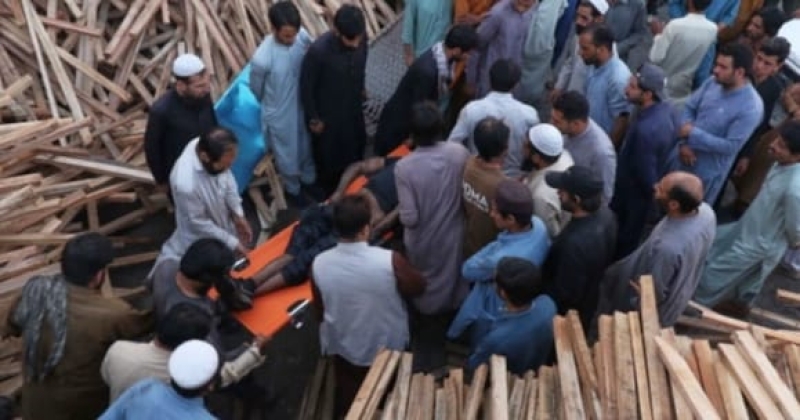
People transport the body of a miner recovered after an explosion inside a coal mine on the outskirts of Quetta, in southwest Pakistan, Thursday, July 30, 2026.
At least 32 miners were killed and 10 others remained trapped underground after a methane gas explosion at a coal mine near Quetta in southwestern Pakistan on Thursday.
The blast occurred at a mine on the outskirts of Quetta, the capital of Balochistan province, government mine inspector Ghani Baloch said.
Seven bodies were recovered several hours after the explosion, while rescue teams later found 25 more, officials and the provincial disaster management agency said.
Rescue operations were continuing to locate and bring out the remaining trapped miners.
Baloch said rescuers would continue their efforts until all the trapped workers were found, but warned that the death toll could rise.
He said the chances of finding survivors decline after methane explosions because oxygen levels inside mines can fall sharply. Rescuers were also proceeding cautiously because of the hazardous conditions underground.
Authorities were handing over the recovered bodies to their families for burial, while relatives of the trapped miners waited anxiously for updates, Baloch said.
Balochistan Mines and Minerals Minister Shoaib Nosherwani said rescue teams were working in extremely difficult conditions. He expressed condolences to the victims' families and announced compensation of 500,000 Pakistani rupees for each miner who died.
He also said authorities would investigate the cause of the explosion and review safety measures at coal mines.
A coal miners' union blamed possible negligence for the accident and called for action against those responsible.
The Pakistan Central Mines Labour Federation urged the government to strictly enforce mine safety regulations and take strong action against companies that fail to comply with safety standards.
Deadly accidents are common in Pakistan's coal mining sector, particularly in Balochistan, where many mines lack proper ventilation, gas monitoring systems and other basic safety facilities.
Mine workers and labour groups have long accused mine owners of failing to enforce safety regulations and provide adequate protective equipment.
Despite the hazardous working conditions and low wages, thousands of people depend on coal mining for their livelihoods in Balochistan, Pakistan's largest and least developed province, where poverty and unemployment remain widespread.