

- SPM Contract Cost Rises by $31m Despite Tender Rules |
- Cabinet Approves Secretariat Relocation to Sher-e-Bangla Nagar |
- Nearly Half of Bangladesh’s Families Are in Debt: BBS |
- Bangladesh Seeks Details on Execution of Two Nationals |
- Former Bangladesh Air Force Chief Arrested in Qatar |
Why Young People Are Taking to the Streets Across Europe
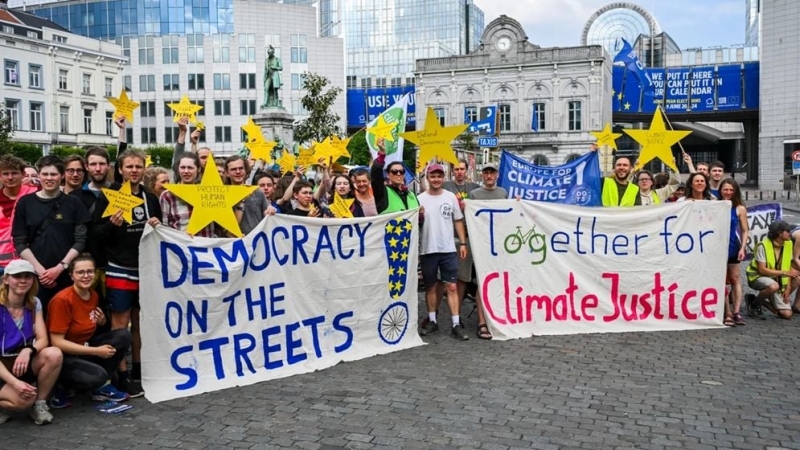
Young people have taken to the streets in France, Spain, Portugal, Italy and Albania, protesting over a range of concerns, including struggling education systems, teacher shortages, rising rents, the growing cost of living, corruption and a lack of employment opportunities.
In France, a student-led movement has expanded into broader anti-government protests. Demonstrations in several countries have also turned violent after initially peaceful gatherings.
France: Anger Over Education and Rising Costs
Protests began in France about a week after the new academic year started in late September. Clashes have also occurred between police and high school students.
Students have raised concerns over long school hours, teacher shortages, deteriorating classrooms and an unclear university admission process. Unfilled teaching positions have reportedly left some students without regular lessons for months.
The movement later drew wider public participation, with demonstrators also expressing frustration over rising living costs, particularly fuel prices. Concerns about fuel supplies and prices have intensified amid the effective closure of the Strait of Hormuz following US bombing operations.
France’s General Confederation of Labour (CGT), one of the country’s major trade union organisations, has backed the protests, calling for lower prices, higher pensions and increased wages.
President Emmanuel Macron is approaching the end of his second term, with France’s next presidential election scheduled for April 2027.
Spain: Protests Over Rent and Evictions
Housing activists took to the streets in Spain in September to protest soaring property prices and rents. The eviction of 87-year-old Maricarmen Abascal from her home became a focal point of the demonstrations after an investment fund reportedly increased her rent by 230 per cent. She died two weeks after being admitted to hospital.
Protesters are demanding lower rents, an end to evictions and restrictions on investment funds purchasing residential properties.
Socialist Prime Minister Pedro Sánchez had sought to pass emergency housing legislation to strengthen protections for tenants. However, the proposal failed to pass parliament amid opposition from right-wing and far-right parties.
Sánchez subsequently called an early election for November 29, saying he needed a broader progressive majority to implement reforms.
Measures adopted through parliament’s permanent deputation could help ease pressure over housing. Both Sánchez’s Socialist Party and the conservative People’s Party have pledged to build more homes and address the housing crisis if they win the election.
Portugal: House Prices Surge 124%
Hundreds of people gathered in central Lisbon on Saturday to protest Portugal’s housing crisis.
Official figures show that house prices in Portugal rose by 124 per cent between 2015 and 2024, nearly twice the European Union average.
With both purchase prices and rents increasingly unaffordable, housing has become one of the country’s major public concerns.
Italy: Demonstrations Over the Cost of Living
In Milan, Italy, protesters demonstrated against the rising cost of everyday life on Saturday.
The march began peacefully but later turned violent. Masked demonstrators threw stones and paving blocks at riot police and set fire to barricades made from tables taken from bars and restaurants.
Saturday marked the first day of the latest cost-of-living protests in Italy. Demonstrations were also held in Belgium in solidarity with the movement in France.
Albania: Anger Over Corruption and Unemployment
Protests against Prime Minister Edi Rama in Albania entered their sixth day on Sunday, with demonstrators voicing concerns over corruption, a lack of jobs and poor educational standards.
The demonstrations began last summer around a luxury coastal property development reportedly backed by US President Donald Trump’s son-in-law, Jared Kushner.
Have the Protests Brought Any Changes?
In France, the government has announced plans to recruit an additional 3,000 temporary teachers to address staffing shortages. It has also pledged to involve students more closely in school management and decision-making.
The government has withdrawn plans to increase some university registration fees in next year’s budget. Following fuel-price protests in mid-September, the French president’s office also announced increased fuel subsidies for selected industrial sectors.
These measures have not brought the demonstrations to a complete halt. Interior Minister Laurent Nuñez has blamed far-left protesters and looters for the violence, signalling that the government may be reluctant to make further concessions.
The future of the protests in France will partly depend on how effectively the government responds to students’ and the wider public’s demands.
In Spain, passing some housing measures through parliament’s permanent deputation could ease the pressure. However, it remains unclear how quickly public frustration over rents, housing affordability and living costs will subside.
Across Europe, the demonstrations reflect different national grievances but share several common themes: access to education, employment opportunities, affordable housing and the rising cost of living. Young people are increasingly taking to the streets to demand tangible improvements in these areas.