

- Bangladesh to Introduce New Law to Curb Extortion, IGP Says |
- UN Marks 81 Years of Global Cooperation and Peace |
- Dhaka's air 5th worst in the world this morning |
- Around 7,500 Bangladeshis imprisoned in Saudi Arabia: Shama Obaed |
- Bangladesh Outperforms India in Global Hunger Index 2026 |
Afghanistan Sees Opium Drop, But Synthetic Drug Threat Rises
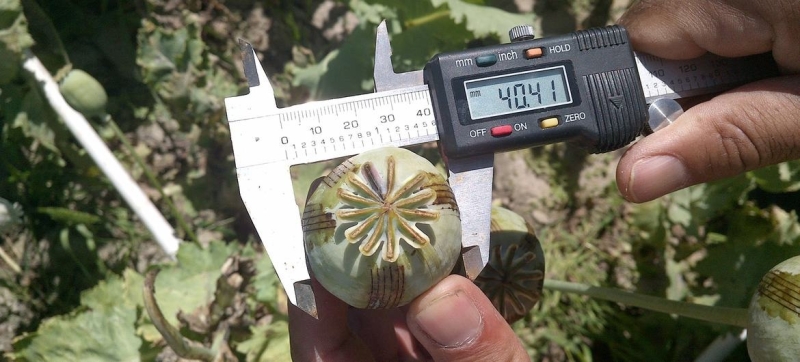
UNODC field surveyor verifying opium yield in Sukhrud, Afghanistan (file)
Opium poppy cultivation in Afghanistan has fallen by 20 per cent compared to last year, continuing a sharp decline since the nationwide ban introduced by the Taliban in 2022. However, synthetic drugs and shifting trafficking routes are creating new challenges.
According to a report released Thursday by the UN Office on Drugs and Crime (UNODC), 10,200 hectares were under opium cultivation this year, down from 12,800 hectares in 2024 and far below the 232,000 hectares recorded before the ban.
Opium production fell even more sharply, dropping by almost a third to 296 tons, while farmers’ income from opium sales has nearly halved over the same period. UNODC emphasizes that eradication efforts must be paired with alternative livelihoods and demand-reduction measures.
Many growers have switched to cereals and other crops, but worsening drought and low rainfall have left over 40 per cent of farmland barren. At the same time, the return of roughly four million Afghans from neighbouring countries has increased pressure on jobs and resources, raising concerns that economic hardship could drive illicit cultivation again.
Rise of Synthetic Drugs
Meanwhile, synthetic drug production, particularly methamphetamine, is increasing. Seizures in and around Afghanistan were 50 per cent higher by late 2024 compared to the previous year. UNODC warns that organized crime groups may increasingly favour synthetic drugs, which are easier to produce, harder to detect, and less vulnerable to climate shocks.
Georgette Gagnon, Deputy Special Representative of the Secretary-General for Afghanistan and Officer-in-Charge of the UN political mission (UNAMA), said the problem extends beyond Afghanistan’s borders:
“The dynamics of supply, demand, and trafficking involve both Afghan and international actors. Addressing this challenge requires collaboration among key stakeholders.”
The report calls for comprehensive counternarcotics strategies that go beyond opium, integrating synthetic drugs into monitoring, interdiction, and prevention efforts.