

- Early winter cucumber brings hope of bumper harvest in Sirajganj |
- Saudi coalition intercepts Houthi missile after blasts in Riyadh |
- COP31 to Focus on Implementing Climate Policies |
- 16 Killed, 46 Injured as 7.0-Magnitude Quake Hits China's Xizang |
- Dhaka Ranks 12th Among World's Most Polluted Cities on Friday |
Sudan War Keeps 8 Million Children Out of School for 500 Days
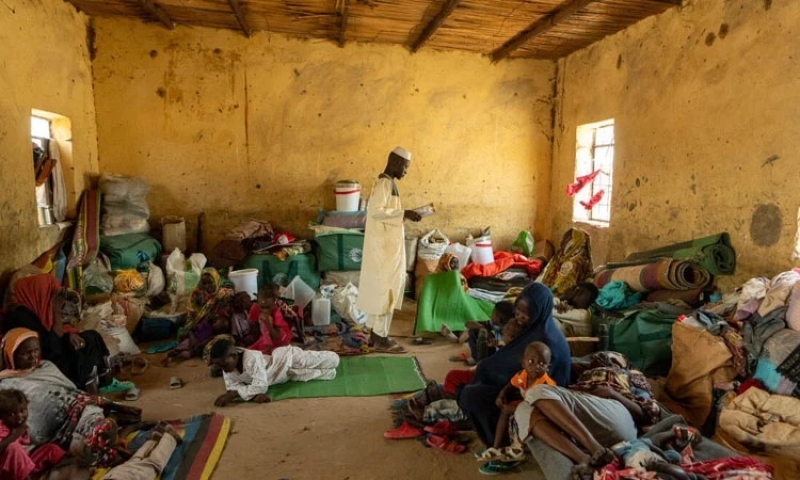
Nearly three years of war in Sudan have forced more than eight million children out of education for almost 500 days, highlighting one of the longest school shutdowns in the world, according to a new assessment by Save the Children.
The organisation said over eight million children—almost half of Sudan’s 17 million school-age population—have gone about 484 days without attending a single class.
Sudan has been engulfed in conflict since April 2023, following a power struggle between the army and the paramilitary Rapid Support Forces (RSF), devastating basic services nationwide.
The prolonged disruption has left many schools closed, damaged by fighting or converted into shelters for more than seven million displaced people, the organisation said.
North Darfur has been hit hardest, with only three percent of its more than 1,100 schools still operating. The situation worsened after RSF forces seized El-Fasher, the capital of North Darfur and the last of Darfur’s five capitals previously outside their control.
Other severely affected areas include West Darfur, West Kordofan and South Darfur, where just 27 percent, 15 percent and 13 percent of schools remain functional, respectively.
The crisis has been compounded by a growing shortage of teachers, many of whom have left their posts due to unpaid salaries.
Without urgent investment in education, Sudan risks “condemning an entire generation to a future defined by conflict,” warned Save the Children chief executive Inger Ashing.
The war, which has claimed tens of thousands of lives, has triggered what the United Nations has described as the world’s worst humanitarian crisis. The UN has also raised alarm over rising attacks on civilian infrastructure, including hospitals, markets and schools, as well as the arming of civilians and the recruitment of children.
Repeated UN warnings have underscored the danger of a “lost generation” as the conflict drags on.