

- New President visits Zia, Khaleda’s graves before Bangabhaban oath |
- Five new faces set to take oath as cabinet members |
- Rising Prices of Essentials Put Low, Middle-Income Families Under Strain |
- Mirza Fakhrul to Take Oath as Bangladesh President Today |
- Clean energy transition needs land; can it help restore it too? |
Char Farmers Prepare for Winter Crop Cultivation
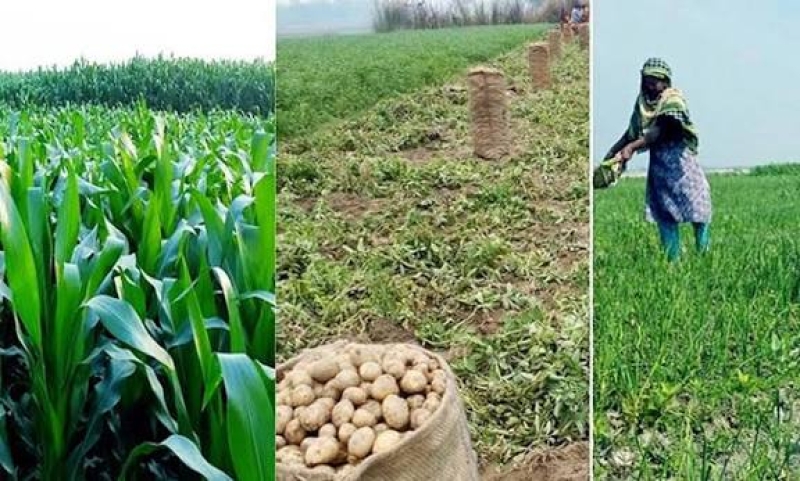
Farmers in the Rangpur agricultural region are preparing to cultivate winter crops on char lands and dried-up riverbeds after the monsoon season ends.
Agriculture officials expect cultivation to begin from late September to early October, provided there are no untimely floods or unusually heavy rainfall.
Large quantities of fertile silt deposited during the monsoon have created favourable conditions for farming in the char areas along the Brahmaputra basin.
Farmers generally begin cultivating peanuts, potatoes, onions, garlic, vegetables, pumpkins, squash and green chillies during this period. Harvesting usually starts in early December and continues until May.
Char farmers completed harvesting their previous crops by May, recording good yields and favourable market prices.
“In the coming season, char farmers will cultivate various winter crops, mostly adopting intercropping and mixed-relay methods and using organic fertilisers to produce healthier and more nutritious crops,” a farmer said.
During the 2025-26 Rabi season, farmers in char and riverbank areas cultivated crops on more than 82,000 hectares across Rangpur, Gaibandha, Lalmonirhat, Kurigram and Nilphamari districts.
The crops included Boro rice, potatoes, sweet pumpkins, squash, brinjal, onions, garlic, green chillies, gourds, bitter gourds, carrots, bananas, mustard, pulses, cauliflower, cabbage, peanuts and wheat.
Char farmers in the region have produced around six lakh tonnes of crops worth about Tk 1,200 crore annually from roughly 82,000 hectares in recent years, according to officials.
Agricultural activities in the char areas have been expanding every year as farmers increasingly utilise dry riverbeds and floodplains.
The vast chars and dried riverbeds of the Brahmaputra, Teesta, Dharla, Dudhkumar, Ghaghat, Jamuna, Karatoa and other rivers are increasingly being transformed into productive agricultural land during the dry season.