

- Sajek Road Blockade: 2,933 Tourists Evacuated Amid Gunfire |
- Climate Crisis May Displace 7.5% of Bangladeshis by 2050 |
- NEIR Rollout Targets Tk 2,000cr Revenue Loss From Illegal Phones |
- Dhaka Ranks 7th Among World’s Most Polluted Cities on Thursday |
- Document: Two Bangladeshis Executed After Detention in 2023 |
Dhaka’s air continues to be moderate on Saturday
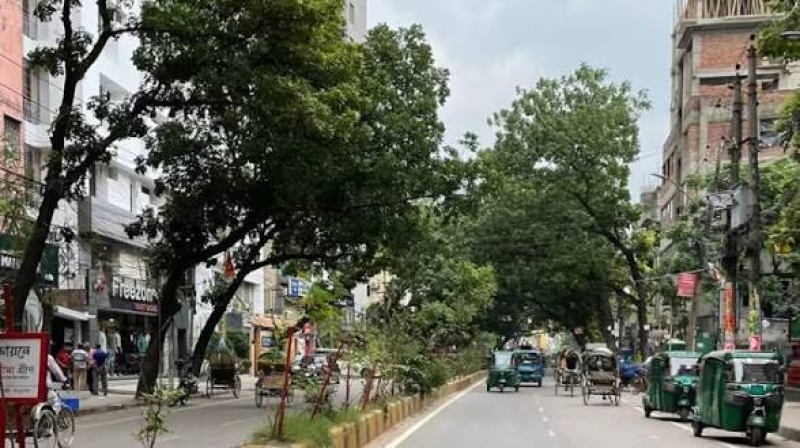
Dhaka, the densely populated capital of Bangladesh, ranked 31st among the world’s most polluted cities on Saturday morning, with an Air Quality Index (AQI) of 66 at 9:00 am.
The air was classified as ‘Moderate’, meaning it could pose health risks to people who are more vulnerable, according to the AQI scale.
Pakistan’s Lahore, India’s Delhi, and Indonesia’s Jakarta occupied the first three spots on the list, with AQI scores of 290, 210 and 167 respectively.
When the AQI value for particle pollution is between 50 and 100, air quality is considered ‘moderate’, usually sensitive individuals should consider limiting prolonged outdoor exertion, between 101 and 150, air quality is considered ‘unhealthy for sensitive groups’, between 150 and 200 is ‘unhealthy’, between 201 and 300 is said to be 'very unhealthy', while a reading of 301+ is considered 'hazardous', posing serious health risks to residents.
The AQI measures daily air quality, showing how clean or polluted the air is and what health effects people might experience.
In Bangladesh, the AQI is based on five main pollutants: particulate matter (PM10 and PM2.5), nitrogen dioxide, carbon monoxide, sulphur dioxide and ozone.
Dhaka has long faced serious air pollution. The situation usually gets worse in winter and improves during the monsoon season.
The World Health Organization says air pollution causes around seven million deaths worldwide each year, mainly due to stroke, heart disease, chronic respiratory illness, lung cancer and acute infections, reports UNB.